The Reality of the Chakras

The Reality of the Chakras

What is real about the chakras?

Map of Experience

There are many skeptics when it comes to the chakras. And for good reason—after all, why should anyone believe in colorful wheels inside the body? As far as I know, no one has ever found such a wheel during a dissection class.

However, this approach is based on a major misunderstanding: The chakras are not physical organs, nor can they be clearly associated with any specific gland; rather, they are a map of our inner experience. This experience is human and real—real as an experience, not real as an object.

At the same time, the radiant power of the chakra is one that we awaken when we have the courage to enter our inner landscapes. It is therefore not a fixed reality that exists outside the steps you take yourself.

The power of meditation—bhāvana—brings her from the threshold of nonexistence into life.

Nevertheless, its reality as a map of experience is undisputed. The yogis, who had often spent their entire lives in deep contemplation, recognized that the experiences of the individual self do not arise without some inner form. Feelings and even thoughts have a structure within the body, much like a geometry of experience.

The central axis of this inner map is suṣumnā, the nāḍi that runs from the base of the body to just above the head. It is the playground of this inner experience. If you observe yourself in daily life, you can see that all inner experiences arise along the vertical axis of suṣumnā and dissolve there again.

So our love isn't located in our elbow, but in our heart. Your sexual arousal isn’t in your ear, but in the center of your pelvis. Your fear is in your stomach, just like your strength. When you have a great idea or a flash of inspiration, it appears as a bright thought or image above your head—not deep down in the earth.

This vertical orientation of your inner psychological experience—which is common to all of us as human beings—is the reason why the chakras are aligned along this axis.

The ancient tantrikas knew this and therefore placed the deities in these specific areas of self-experience. The underlying logic was that when a force is placed at the center of the landscape of our self, the self must then become part of that force.

Where else should the divine be worshipped but in the temple of one's own self?

Mualdhara Chakra Sound

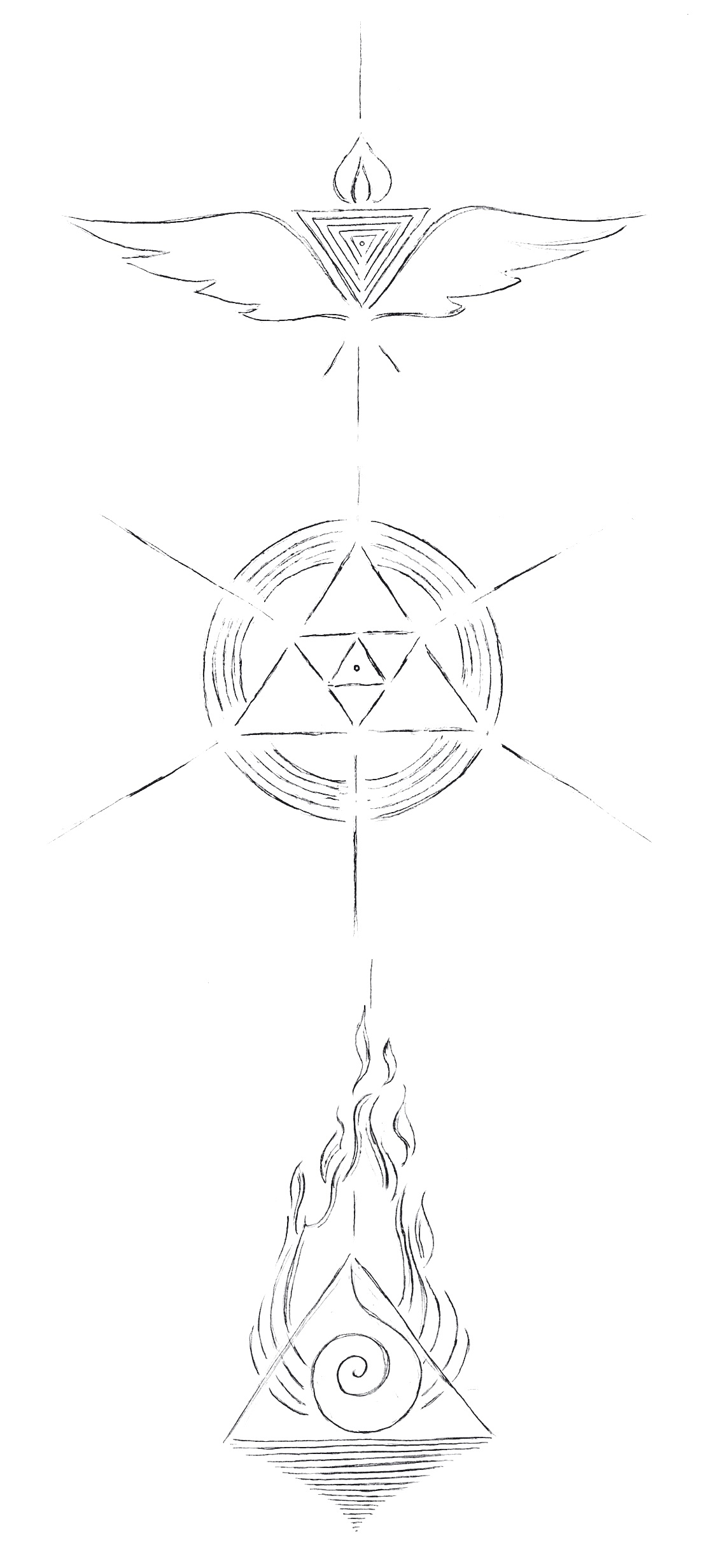
The Trinity of Power

The Three Forces

The first system of chakras, in which they are described as significant centers of the body’s life force, originates from Taoism and is still taught today in the form of the lower, middle, and upper dantien (tan t’ien—sea of qi).

This Dantien is also known in exactly the same form in traditional Tantra. In Tantra, the lower Dantien is called kanda and is described as being in the same position and having the same attributes as in Taoism. It is located three finger-widths below the navel, is egg-shaped, and has a radiant golden color.

The two higher centers of the middle and upper dantien correspond to what are known in yoga as anāhata and ājñā.

This division of energy into the lower, middle, and upper centers is the most fundamental reality of the chakras and the structure of the self.

We move back and forth between the Earth’s magnetic force and the sky’s electrical force; our center is the heart, the seat of our very life.

The Tantrikas used a meditation technique in which Kuṇḍalinī was awakened in the body’s three major centers: in the kanda as the fiery Ādhāra Kuṇḍalinī, in the heart as the light of truth—madhya Kuṇḍalinī—and in the head as the divine will—Ūrdhva Kuṇḍalinī.

Kuṇḍalinī is then channeled from the trinity of these centers into the center, where it merges with the soul—the center of being.
Trinity Power Shakti

THE GREAT IMPORTANCE OF THE CHAKRAS

Nowadays, the chakras are typically viewed as the centers of our emotional well-being as well as the seats of supernatural powers. Crystals, colors, singing bowls, and massages are said to help awaken the hidden powers within these centers and guide us back to harmony.

Along with all of that, however, the most important treasure that the chakras hold for us has been forgotten.

The greatest gift of the chakras is that they are gateways located within our bodies through which we can enter into our experience. The chakras chart a map of experience, and like any map, this one serves as a guide. We can now find the places we’re looking for, instead of wandering aimlessly through the fog of our experience.

Through these gates, the yogi can gain access to a certain power, to a certain experience of the self.

For example, the Śiva Saṃhitā (3:73) mentions that meditation (e.g., dhāraṇā for two hours) on a chakra enables the practitioner to overcome the limitation present there and awaken a power. For instance, the limitation of fire is overcome through meditation on maṇipūra, and the limitation of the element of air is overcome through meditation on anāhata.

Successive meditation (dhāraṇā) on all the centers makes it possible to drink the “nectar of immortality.” These ancient techniques are only a fraction of the ways to awaken powers through their gateways in the body and to unfold the potential of the human psyche.

The body is a mirror of the universe, so all deities—as well as worldly experiences—must find a home within it. The body is a vast landscape, full of temples, oceans, mountains, and beings of all kinds.

The experiences of the self are the seasons of these landscapes and the seismic activity of their earth, the swirling of their winds, and the radiance of their stars. In the temples of these landscapes, the earthly meets the divine, and when you enter the temple within, you are truly at home.

Within this human body, Mount Meru (the spine) is surrounded by seven islands; there are rivers, seas, mountains, fields, and lords of the fields. Within it are seers and sages; all the stars and planets are there as well. There are sacred pilgrimages, shrines, and the presiding deities of the shrines. The sun and moon—the forces of creation and destruction—also move within it. Ether, air, water, and earth are there, too.

Śiva Saṃhitā (3:1–3)
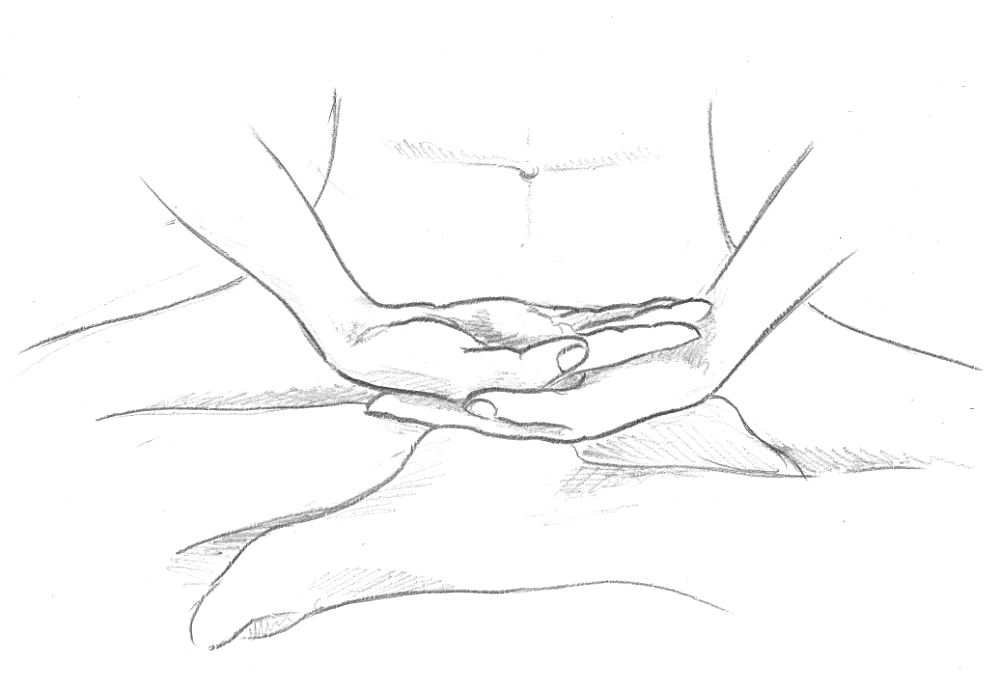
Bhairava Mudra Meditation

A MODERN UNDERSTANDING of the Chakras

When the Ṣaṭ-Cakra-Nirūpaṇa was first translated into English in 1912, the concept of psychic centers in the body resonated deeply with readers and practitioners of that era.

The Theosophical Society, led by the occultist Madame Blavatsky in Chennai, was deeply inspired by the concept of the chakras and linked it to human anatomy. In their view, the chakras had to have anatomical counterparts, and since the glandular system had recently been rediscovered at that time, they attempted to explain the functions of the chakras through those of the glands and, in this way, to establish correspondences between the two systems.

Later, the magician and occultist Aleister Crowley also wrote about Kundalini Yoga; he quickly became a hero of the New Age movement. However, the most important bridge to the West was built by the prominent Swiss psychologist Carl Jung.

He spent three months traveling through India, where, after visiting a Kali temple, he had a vision of the goddess. He was so fascinated by India’s spiritual power that he began giving lectures on Kundalini Yoga in 1932. These groundbreaking lectures led to his famous book, *The Psychology of Kundalini Yoga*.

Jung proposed many ideas that later merged with the New Age movement and shaped our understanding of the chakras as an expression of an individual’s psychological evolution. For Jung, spiritual evolution—symbolically represented by the sequence of chakras—was a macrocosmic expression of the individual’s psychological evolution.

This understanding of the chakras—which was developed in the *Ṣaṭ-Cakra-Nirūpaṇa* and later reinterpreted by Jung in light of modern psychology—is now regarded as the most important chakra system not only in the West but also in India itself.

In any case, the chakra system is undoubtedly multidimensional, and many interpretations may point to a deeper truth. In this respect, this Jungian psychological interpretation of the chakras is just as much a revelation as the realization that the spiritual evolution of the cosmos is reflected in the individual.

Both visions can deepen our understanding of ourselves and the cosmos.
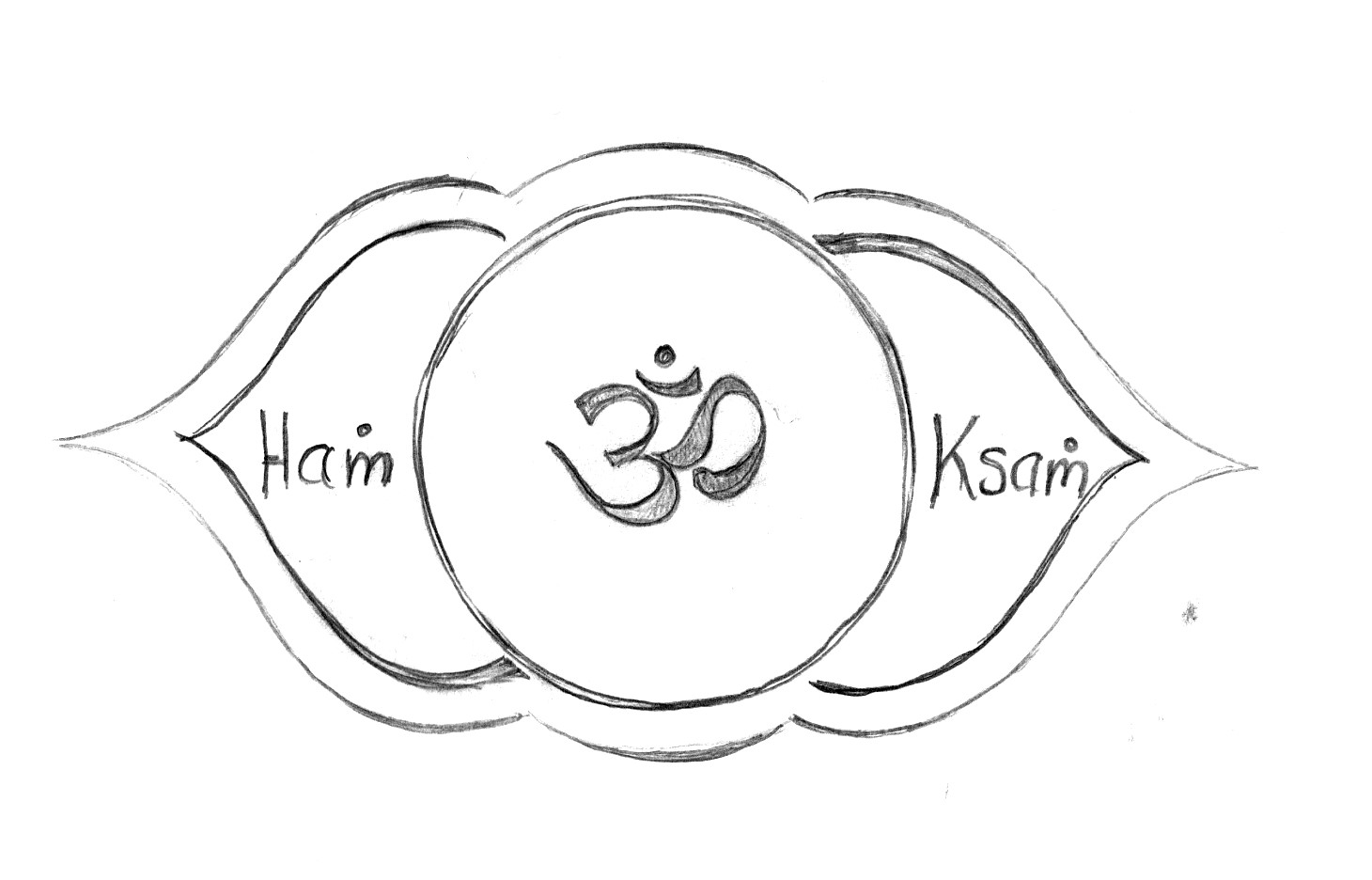
Ajna Chakra Sound

Learn more about the chakras here

A journey through the chakras is a journey to yourself.

In this book, we also explore the roots of Kundalini Yoga and yogic anatomy, and we discover the secrets of the koshas, prana, and the Trinity of the Goddess.

These profound practices, visions and insights into yogic anatomy and chakras will inspire and enrich any yoga practice.

More Articles Weekly

We'll be posting new articles every week on the individual chakras, the koshas, and topics in yogic philosophy. Stop by or send us an email so I can add you to our newsletter mailing list.

Any questions? Just write to us!

Chakras – Overview and History

Chakras – Overview and History

A Brief History of the Chakras

Chakra or cakra means wheel or circle. It is also interesting to note that the Greek word "kulkos" and even the English word "cycle" are derived from this word.

The word “chakra” appears in early texts such as the Vedic Ṛgveda. Upon closer examination, however, it becomes clear that at that time the word “chakra” did not yet refer to a spiritual energy center, but rather denoted a wheel or a center of power.

In the 1st century BCE, early Upanishads refer to subtle yogic anatomy, such as the nāḍis. Similarly, the Dhyānabindu Upaniṣad from the 3rd century CE already mentions techniques of Kundalini Yoga, the rising of energy (Śakti), and the positions of the lower chakras.

As tantric yoga continued to evolve from the 8th century CE onward, the yogic understanding of the chakras became increasingly refined. The Upanishads written during this period, such as the Yoga-Kuṇḍalini Upanishad, emphasize the importance of the chakras for the art of Kundalini Yoga.

The path of yoga, as described in detail in the Gīta or the later Yoga Sūtras, leads through the purification of the self to devotion and enlightenment. The chakras existed outside the teachings of early classical yoga and were a purely tantric teaching. It was not until the later schools of Hatha Yoga and Tantric Kuṇḍalinī Yoga that they came to be regarded as the key to enlightenment (Haṭha-Yoga-Pradīpikā, 3:105–110).

Through the union of vāyu and agni (mūlabandha), the Kuṇḍalinī pierces the brahmagranthi and then the Viṣṇugranthi. Then it pierces the rudragranthi [the three knots]. Afterward, all six lotuses are pierced. Then Śakti is blissful with Śiva in the Sahasrāra Kamala (thousand-petaled lotus chakra). This should be known as the highest state of being and the gateway to ultimate bliss.

Yoga-Kuṇḍalini Upanishad (85–86)

Mualdhara Chakra Sound

CHAKRAS AS MEDITATION TOOLS

A common modern misconception about the chakras is that they do not serve solely as a map of the subtle internal anatomy; rather, the chakra is—and has always been—a tool for meditation.

This means that the activation of the chakra—and the associated experience—is a conscious, deliberate act that takes place within the context of meditation. The chakra therefore has no independent existence outside the mind that creates it.

One’s own will is therefore the key to entering into the experience.
From the very beginning, yogis used visualization techniques in which they used their imagination to place a spinning wheel—dedicated to the energy of a specific deity—within their bodies. These wheels of the deities were placed at various points in the body to activate the deity’s power in that specific area and open a gateway to the inner experience.

What various chakra systems have in common is their vertical alignment along the axis of inner experience (or suṣumnā)—various systems were developed by Tantric traditions to awaken specific energies within this axis.

The Kaubjikā tradition routinely taught two very different systems—one with 5 centers and one with 7—thereby suggesting that the concept of chakras is more of a tool for meditation than a description of a fixed energetic reality. Depending on the goal of the meditation and the system one chooses, a different number of chakras—and different tools within them—is selected.

Most systems describe the chakras as an expression of a specific level of consciousness. Kuṇḍalinī, the goddess, is then the force that can transcend one level in favor of a new one, and thus permeates the chakras.

For this reason, chakras are often described as granthi—a psychological knot or blockage that must be overcome. Tradition identifies three primary knots in the body: Brahmā granthi, Viṣṇu granthi, and Rudra granthi, which represent the three fundamental attachments of the individual self or three obstacles to ascending into cosmic consciousness. These three attachments serve as examples of all other limitations an individual may have; thus, they also represent the seven chakras.

In fact, a chakra is defined as a knot pierced by Kuṇḍalinī. Kuṇḍalinī is often likened to a needle that threads the blossoms of the chakras onto a string, and in this way, by piercing them, creates a harmonious whole.

Awakened by the contact of agni with mānas and prāṇa, it takes the form of a needle and pierces the suṣumnā. The yogi should, with great effort, open this door, which is locked. Then he will pierce the door to liberation through Kuṇḍalinī.

Dhyānabindu Upaniṣad (5:66)

chakra sound

Chakra Systems and Tools

The Five Elements

The best-known technique of chakra meditation—and the one my teacher taught me—is bhūta śuddhi, the purification of the five elements. Five chakras—each of which embodies one of the five elements—are located within the body.

Once the forces of the five elements are active, Kuṇḍalinī can rise as the central force. The five elements represent the five limitations imposed on the being by each element. When the elements are activated by the mantra, the energy of the element is permeated by the power of consciousness and mantraśakti.

In this way, the element's limitations are transcended and its power is made available.

Pancha Butha Suddhi Yoga

Shadow or Light

Everything is both shadow and light. The difference between the two is not the element itself, but the presence of consciousness.

The goddess, who manifests as the five elements, is both limitation and freedom, just as māyā is both the goddess of illusion and the mother of all knowledge. Whether she represents bondage or liberation does not depend on the element itself in which she appears, but rather on the level of consciousness with which that element is recognized and thereby integrated into being.

If the lowest of all elements (earth) does not become an active part of the self through the power of consciousness, but instead runs rampant in the shadow of ignorance, then it is bondage and a gateway to hell.

If, instead, it is permeated by the forces of consciousness, it can be transcended and becomes a source of great strength, center, and stability. When you bring the shadow into the light of the center, it becomes your ally.

Through prakṛti, you will rise. It is through prakṛti that you will fall.

Swami Lakshman Joo

The Deities

Another important approach is to place the six most important deities within the body, thereby awakening their powers within the self. These deities are supreme gods who were worshipped in India at various times throughout history as the highest form. The social evolution that created the image of a particular deity and the power venerated within it is an expression of the spiritual evolution that underlies social development.

The Tantrikas were aware of this connection and therefore revered the chain of supreme deities as representations of spiritual evolution, not only in the cosmos but also in the individual life of a human being. From this perspective, the placement of these deities within the body and the transcendence of each one, one by one (from bottom to top), is a symbolic yet powerful journey through one’s own inner spiritual evolution.

The six deities, as an evolution from mūlādhāra to ājñā:

• Brahmā: God of Creation
• Viṣṇu: The omnipresent god
• Rudra: God of Destruction
• Īśvara: Personal God
• Sadāśiva: Formless Tantric Śiva
• Bhairava/Maheśvara: Supreme left-handed Śiva

The Vowels

In yoga, sound—vibration—is sacred. The entire universe was created through the primordial sound, Oṃ. In the Yoga Sutras, Patanjali explains that Oṃ is the sound form of Īśvara, that is, God. Oṃ is thus the source of all things and the seed of all true insight.

Since Oṃ is God in the form of sound, Oṃ is also Śabda Brahman, the chain of sounds from which the universe is formed and from which all other sounds have emerged. Every sound is thus a creative force of the Supreme—the word with which God creates the world. Together, these words form the one great sound that is the universe itself. They are Kuṇḍalinī, the creative force of the Supreme.

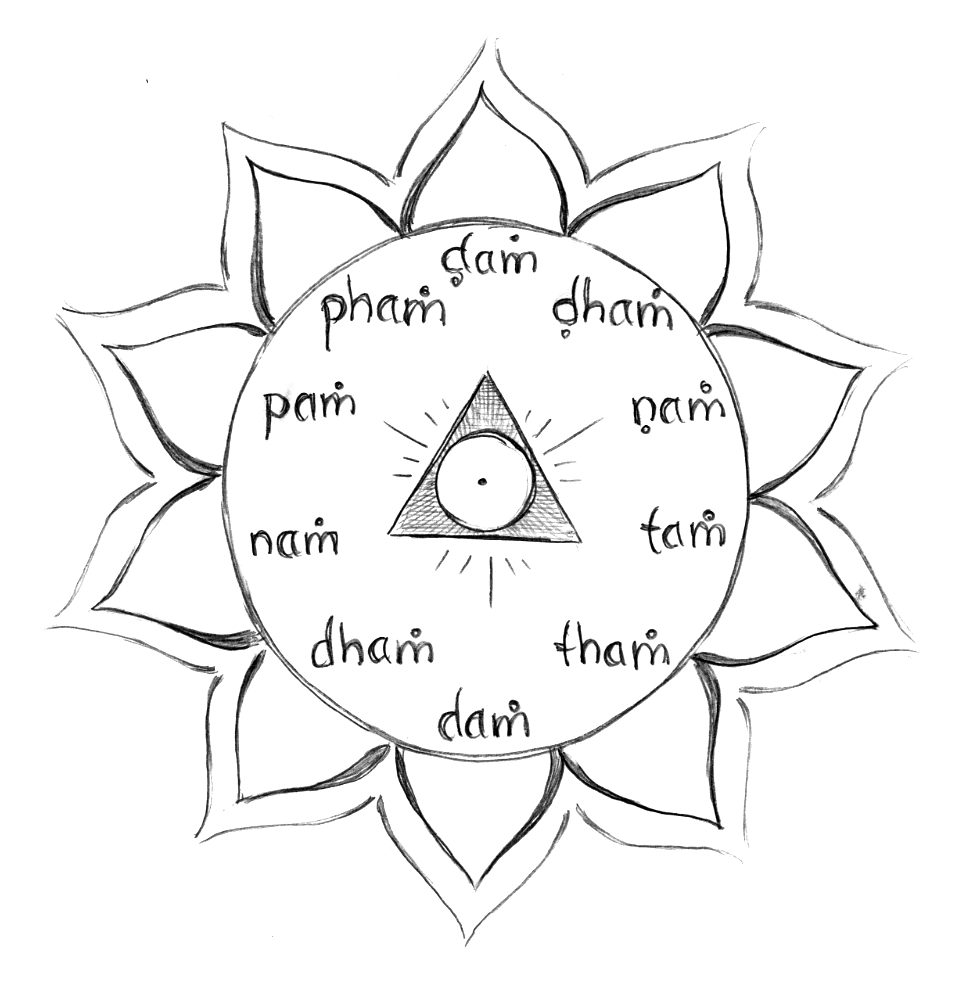
The chakras are an expression of this evolution from the Supreme to the material realm and back again from the material realm to the Supreme. This process of evolution and involution unfolds along the ladder of sounds, which are assigned to each petal of the chakras.

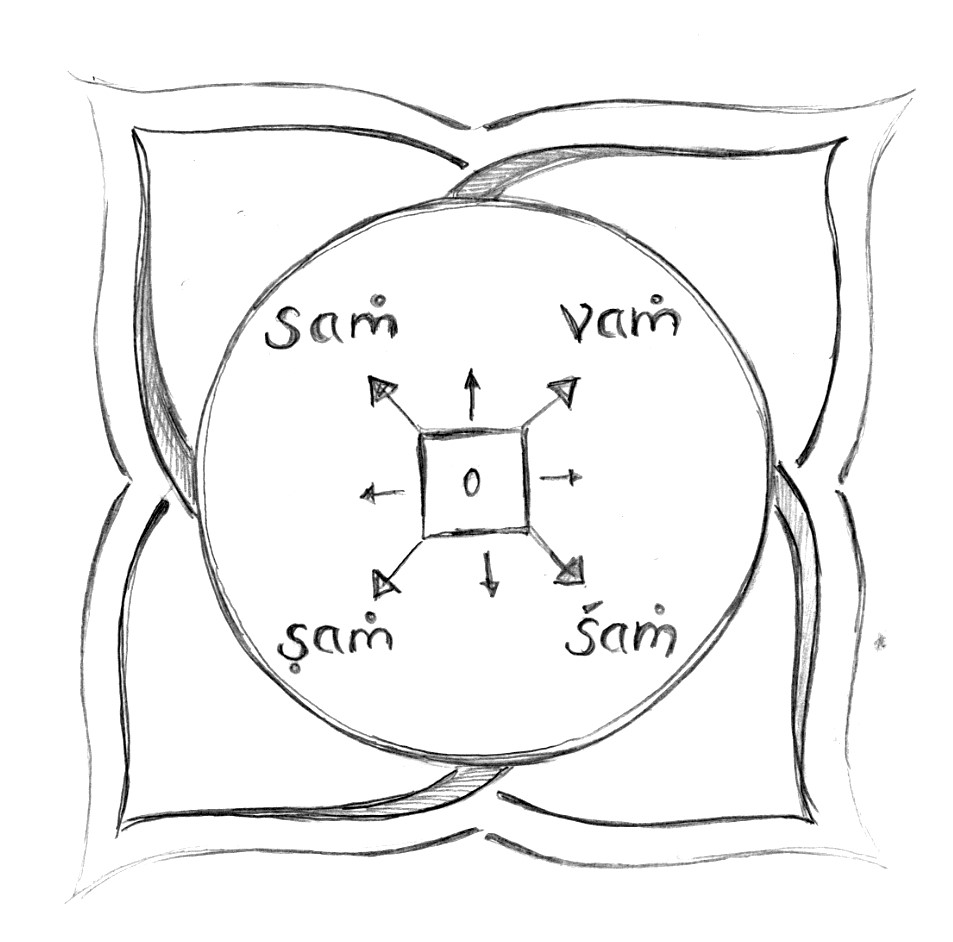
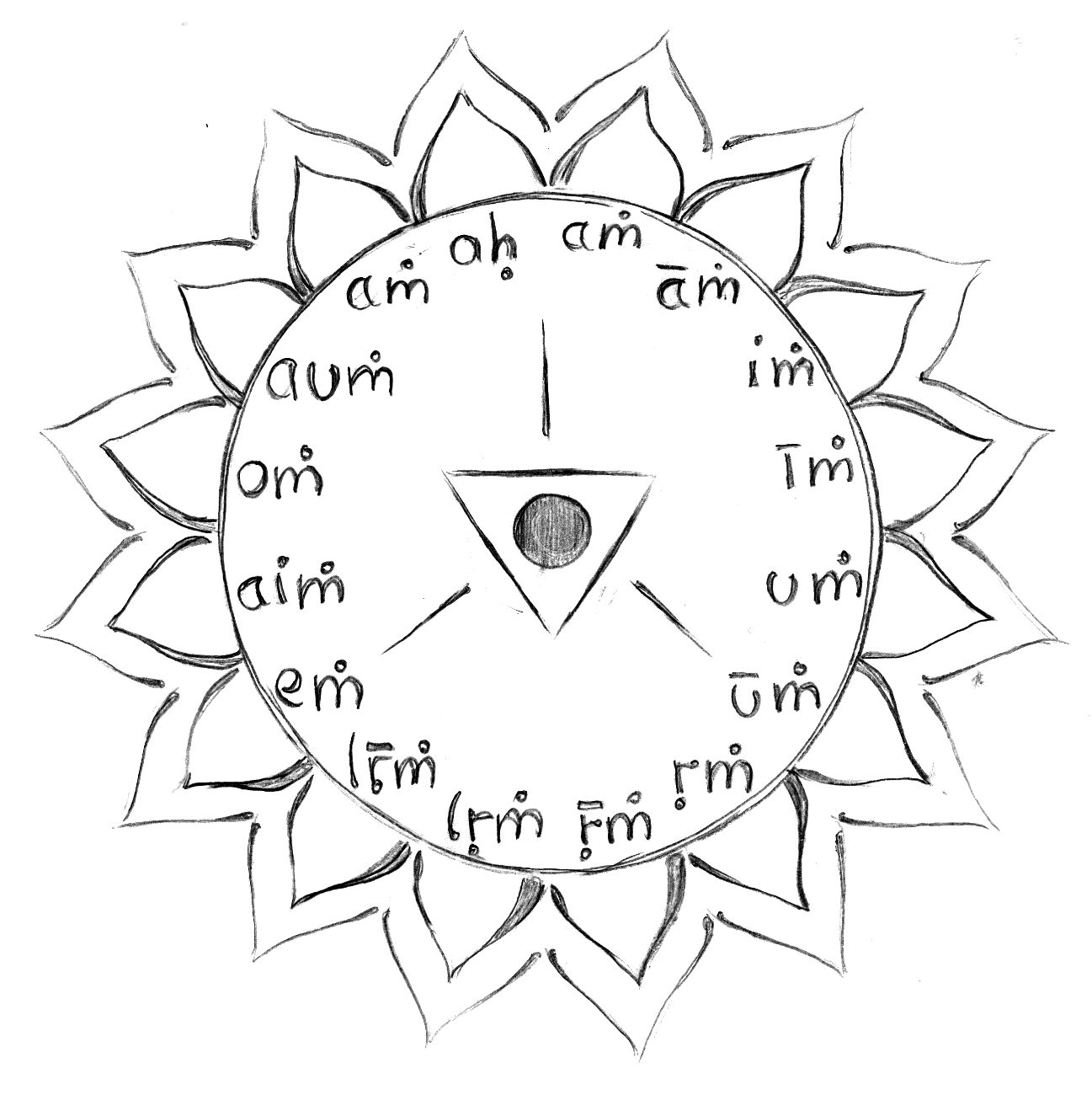
If we consider the number of petals on the lotus flowers of the chakras, their total is 50 (4+6+10+12+16+2), which corresponds to all 50 sounds of the Sanskrit alphabet. Together, these encompass all sounds and thus represent the great primordial sound Oṃ, God, the one source.

Traveling through these chakras from bottom to top and placing the sounds on their petals is, therefore, a journey through the self—from the coarse to the subtle, from the material back to the source of all creation.

Ajna Chakra Sound

Systems

One of the earliest chakra systems originated in the 6th century B.C. and is known to us from the Kālottara Tantra. This was a system of five centers, in which the lowest (mūlādhāra) was located in the heart, and each subsequent center rose steadily upward. The Kālottara Tantra proposed meditations in which the Kuṇḍalinī rises from the heart upward through the five elements and ultimately finds fulfillment above the head. This system was conservative, meaning that it ignored the lower centers and the sexual energy dormant within them, which was considered dangerous.

The system we know today was first mentioned in the Kubjikāmata Tantra of the Kaubjikā tradition as one of the two most important systems in that tradition. This system of six chakras later appeared in the Śiva Saṃhitā and in the Ṣaṭ-Cakra-Nirūpaṇa, which was translated into English at the beginning of the 20th century, and found its way into the New Age movement.

The Ṣaṭ-Cakra-Nirūpaṇa is not a tantra or a classical text, but rather a treatise written by the scholar Svāmī Purnananda in the 16th century. The text is primarily a vivid description of the mandalas of the chakras, along with their associated deities and symbols.

The Ṣaṭ-Cakra-Nirūpaṇa is not easy for laypeople to understand, yet it is beautiful and inspiring; it is a colorful journey through the world of the chakras, Kuṇḍalinī, and their symbols.

Anahata Chakra Sound

Learn more about the chakras here

A journey through the chakras is a journey to yourself.

In this book, we also explore the roots of Kundalini Yoga and yogic anatomy, and we discover the secrets of the koshas, prana, and the Trinity of the Goddess.

These profound practices, visions and insights into yogic anatomy and chakras will inspire and enrich any yoga practice.

More Articles Weekly

We'll be posting new articles every week on the individual chakras, the koshas, and topics in yogic philosophy. Stop by or send us an email so I can add you to our newsletter mailing list.

Any questions? Just write to us!

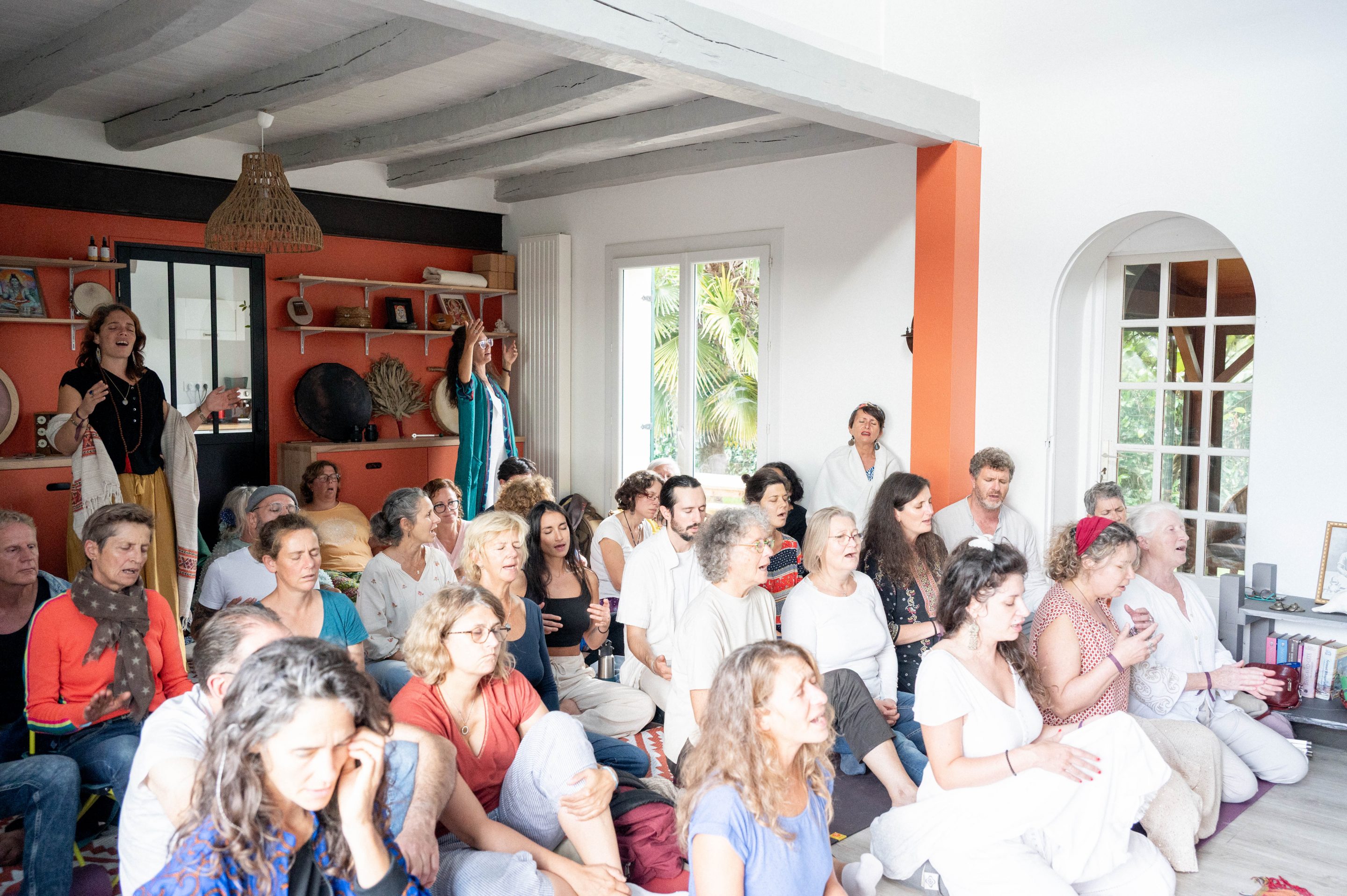
Weekend of Sound Yoga and Tantra

Weekend of Sound Yoga and Tantra

The weekend of 23–25 October A journey to the heart of Tantra.

In love with sound and vibration

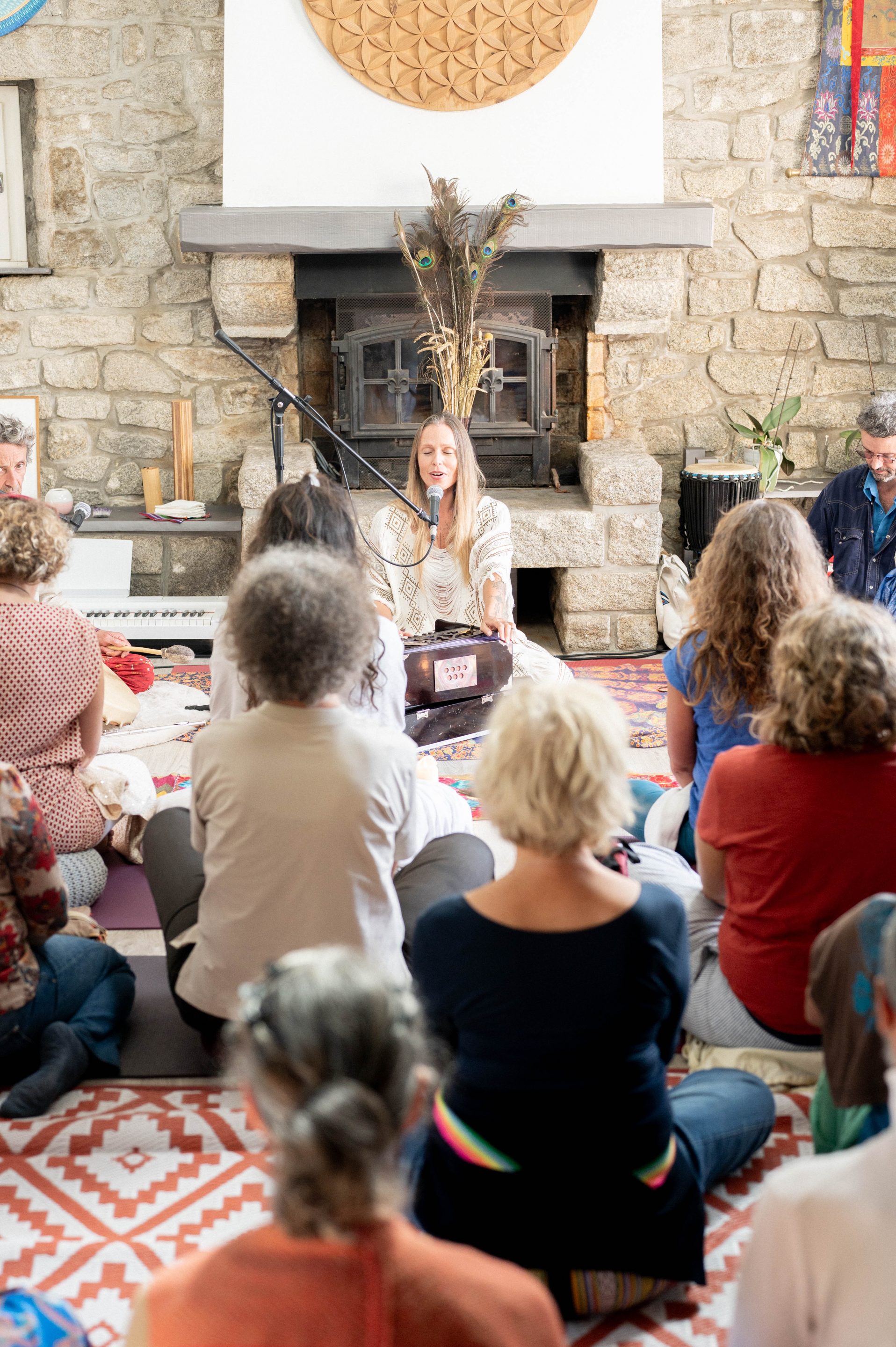
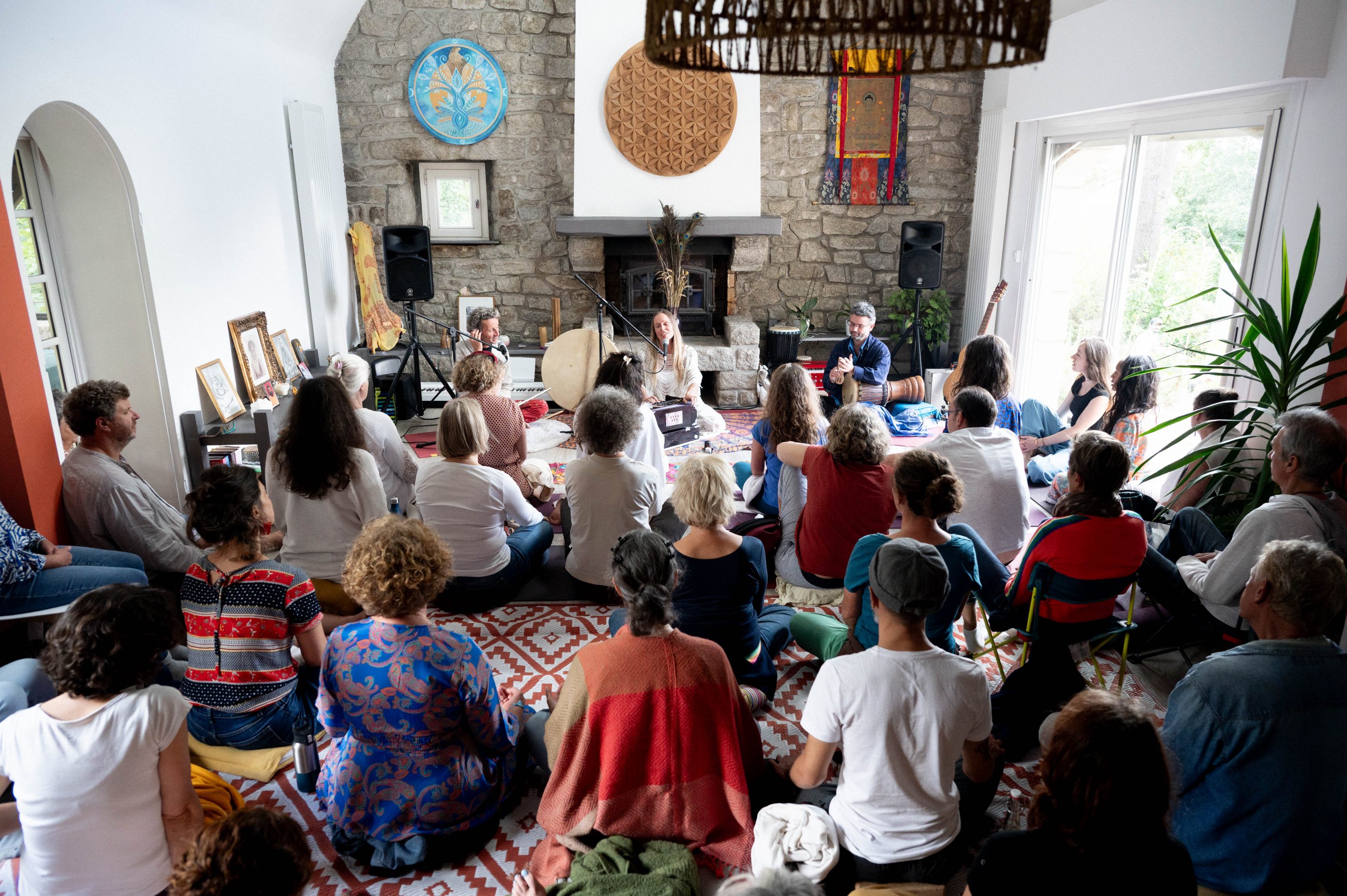
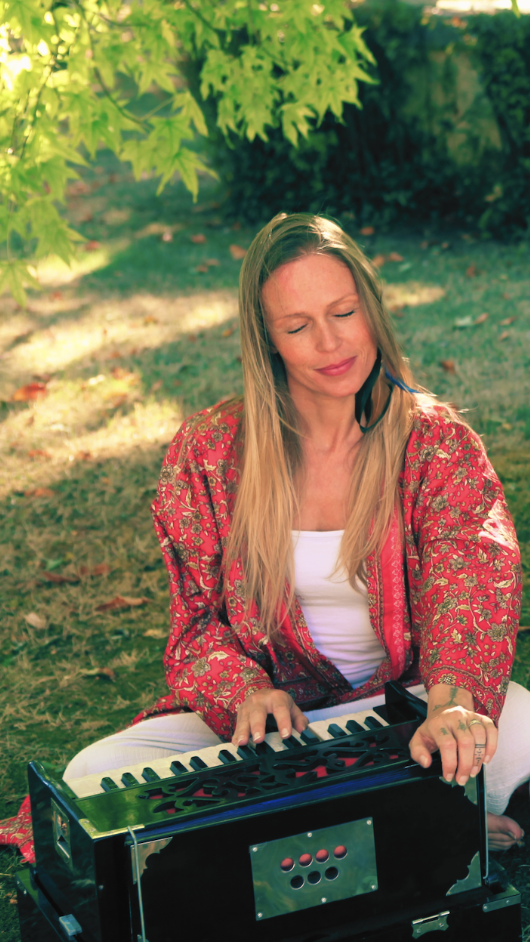
My name is Emmanuelle Cueff and I’m going to take you on a journey into authentic tantra and sound.

Enamoured of sound and vibration, and fascinated since childhood by the boundlessness of life’s dance, I am a seeker who loves to return to the roots of things in order to draw ever closer to the nectar of creation.

I prefer the path of direct experience. My areas of research include VIBRATION, movement, sound, nature, the human and cosmic nature of humankind, and the mysteries of energy and consciousness.

For the past 16 years, I have been guiding people on a journey through the body, energy and sound – as a catalyst for deep presence, a return to spontaneity and an awakening of consciousness.

From the Organic to the Cosmic

From the organic – which connects us to our bodies, our emotions and nature – to the cosmic … I invite you to explore the different layers of being, either alone or in a group.

Together, we discover how reconnecting with our inner universe holds the promise of a path to embodiment – an embodiment that is also reflected in the outside world. Inside and outside, which are in truth one.

Yoga of Sound and the Tantric Path

I invite you to experience a return to presence, using profound tools drawn from my Yoga of Sound and Kashmiri Shaivism – the tantric path, particularly the Kaula tradition.

In this tradition, the body itself is the temple of Kali. It is therefore not necessary to reject or deny the body in order to experience union with the Divine. On the contrary: here, nothing is regarded as pure or impure, but everything is seen as a living dynamic that serves our development.

Kali – the embodiment of love and the liberator

Kali is the absolute reality that lies more or less dormant within us. When she begins to stir once more, she floods us with the desire for union with the Divine – that desire which transcends all others and reveals itself as pure love.

The often terrifying aspect of Kali, which is frequently misunderstood, is closely linked to her absolute love. She is the great liberator within us and beyond. She acts out of a boundless and unconditional love.

Its power can dissolve, resolve and lead us to liberation – through the acceptance of death. Then we realise how revealing our true nature in the full truth of the moment leads to letting go of what must die … until rebirth.

Death and life … life and death … one and the same work. Acceptance of death becomes the key to freedom.

Fish Logo Matsya Yoga. Yoga Alliance yoga teacher training in the Wachau region. Hatha yoga training, authentic Kundalini yoga. Yoga kriyas.

The surgery opens its doors

Today, I no longer just give names – I am opening the door to my practice. A practice that is nourished by deep, honest experience and is currently unfolding in many different ways.

Whether through the breath, the body, movement, sound, singing, mantras, visualisation or rediscovered SPONTANEITY – I will guide you on your journey from energy to your very own, unique and yet universal energy … and from there on to consciousness.

Tools for your own freedom

I’d like to share with you these wonderful tools that have accompanied me over the years and led me towards greater wholeness. They will also help you discover your own keys to unlocking your inner doors – towards the freedom of being true and authentic.

And ultimately, it is no longer about being a key or a door … but about becoming the rediscovered vastness and expanse of the space once the door to the inner self has been opened. I’d like to share with you these wonderful tools that have accompanied me over the years and led me towards greater wholeness. They will also help you discover your own keys to opening your inner doors – towards the freedom of being true and authentic.

tantra sound yoga
tantra sound yoga

Daily schedule (23–25 October)

Friday - Sunday

Friday
5–8 pm: Welcome – Opening circle – Tantra visualisation & Shakti-Shiva mantras / Meditation

Saturday
8–9 am: Sound yoga practice – breath and body movements merge with the primordial sounds and bijas mantras.
9–10 am: Breakfast
10 am–12 noon: Tandava (Tantric dance) / Kali practice – Mantra meditation
4–7 pm or 5–8 pm: Tantra visualisation / Connection – Mantra singing circle – KALI / Receiving & sharing mantras / Meditation

Sunday
8–9 am: Sound yoga practice – breath and body movements merge with the mother sounds and bijas mantras.
9–10 am: Breakfast
10 am–12 noon: Tandava (Tantric dance) / Closing circle – chanting of Shakti & Shiva mantras / Sowing the seed of TARA.

How to get there

This wonderful workshop will take place on the weekend of 23–25 October at our new centre at Rossatz 12.
It’s easy to get here: take the train from Vienna to Krems and from there the bus to Rossatz. The entire journey from Vienna takes about 1½ hours.

If you have any questions, please feel free to give us a call.

Course fee

The course lasts three days. The course fee includes accommodation and a light breakfast. A kitchen is available for all other meals, and there is a local grocery shop nearby.

The course fee is €350 as an early bird rate for the whole weekend if you book before 1 August, and €420 after 1 August.

Registration

To reserve your place on the course, a deposit of 50 euros is required. This must be transferred to our association’s bank account. Please then send us an email with a screenshot of the transfer so that we can match it to your booking and reserve your place immediately.

The association's bank account:
Matsya Yoga / Bank Austria / IBAN: AT50 1200 0100 4187 2572 / BIC: BKAUATWW

If you have any questions, please don’t hesitate to get in touch.

home@yogamatsya.com

We look forward to welcoming you to Rossatz on Friday evening!

Find out more about Emmanuelle

Emanuelle is, in my view, one of the finest tantric musicians of our time.

Her music draws you into an almost surreal trance – a gentle, profound journey through the universe.

She doesn’t waste any energy on advertising or social media. All her energy goes purely into her art. And that’s exactly what you can feel: that’s what makes her music so powerful and authentic.

Come with us. Let’s journey with her to the farthest reaches of the universe, into the very heart of the heart, and back again.

Any questions? Just write to us!

2. chakra zeichnung
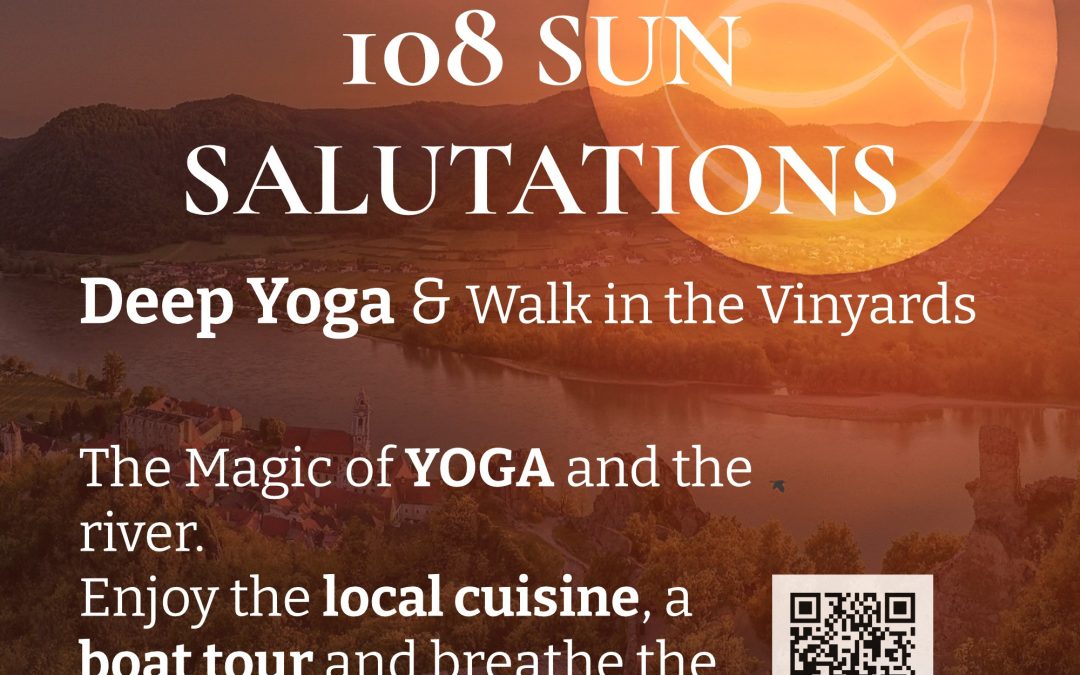
108 Sun Salutations in the Wachau!

108 Sun Salutations in the Wachau!

108 Sun Salutations

We will embark on a journey of 108 Sun Salutations in our beautiful center in the Wachau.

Course Fee: 25 Euros - deep dive into the soul of Yoga

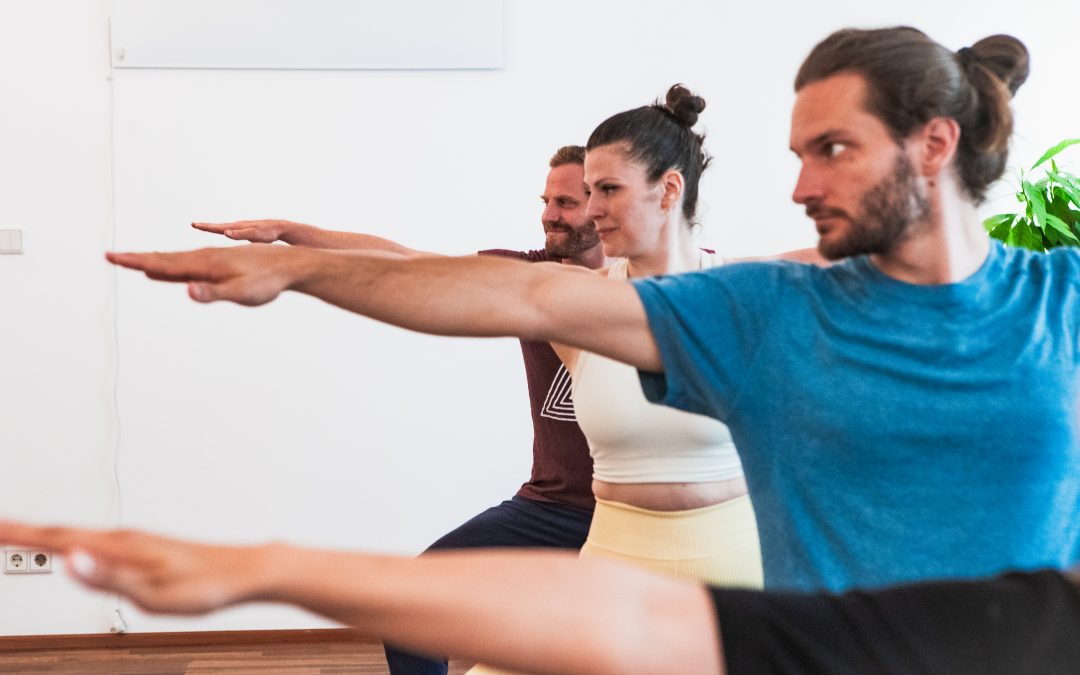
Nic is a very experienced and dynamic teacher. She will demonstrate various versions of the great SUN SALUATION

—still, breathing, engaging, deep, dynamic, pulsing, and fiery.

The Sun Salutation is one of the most basic and healthiest exercises in all of yoga; it is a foundation for mental and physical health. Learning and practicing the Sun Salutation will help you live fully, think and feel more clearly, and strengthen you on your path as a human being.

What is the Wachau?

Our new center in the Wachau is also worth a visit. We are directly located on the banks of the Danube—what I believe is the most beautiful area along our magical river.

Our retreat center breathes the history and vibrant life of this special and musical river.

How to join? How to get there?

If you'd like to join us, you can easily book your spot through Eversports, give us a call, or simply stop by the center.

The course lasts for two hours. Afterward, feel free to relax at the center, enjoy the fires from a boat tour at the Danube, wander in the vinyards and or just enjoy cup of tea.

There is a bus stop directly in front of the building, with convenient connections from the main station in Krems to our retreat center. If needed, we're happy to arrange a pickup for you from Krems as well.

You can book your spot through this link—we look forward to welcoming you!

Yoga logo with starry background
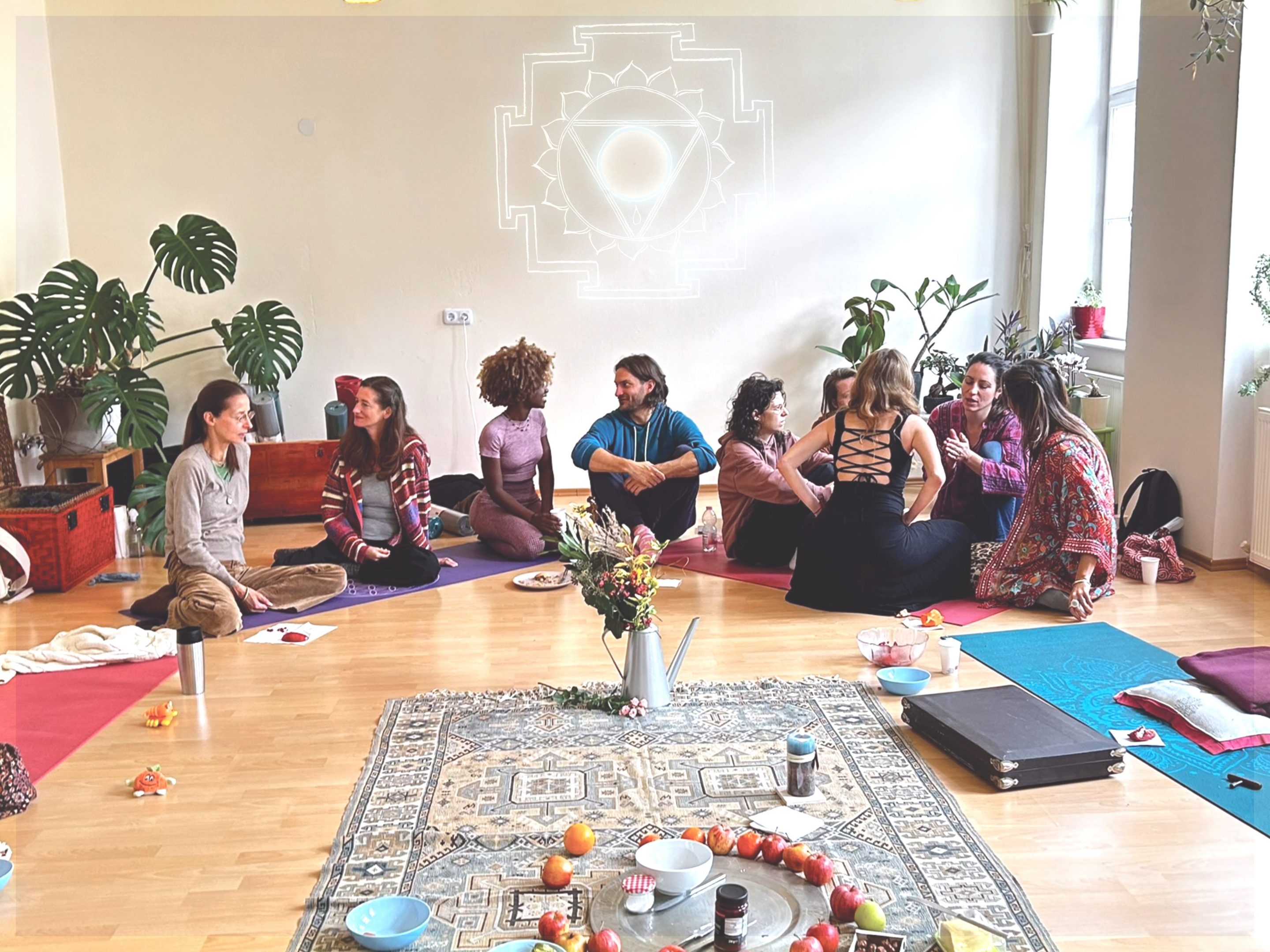
Matsya Yoga gathering feier vishuddha chakra
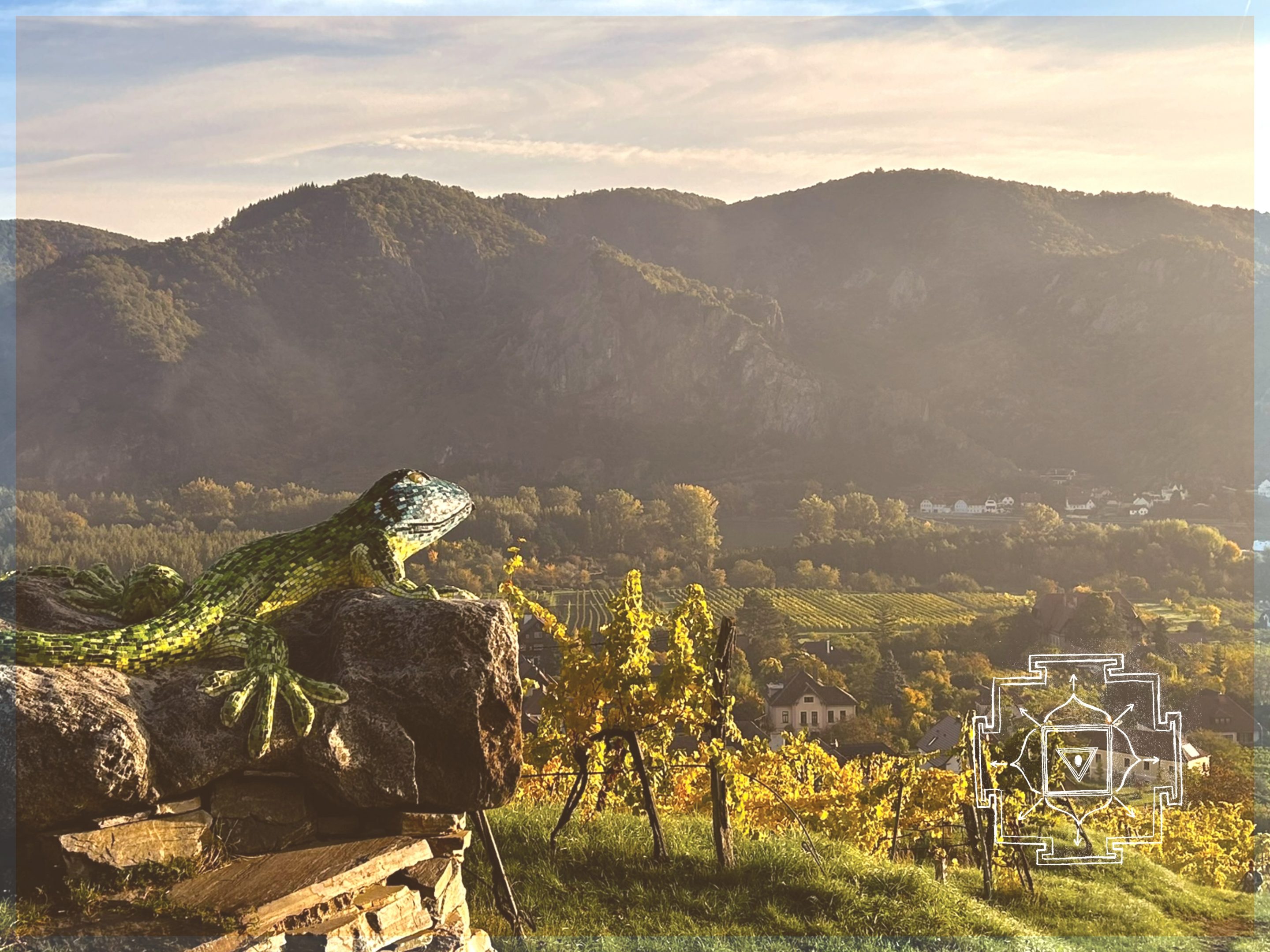
Lizard overlooking scenic vineyard landscape

What else to Enjoy?

The course will cost 25 euros. For an additional 15 euros, we will provide you with a light lunch featuring local food products and take you on a guided tour of the vineyards and down the river.

If you wish, you can also join us in the evening for a boat tour along the Danube, where we will witness solstice fires burning by the river.

It will be magical!

I hope to see you there!

Questions? Write us!

11 + 6 =

2. chakra zeichnung

Welcome in the New Year dear Yogi!

Welcome in the New Year dear Yogi!

Neujahrsvorsätze sind etwas Schönes.

Wir möchten erkennen was uns an uns selbst stört, oder vielleicht nur Verbesserns wert erscheint, und möchten uns darum bemühen es zu verändern. Vielen fällt diese Änderung schwer bis unmöglich. Das kann an vielen Gründen liegen, möglicherweise will man es nicht genug? Oder vielleicht bemüht man sich nicht richtig? Ist vielleicht dieses fehlende Bemühen das Problem, das man ändern will? Oder ist das, was man ändern will, gar nicht falsch, sondern nur eine Eigenschaft eines wunderbaren Individuums, welches sich gar nicht ändern braucht?

Die Antwort auf diese Frage ist nicht wichtig, denn natürlich ist sie für jeden Individuell und kann nicht aus einer Massen-E-Mail herausgelesen werden. Daher lasst mich lieber über meinen Vorsatz erzählen, der nicht nach Änderung strebt, sondern nach dem Mut zum Gleichbleiben.

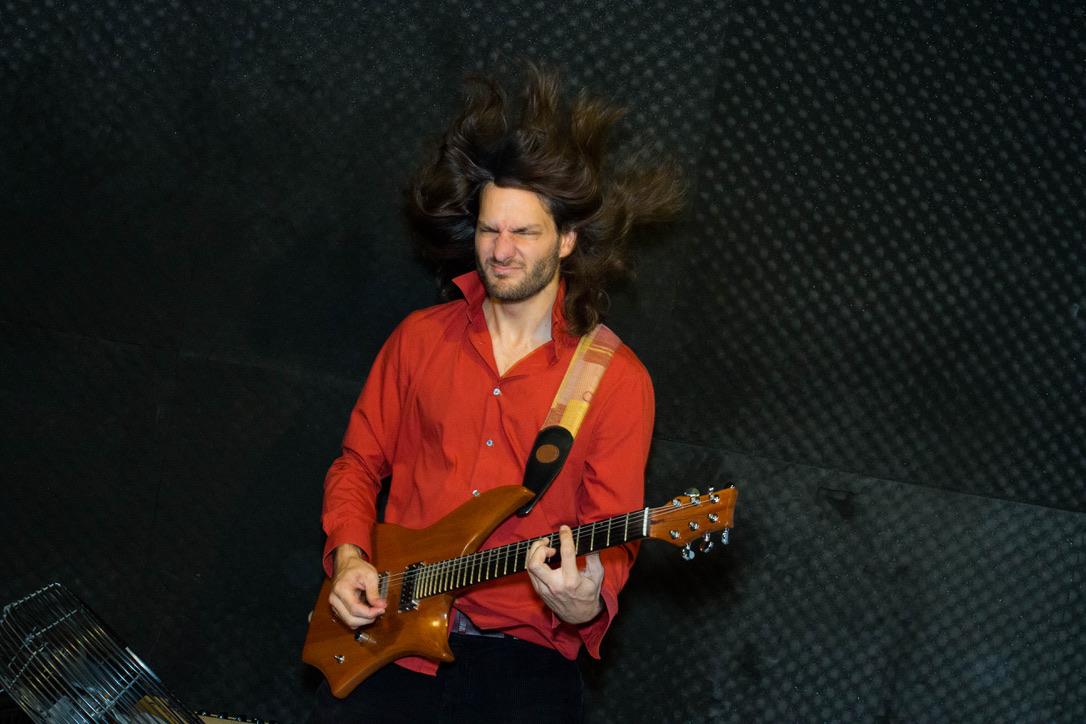
Letztes Jahr habe ich meine Karriere als freischaffender Musiker begonnen. Wie ich an diesen Punkt gelangen konnte, ist mir bis heute ein absolutes Mysterium. Ein Mysterium, dass ich hier mit ein paar Zeilen beleuchten möchte.

In der Zeit vor meiner Selbstständigkeit, habe ich mich sehr um die Musik bemüht und viele Projekt gestartet, betreut, mitgeholfen, und dabei vielen Mit-Musikern eine harte Zeit bereitet. Ich wollte so unbedingt einen Beruf daraus machen, dass sogar die Freundschaft mit meinem lieben Schlagzeuger-Kollegen Mathäus, darunter gelitten hat. Jegliche Form von Erfolg durch den Stress, den ich dadurch verursachte, blieb allerdings aus.

 Schließlich gab ich auf. Aber nicht die Musik und nicht meine Leidenschaft. Ich gab die Belohnung für mein Schaffen auf. Ich ließ völlig von der Idee los, dass das, was ich tat irgendeinen zusätzlich Gewinn bringen sollte, abgesehen davon, dass ich tue, was ich gerne tue. Plötzlich wurde das Tun ganz leicht, die Dinge bewegten sich weiter und eines Morgens, wie aus dem nichts, sah ich eine Anzeige von Rock4Kids, für die ich nun seit einem Jahr als Musiker arbeite. Wie durch Magie fand mein Weg zu mir.

Die Weisheit von der Belohnung loszulassen und sich im Tun zu verlieren, habe ich aus der Baghavad Gita, wo es heißt:

refute the fruits of your actions

Damit ist genau das gemeint, was ich oben beschrieben habe. Hör auf über die Belohnung nachzudenken, die dein Schaffen bringen soll, und verliere dich im Schaffen selbst. Das bedeutet nicht, dass man zur Belohnung nein sagen soll, wenn sie kommt: großartig, wenn nicht: auch großartig!

Damit möchte ich mich selbst dazu motivieren, auch mit dem neuen Studio in der Sechshauserstraße 26, diesen Kurs beizubehalten. Denn es ist nicht leicht davon loszulassen, vor allem nicht, wenn man zu tief in die Geldbörse schaut. Es erfordert Mut und ein bisschen Glaube. Aber ich denke gemeinsam können wir hier einen Ort schaffen, an dem Magie passiert.

Ich hoffe diese Worte waren ein Gewinn für dich und wünsche dir, liebe Leserin und Leser, ein wundervolles Jahr 2026 und hoffe dich bald bei uns im Studio begrüßen zu dürfen.

Die Kraft und Weisheit neue Weg zu gehen, findet man in der Stille. Und in die Still taucht man am leichtesten mit Hilfe von Yoga.

Yoga Philosophie - Überwindung des todes
Yoga Philosophie - wir sind alle Eins
Yoga Philosophie - Liebe

Any questions? Just write to us!

2 + 4 =

6. chakra zeichnung
4. chakra zeichnung
3. chakra zeichnung
2. chakra zeichnung

New Horizons 2026 – Kundalini Yoga School

New Horizons 2026 – Kundalini Yoga School

New horizons in the year 2026

As a Kundalini Yoga school, we have so far offered our Hatha and Kundalini Yoga training courses at our premises in Vienna.

Now we are opening new doors and creating new opportunities in the Wachau and also in Vienna, where we can organize our yoga training courses in a new, exciting way.

Discover with us what exciting experiences await you!

New features for our Hatha and Kundalini yoga school

We breathe nature, art and beauty. The right space for our Academy of Hatha and Kundalini Yoga is one that takes us out of our everyday consciousness and allows us to immerse ourselves in new experiences. By leaving the familiar, we can also break through the mental patterns that keep us stuck.

Rossatz at the beautiful Danube offer exactly the environment we need to open up our inner spaces. Our school for Hatha and Kundalini yoga offers a place where you can remember what lies deep within you.

Everything on the outside also moves the inside - this means that the outer flow can also make the inside flow.

Panta rhei - whenever it flows, there is life.

New spaces in the Wachau

The Wachau offers numerous new spaces in which our yoga school can develop, like our beautiful yoga room that invites you to learn and experiment.

We also have three apartments, which can be booked as individual apartments for the yoga training courses, as well as an inner courtyard that invites you to enjoy the silence - under a wonderful cherry tree that blossoms in spring and gives fruit in summer.

As a special addition, there is also an outdoor sauna, which gives our school a touch of spa atmosphere.

New Studio in 1150 Vienna

We have successfully taught Kundalini yoga and Hatha yoga in Vienna for many years. Our yoga is something special, away from the mainstream - we go where few dare to go.

It was therefore important for our community to continue to have a location in Vienna. The new location is self-managed by the Matsya community and is located at Sechshauser Straße 26, right next to the Gumpendorfer Straße subway station.

There, all visitors will find the same welcoming atmosphere as before at our old location in Vienna. In addition, we will be offering a new format for teacher training that we have never offered before in this form.

New training format

Our school's intensive teacher trainings will continue to take place in the beautiful Wachau region - there you will find the peace and quiet you need to fully immerse yourself in yoga for a whole month.

Our new location in Vienna now makes it possible to offer teacher training courses at weekends throughout the year. This means that we are now also inviting working people who do not have time during the week to attend teacher training.

Both formats can be combined with each other: The weekend format is ideal during periods of work commitments, while training can be attended during the week in the Wachau during vacation periods.

We look forward to welcoming you to our new yoga school and on our journey into the heart of Hatha and Kundalini Yoga!

Start your certified yoga teacher training in Vienna with Matsya Yoga - intensive Hatha Yoga training, Kundalini Kriyas, mantras and practical training.

New training content

With the opening of our new yoga school in the Wachau region, we will also continue to develop the content of our training courses. It has always been important to us to explore the roots of Hatha and Kundalini Yoga, which go back to Tantra.

Thanks to our teacher Mark Dyczkowski, we can now delve even deeper than before into the philosophy and practice of Shiva Tantra in the Wachau.

Until now, it has often been difficult to engage intensively with this content in Vienna. The urban atmosphere of our previous yoga studio and the diverse audience in Vienna called for a more commercial yoga in order to connect to people how they needed it.

The Wachau, on the other hand, now offers precisely that protected space that enables us to delve deeper into philosophy and open new doors to spiritual practice.

The ritual of the Trika Tantra and the study of source texts such as the Vijnana Bhairava Tantra are our way of experiencing the essence of Tantra.

Visit us in the Wachau and discover new dimensions of the practice together with us.

Namaste,
Clemens