Note: All exercises are illustrated by hand with a pen and written by Clemens Biedrawa.
Pavanmuktāsana 2 – the Abdominal Series in Kundalini Yoga
When Pavanmuktāsana 1 opens the joints, then part 2 moves to the center.
The series is called udarapoṣaṇa āsana—“the postures that nourish the abdomen.” Ten exercises, all performed while lying down, all focused on the navel. They look like calisthenics. And in fact, physically, they do exactly what they promise: They stimulate intestinal peristalsis, facilitate elimination and digestion, and build core strength.
But that's not the reason we teach them.
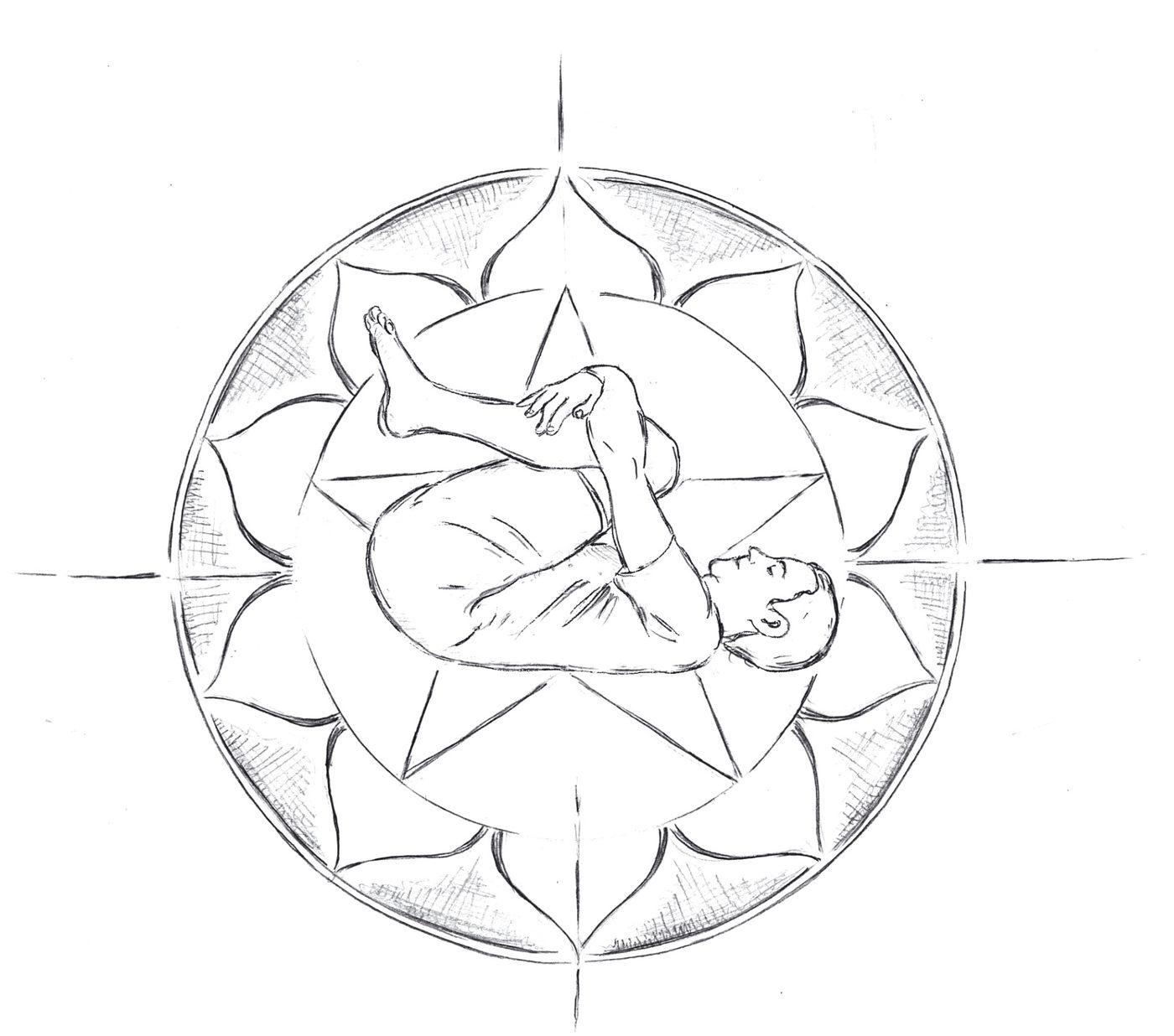
Udarapoṣaṇa āsana – the series that nourishes the center
From an energetic perspective, this series is even more interesting than its physical effects: It can strengthen willpower and that self-confidence and foster a warm feeling of grounding deeply within our inner core. The more we feel the strength of our center, the more freely we can live – free from worries and fear.
This is not a coincidence and not a metaphor. The abdominal cavity is in yoga the seat of Maṇipūra, the center of fire. Anyone who reads about the Maṇipūra chakra will find, will find there the same themes again: discipline, strength, transformation—and the storm clouds that obscure the sky, when this center loses its balance . These ten exercises are the physical approach to this.
The way the pavanamuktāsana series is presented here differs somewhat from the original method taught by Satyānanda. Here it is taught the way it is customary in our Kundalini Yoga tradition .
How to Practice This Series
Since these exercises are meant to work subtly with our energy rather than merely affecting the physical body, they should be practiced with a clear focus on breathing and rhythmic movement.
- The belly breathes along. With every inhalation it expands, with every exhalation it contracts. The movement massages the centre from within.
- The lower back stays safe. The hands stabilise the hips from the sides — with the backs of the hands from underneath. This is not a detail but the condition for the series strengthening rather than straining you.
- Begin slowly, then speed up. Almost every exercise follows this arc: start consciously and slowly, become dynamic, come back to stillness at the end.
- Breathe passionately. The more intense the breath, the more vitality can be gained. The navel is the point of reference.
- Let go in between. Pūrṇa supta pavanamuktāsana — both knees to the chest — is the resting posture you return to again and again after the strong exercises.
- Duration. About 60–90 minutes.
Pavanmuktāsana 2 – the Exercises Step by Step
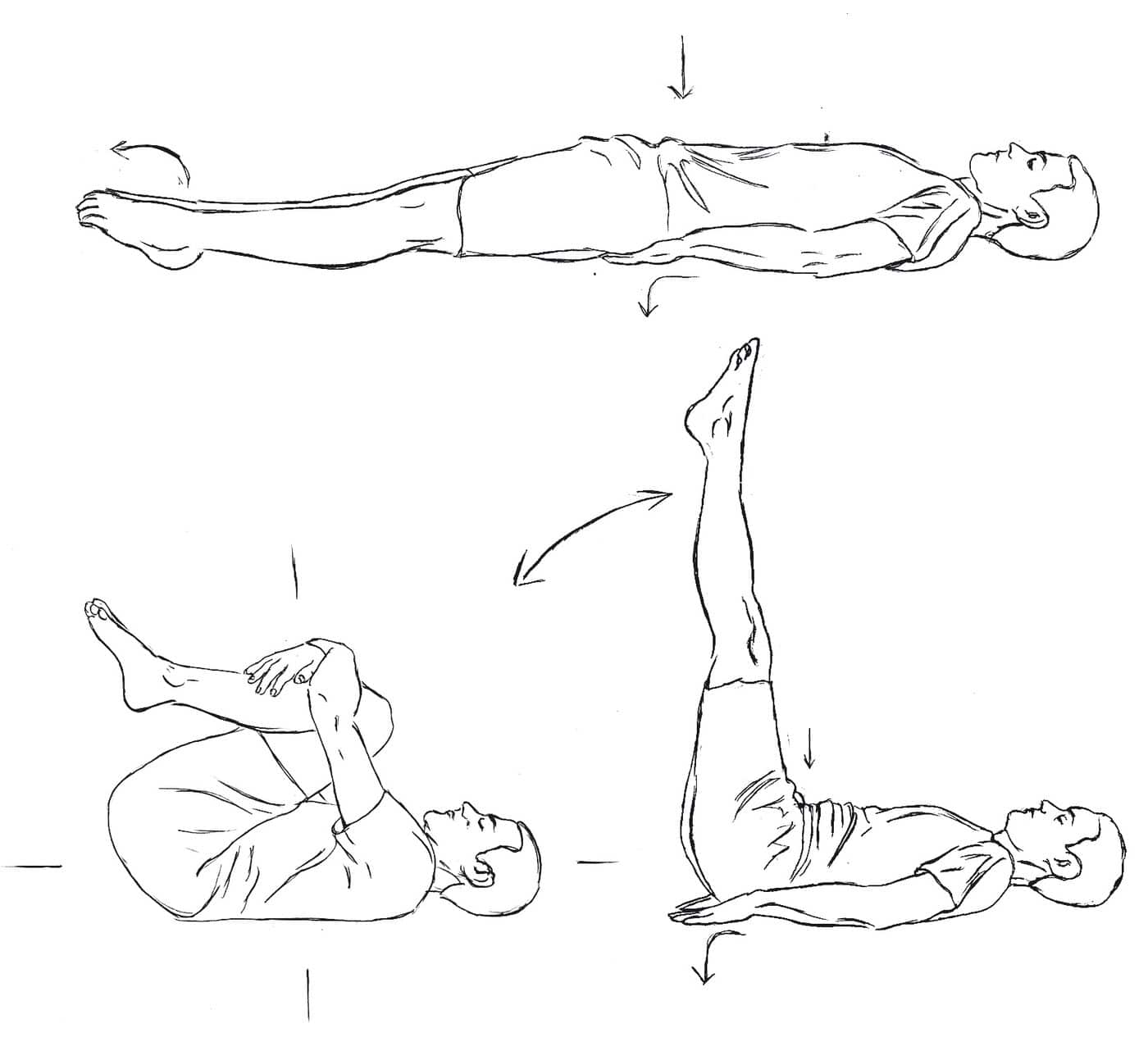
Dṛḍha Uttānpādāsana – Dynamic Leg Raising
Lie on the floor with your legs together and your arms stretched out beside your body. The palms face down onto the floor; your hands stabilise the hips from the sides.
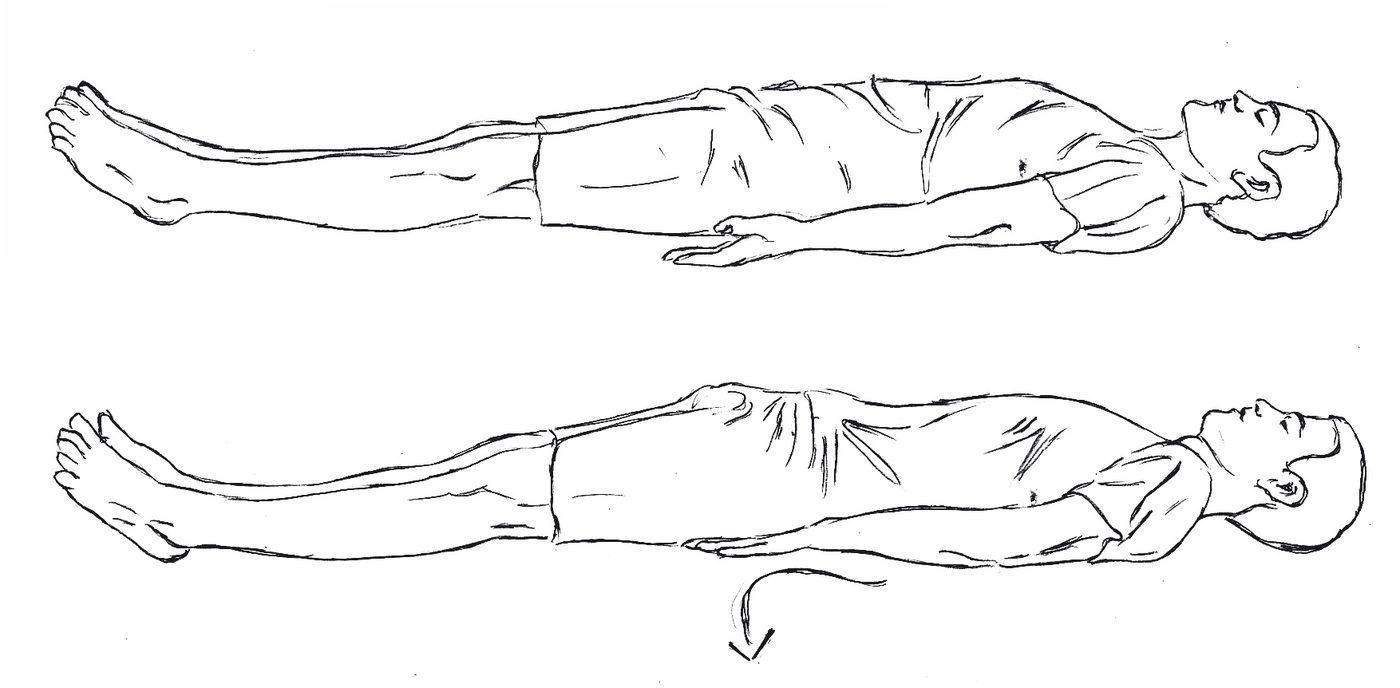
Raise the right leg as you inhale. As you exhale, lower it to the floor. Inhale and raise the left leg, exhale and lower it to the floor. Continue in this way. Make sure your toes point away from your body.
Begin slowly, then become faster and more dynamic. Stabilise your hips with the backs of your hands from underneath, and make sure your lower back stays stable and safe.
Breathe deeply and rhythmically. Your belly should expand with every inhalation and contract with every exhalation – massage the centre.
Deep, rhythmic breathing. Gradually become faster, then slow down again at the end, 1–2 minutes.
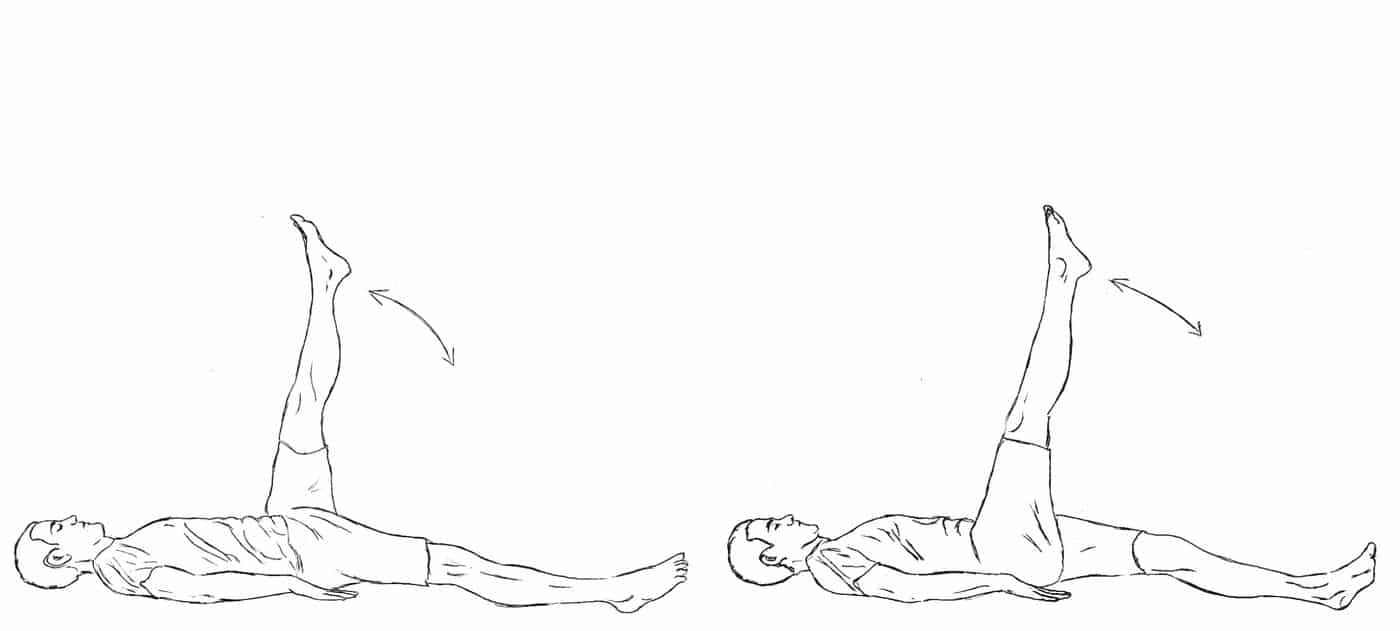
Then do the same exercise with both legs pressed together. Raise and lower them in the rhythm of one breath. Stabilise your lower back with your hands.
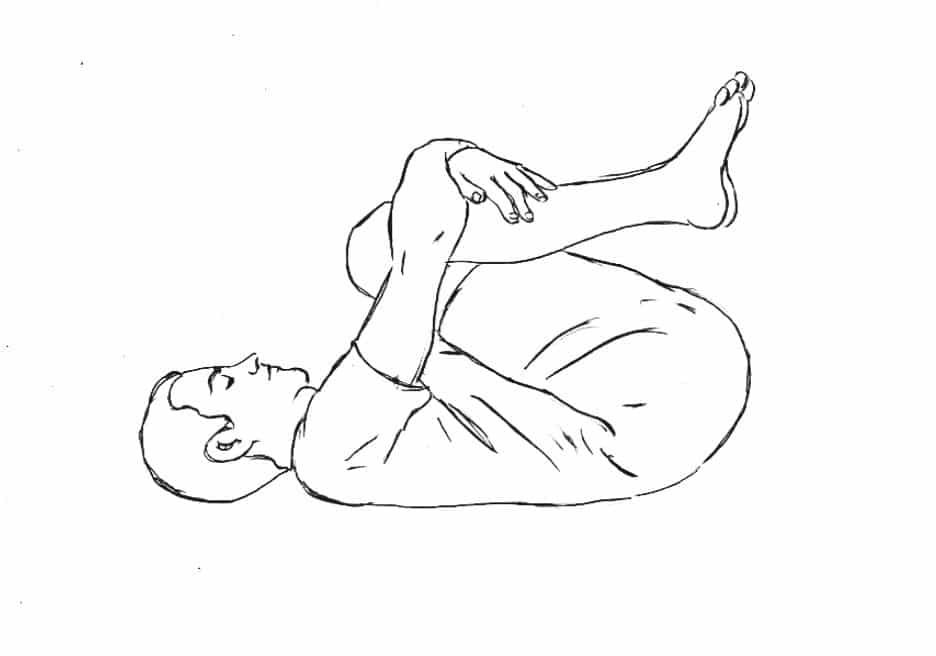
Relax by drawing your knees towards your chest. This resting posture is called pūrṇa supta pavanamuktāsana.
Cakra Pādāsana – Leg Rotation
Bring your arms back alongside your body, palms facing down, and stabilize your hips from the sides with your hands.Bring your arms back alongside your body, palms facing down, and stabilise your hips from the sides with your hands.
Raise the right leg and begin to rotate it carefully and consciously from the hip, clockwise. Move it inwards across the physical centre, then up, then out and back to the centre.
Be aware: If the foot follows the direction of the leg movement from the ankle, and the leg is guided inwards through the physical centre, you can avoid an uncomfortable clicking in the hip joint.
Make this movement consciously and with deep breathing, moving the belly out and in with the breath. Rotate one leg first, then the other.
Breathe deeply and rhythmically from the belly for 1–2 minutes on each side.
Then do the same exercise rotating both legs together, pressed against each other, while stabilising your lower back with your hands. Rotate in one direction, then the other. Relax by drawing your knees to your chest.
Rhythmic belly breathing for one minute in each direction.
Pāda sañcālanāsana – Cycling
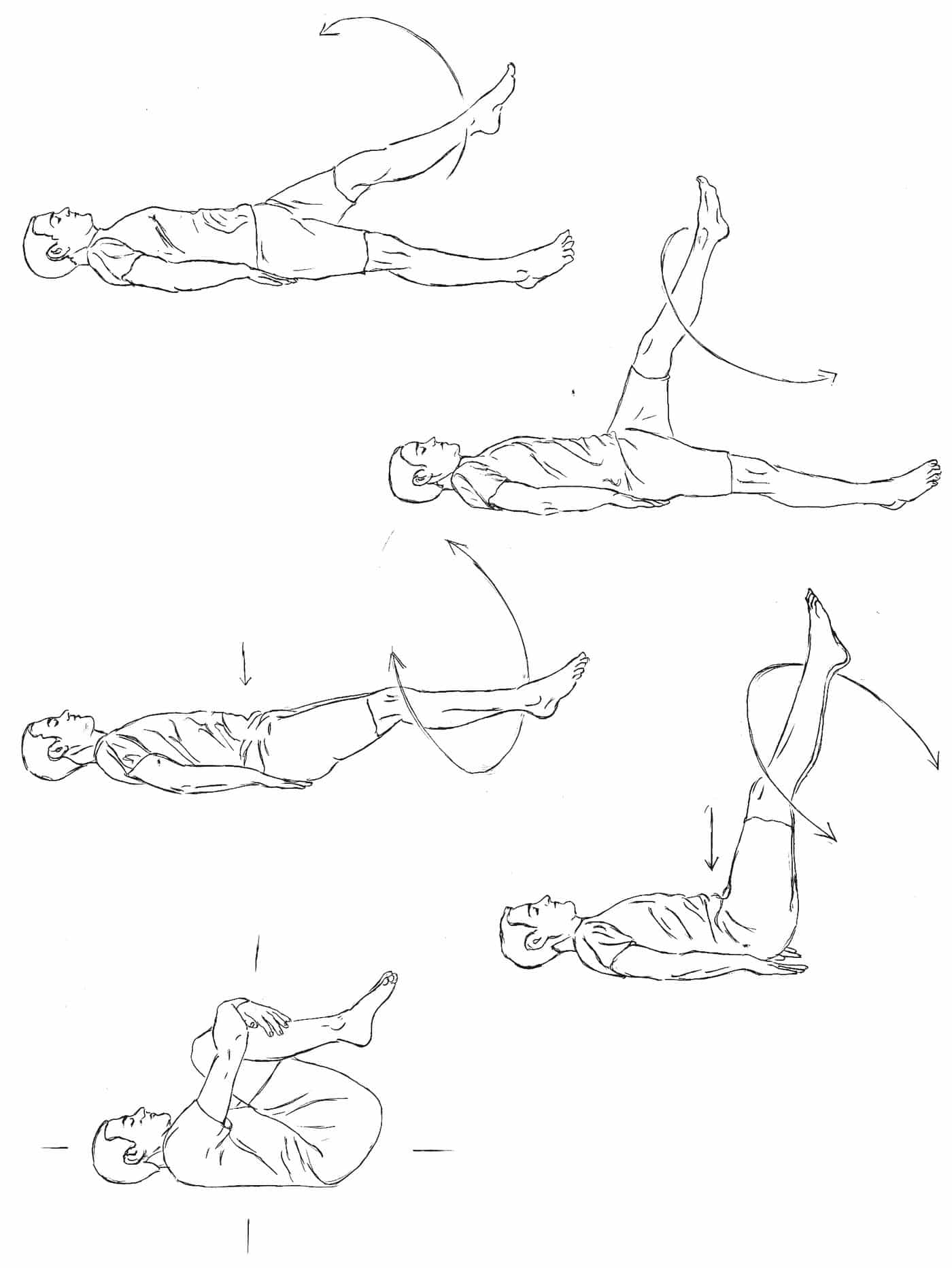
Bring your hands to your sides and stabilise your hips firmly with the backs of both hands, left and right of the hip joint. Draw both knees to your chest and take a few deep breaths in and out. Then inhale and extend the left leg so that it is parallel to the floor.
From here, begin a cycling movement with your legs. Exhale as the left knee is drawn up towards the chest, and inhale as the right knee comes towards the chest. This sequence of breath and movement supports the natural motion of the intestines.
At the end, inhale and extend the legs parallel to the floor and hold the position; exhale, bring the legs to the chest and relax. Repeat the exercise in the opposite direction. Then draw the knees to the chest and relax, in pūrṇa supta pavanamuktāsana.
Note: When the foot from the ankle articulates with the direction of the leg movement it is mobilized and the leg also moves inward through the body center. You can feel the strength of our center, the more freely we can live – free from worries and fear.Hinweis: Breathe intensely and passionately. The belly must arch in and out; concentrate on your navel. The more passionate the exercise, the more vitality can be gained.
Do this movement consciously and with deep breath. Move the belly with the breath outward and inward. Rotate first one leg, then the other.Practise this exercise rhythmically for 1–2 minutes in both directions.

Supta Pavanamuktāsana – the Sleeping Wind-Releasing Pose
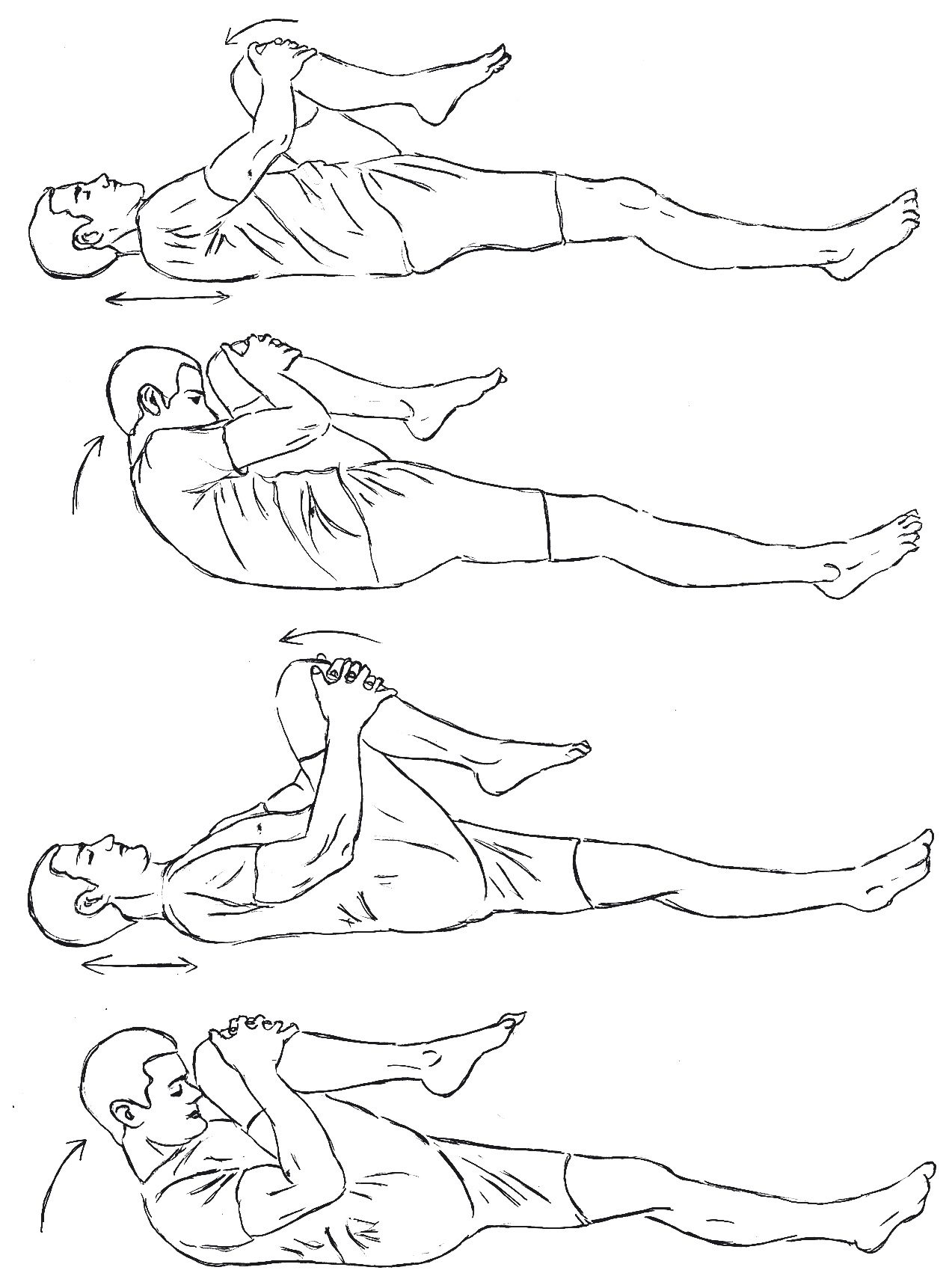
Still lying on the floor with your legs together, draw the right knee to your chest, interlace your fingers and hold the leg on the shin, just below the knee.
Inhale and lengthen your neck and torso above the floor. As you exhale, slowly bring your forehead towards the knee. Inhale and lower your body back to the floor as before. Move up and down in this way and massage your belly.
At the end, come to rest, then reverse the position and repeat the exercise with the other leg.
Move with deep, slow breathing, 1–2 minutes per side.
Then bring both legs to the chest, into pūrṇa supta pavanamuktāsana. Repeat the same exercise, pressing both legs firmly to your chest and massaging your belly. Relax by releasing your legs and stretching out on the floor, palms facing up.
Move with deep, slow breathing, 1–2 minutes.
Supta Udarākarṣaṇāsana – the Sleeping Abdominal Twist
Still lying on the floor, interlace your fingers behind your neck with your thumbs on either side of your throat. Lift your knees, inhale and open your chest, and as you exhale let your knees fall slowly to the right.
Keep your elbows in contact with the floor. Stay here for a few breaths and look inwards. Then inhale, bring your legs back to the centre and let them fall to the left as you exhale.
Twist with deep breathing and stay on each side for at least 1 minute.
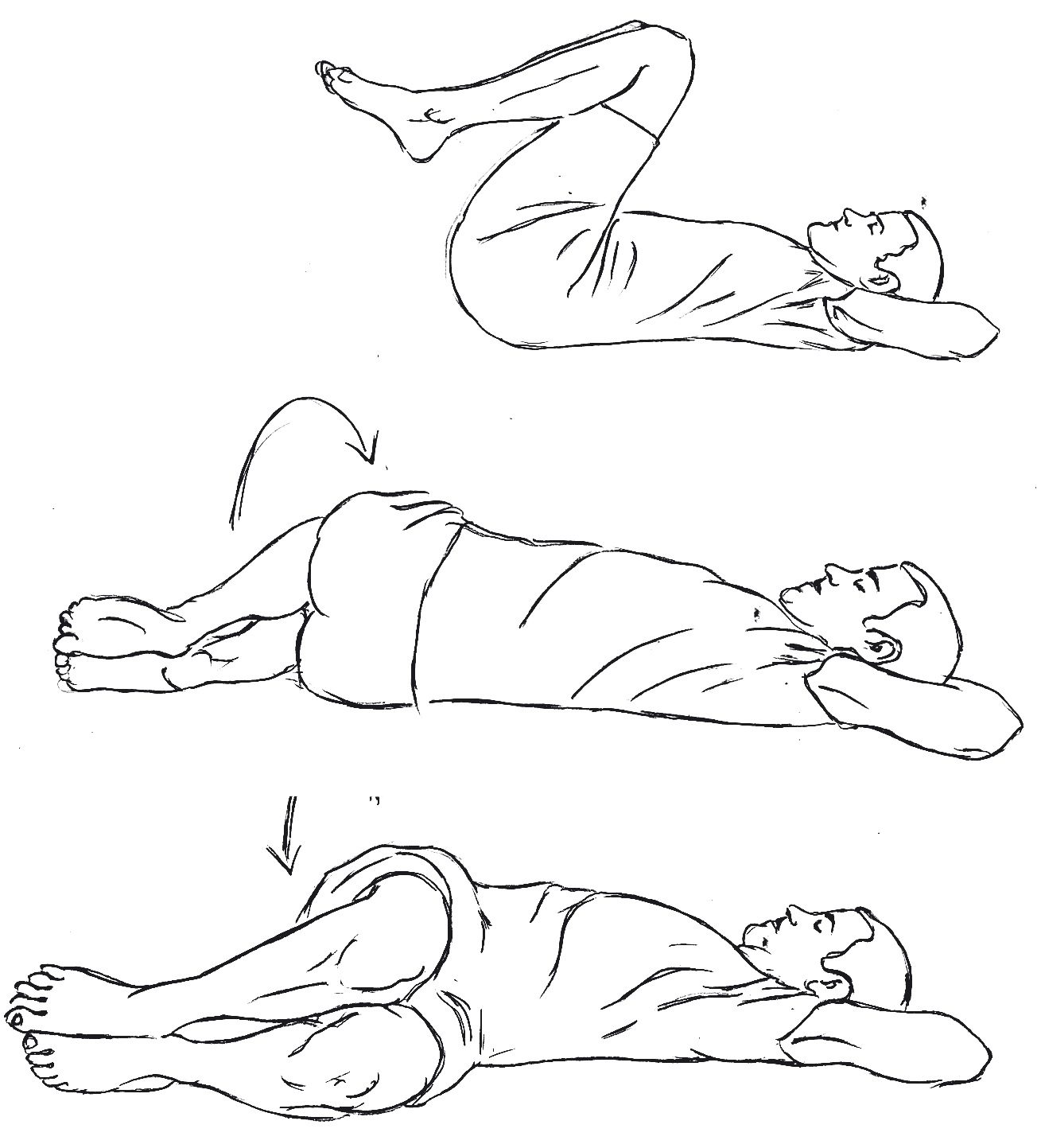
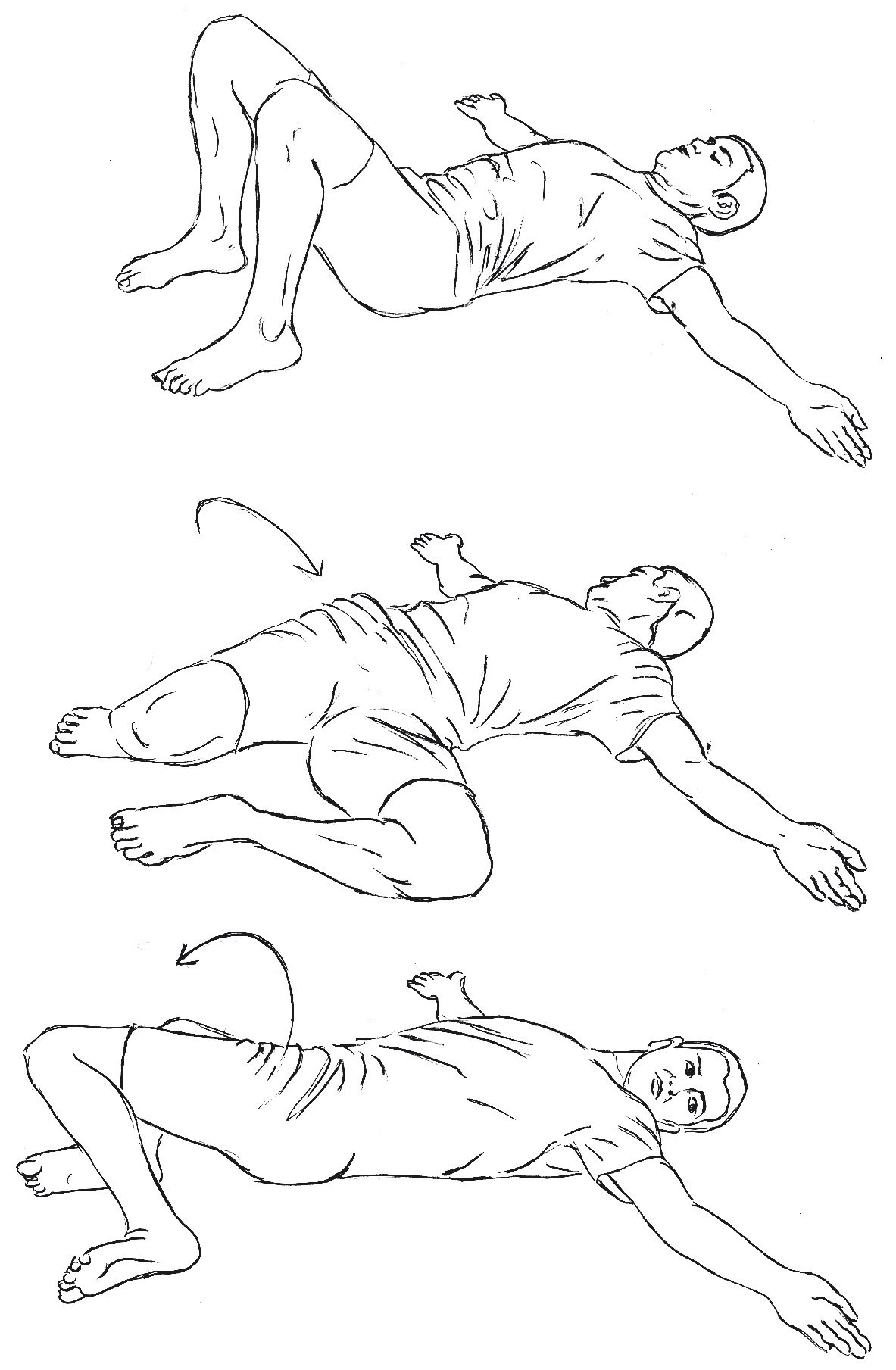
Makra vyāyāma – the Crocodile Pose
From the starting position, lie down on the floor and breathe deeply into your belly. Draw your knees up, feet on the floor close to your buttocks. The feet are about 30 to 40 cm apart. Open your arms and turn your palms upwards, arms resting extended on the floor.
Inhale and open your belly and chest. Exhale and let your legs fall to the left while you turn your head to the right and gaze into your open right palm. Inhale, bring your knees back up and turn your head to the centre. Exhale and let your knees fall to the right while you turn your head to the left and gaze into your open left palm.
Begin slowly and carefully, then become faster with breath and movement, and at the end come into śavāsana and rest for at least one minute.
Variant: To intensify the effect of this exercise, repeat it with your feet and knees closed. This variation allows the energy to move from the hips upwards into the spine and the belly. Begin with slow, conscious movements and then gradually increase the pace of breath and movement.
This exercise stimulates the spinal canal like no other. Deep rest for at least one minute is obligatory.
Move from side to side in this way with deep, rhythmic breath. 2–3 minutes.
Śavāsana – the relaxation between poses
Lie on your back, palms facing up. Let the movement echo and the warmth in your belly spread.
After the crocodile exercise this pause is not optional. What gets integrated here is exactly what the whole series is made for.

Śava udarākarṣaṇāsana – the Universal Abdominal Twist
Vom śavāsana , lift your right knee and place your right foot over your left knee onto the left thigh. Raise your left hand and take hold of your right knee. Extend your right arm out across the floor, palm facing up.
Now draw your right knee to the left with your left hand and turn your head to the right, gazing at your right palm. Breathe deeply in silence. After a while, change sides.
Breathe deeply and stay on each side for at least one minute.

Jhulanā Luḍhakanāsana – Rocking and Rolling
Hold both legs pressed to your chest. Begin to roll gently from one side to the other. Look inwards and turn this into a soft dance around your inner centre.
Then change the direction of movement and roll forwards and backwards. Roll forward onto your feet and back over your spine in a playful movement. As you come forward, try to press your body weight onto your feet without actually lifting up. This will push the energy into the navel centre.
Finally, stretch out your arms and legs and relax.
Play with deep breathing and roll for 1–2 minutes.

Uttānpādāsana – the Extended Leg Pose
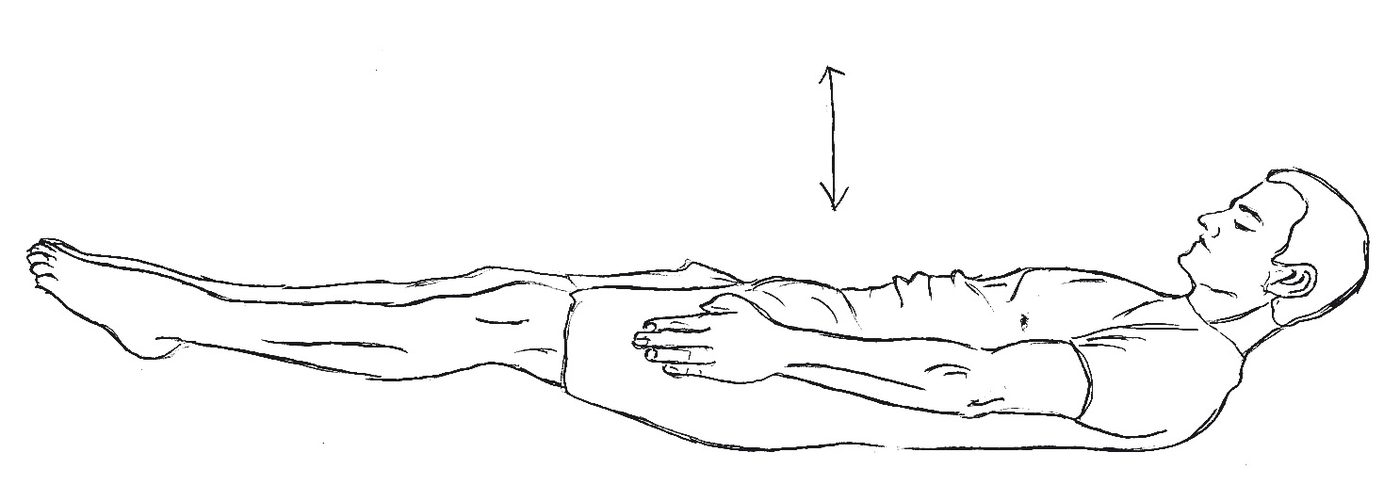
In our lineage this āsana als uttānpādāsana is called, not to be confused with naukāsana, in which the legs are raised 60 degrees above the floor.
From lying on your back, turn your palms inwards and close your fingers, then raise your arms so that your fingers point horizontally towards your toes. Lift your feet and your head just above the floor. Look at your toes with an open, alert gaze.
Breathe deeply in and out a few times, then begin with a gentle but deep kapālabhātī from your navel centre. Finally inhale, concentrate on your centre, hold the air in, then exhale and draw your belly inwards, holding the breath out for a moment here as well.
Fire is the teacher.
Deep breathing or kapālabhātī for 1–2 minutes.
Śavāsana – Corpse Pose
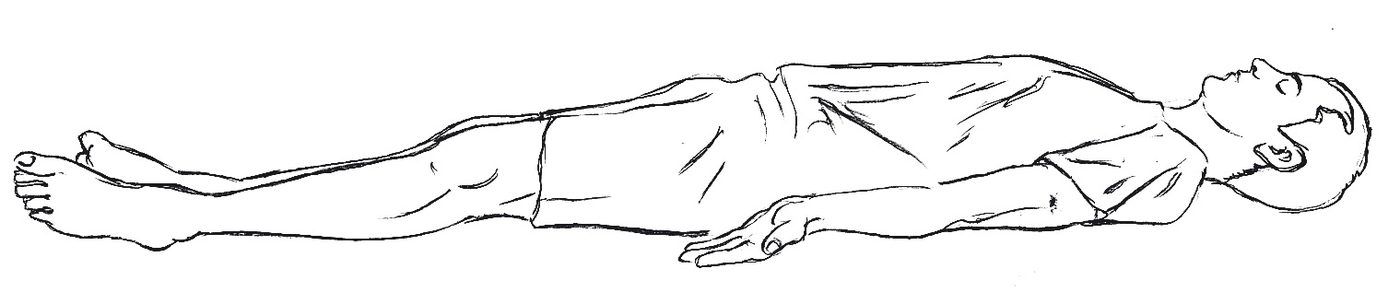
Lie on your back with your palms facing up. Centre yourself — you are loved.
You are truth, you are perfect.
The Series at a Glance
- Dṛḍha uttānpādāsana – Dynamische Beinhebehaltung
- Cakra pādāsana – Leg rotation
- Pāda sañcālanāsana – Cycling
- Supta pavanamuktāsana – Sleeping wind-releasing pose
- Supta udarākarṣaṇāsana – Sleeping abdominal twist
- Makra vyāyāma – Crocodile exercise
- Śava udarākarṣaṇāsana – Universal abdominal twist
- Jhulanā luḍhakanāsana – Rocking and rolling
- Uttānpādāsana – Extended leg pose
- Śavāsana – Corpse pose
Ten exercises, one direction: everything pulls towards the navel. If you have practised Teil 1 , you will notice the difference at once — part 1 is fine and meditative, part 2 is fire. And part 3, the Śakti Bandha series, finally sets the accumulated energy flowing and anchors it low in the pelvis.
Sūksma vyāyāma, Dhirendra Brahmacāri and Western Kundalini Yoga – Frequently Asked Questions
What is sūkṣma vyāyāma?
Sūkṣma means subtle or fine, vyāyāma means exercise. What is meant is a category of movements that address not the muscle but the energy body: small, precise, repeated, always coupled to the breath. The difference from classical āsana is the focus — not holding a shape, but moving prāṇa through a particular region.
The pavanmuktasana belongs to this family. And precisely for this reason Part 2 also works when the exercises seem mundane: the effect is not created through effort, but through rhythm, breath, and awareness.Das pavanmuktāsana belongs to this family. And that is exactly why part 2 works even when the exercises strike you as banal: the effect does not come from effort, but from rhythm, breath and attention.Who was Dhirendra Brahmacāri?
Who was Dhīrendra Brahmacārī?
Dhīrendra Brahmacārī (1924–1994), born Dhirendra Choudhary in Bihar, left his parents' home at thirteen and learned yoga from his teacher Maharshi Kartikeya in an ashram near Lucknow. He became one of the most influential and most controversial figures in twentieth-century Indian yoga.
He taught Indira Gandhi, introduced yoga as a school subject in Delhi, trained Soviet cosmonauts in the 1960s and, in the late 1970s, presented the television programme Yogabhyaas on Doordarshan. His Vishwayatan Yogashram in New Delhi lives on today as the Morarji Desai National Institute of Yoga. His books Yogic Sūkṣma Vyāyāma and Yogāsana Vijñāna were the first to set down in writing the very sequence we are dealing with here.
His later closeness to power – during the Emergency of 1975–77 he was regarded as an influential adviser to Indira Gandhi – and several criminal proceedings damaged his reputation. For the history of sūkṣma vyāyāma he nevertheless remains the key figure.
What does Dhīrendra Brahmacārī have to do with Yogi Bhajan?
More than was long known. Yogi Bhajan (1929–2004), who went to North America in 1968 and founded 3HO there, studied at Dhīrendra’s Vishwayatan Yogashram in New Delhi in the early 1960s. The director of the ashram later described him as “a frequent visitor, but not a very close student”.
The religious-studies scholar Philip Deslippe traced in his paper „From Maharaj to Mahan Tantric: The Construction of Yogi Bhajan's Kundalini Yoga“ how the defining physical features of Bhajan’s Kundalini Yoga can be found within sūkṣma vyāyāma – the rapid breathing (bhastrikā, known in the West as “Breath of Fire”), certain postures and the bandhas. Deslippe also shows that a 3HO text on “The Navel Point” was an unaccredited reworking of an earlier chapter by Dhīrendra.
The mantra and the figure of the master came from a different source: the Sikh sant Maharaj Virsa Singh, to whom Bhajan explicitly deferred during his first years in the West.
Why does Pavanmuktāsana 2 feel so much like Western Kundalini Yoga?
Because both come from the same root. Anyone who has ever lain on their back in a 3HO class, raising and lowering the legs dynamically while doing Breath of Fire and searching for the navel point, will recognise the exercises in this article at once — dṛḍha uttānpādāsana, the cycling, uttānpādāsana with kapālabhātī.
The term “navel point”, which plays a central role in Western Kundalini Yoga, has its origin precisely here. This series is therefore not merely similar — it is one of the historical building blocks of what has been taught in the West as Kundalini Yoga since the 1970s.
Does that make Pavanmuktāsana “real” Kundalini Yoga?
The question is put the wrong way round, but it is understandable. An exercise does not become Kundalini Yoga because it is called that — nor because a particular school lays claim to it. It becomes that through what you do with it inwardly.
What makes this series Kundalini Yoga is the same point as in Teil 1: the conscious handling of the breath, kumbhaka, mūlabandha and the gaze turned inwards. Without that it is abdominal training. With it, it is work on the energy along the spine. How we understand this in our lineage is set out in more detail in the article on Kriyās and Classes in Kundalini Yoga.
Why does an abdominal series affect willpower and self-confidence?
Because in yoga the abdomen was never only about digestion. Maṇipūra, the navel centre, is the fire centre: the place where the raw is turned into the usable — food as much as experience. If this fire is weak, everything becomes a burden. If it burns too hot, it scorches your own people.
The exercises here work mechanically on the gut and energetically on precisely this fire. Hence the line “Fire is the teacher” at uttānpādāsana — and hence the warm feeling of being anchored that often arises after the series. More on this in the article on the Maṇipūra Chakra and on Mūlādhāra, the centre below it.
What sets part 2 apart from part 1?
Part 1 is fine, slow, meditative — one joint after another, seated. Part 2 is dynamic, warm and physically demanding, entirely lying down. Part 1 releases blockages in the periphery; part 2 builds strength and heat in the centre.
In practice they complement each other: part 1 makes you permeable, part 2 gives the released energy a centre.
How often to practise — and when better not to?
The complete series takes 60–90 minutes. You can also practise a shortened version; more important than completeness is that the breath carries you and the lower back stays stable.
Restraint is called for with acute back problems, recent abdominal surgery, during pregnancy and in the first days of menstruation — dynamic leg raising and kapālabhātī are not the right thing then. If in doubt, speak to your doctor; this article describes yogic tradition and is not a substitute for medical advice.
Where can I learn this series with guidance?
In our weekly Kundalini Yoga classes and at the retreats in the Wachau it is a fixed part of the practice. We cover all three Pavanmuktāsana series systematically — with anatomy, didactics and background — in the RYT 200h Yoga Teacher Training and deepen them in the RYT 300h Training. Everything is also available as online and hybrid training . On our certifications and funding in Austria you will find all the details — or simply write to us via the contact form.
Even more inspiration for you
If you'd like to explore this topic further, feel free to check out our downloads section.
There you'll find a carefully curated selection of Kundalini yoga kriyas, mantras, and other wonderful ideas that I've put together for you.
And if you are curious how these exercises historically arrived where they stand today: Die Yoga and Philosophy and The Chakras tell the long story that came before.
Where we go deeper in the training
We teach this practice in detail in our RYT® 200h Yoga Teacher Training in the Wachau, Austria. Kriyas, bandhas and pranayama go further in the RYT® 300h Training.
Blog