Note: All exercises are illustrated by hand with a pen and written by Clemens Biedrawa.
The Divine Mother’s Sādhana – a Kundalini Yoga Class for Transformation
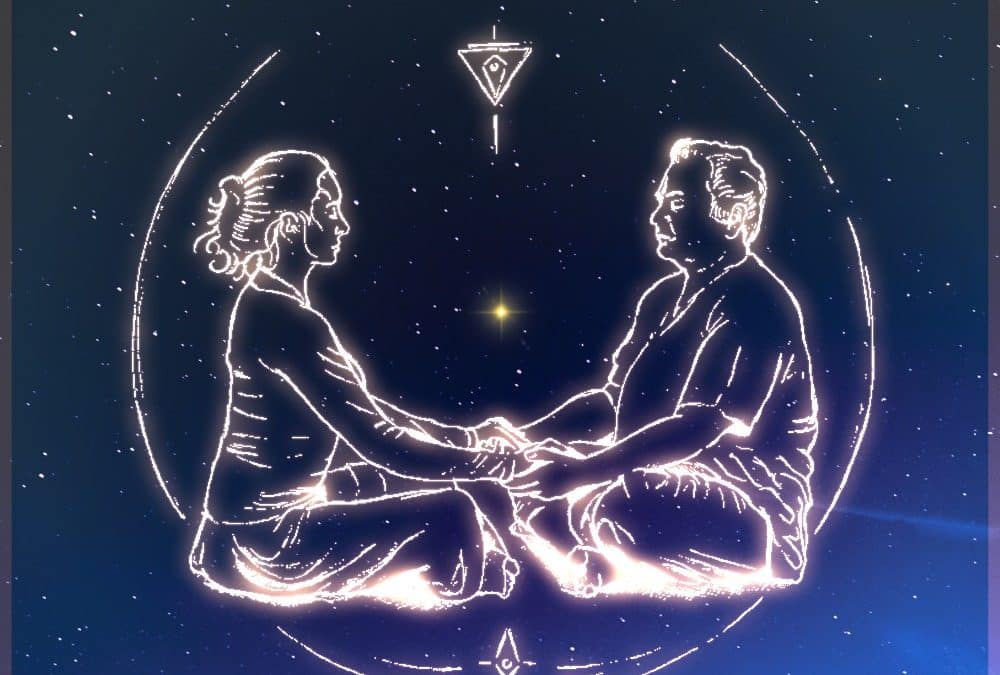
Some classes open the body. Some train the breath. And some do something else entirely: they lay a warm hand on the heart and let it widen.
The Divine Mother’s Sādhana is one of those. It is a kriyā – a practice that unblocks the universal power of action, opens the heart and heals the mind. Twelve classical postures, four forms of breath in each of them, and at the end bīja nyāsa: the placing of the seed sounds within the body.
This sādhana was given to our teacher by his first teacher, Svāmī Vidjanand, a disciple of Svāmī Satyānanda, in order to awaken the energy of the Divine Mother. It is gentle and loving, and it is meant to cover you with the warm hand of your ever expanded being.
Below you will find the complete class with all its illustrations, the background to nāḍiśodhana, kapālabhāti and bhrāmarī – and at the end a detailed guide to bīja nyāsa, the heart of our Kundalini Yoga practice.
What is the Divine Mother’s Sādhana?
Sādhana means practice – the steady means by which something is realised. Kriyā means action. A kriyā in Kundalini Yoga is a self-contained sequence that awakens a particular force, moves it through the body and finally brings it to rest in the centre. You can read more in our overview of the kriyās and classes in Kundalini Yoga.
The force awakened here has a name: the Divine Mother. In tantric language she is śakti – the power that brings everything forth, carries it and takes it back into herself. She is not distant. She is the pulse in your own belly, the warmth in your hands, the sound that remains when every thought has fallen silent.
So this class is not a practice about the Mother. It is a way of feeling her in your own body. It is a purification sādhana: it dissolves whatever blocks the free flow of action.
The structure in one sentence
Two breathing techniques to prepare, a sun salutation to warm, ten seated and kneeling postures – each with deep breathing, kapālabhāti and bhrāmarī – then bīja nyāsa and śavāsana.
Duration: about 60 to 90 minutes. Level: suitable for beginners, endlessly deepenable for experienced practitioners.
The secret: four forms in every posture
There is one instruction in this class that is easy to skim past, and it changes everything. Our teacher passes it on exactly as he received it:
I have given the minimum times of 30 seconds kapālabhāti and 3 times bhrāmarī in each posture. Know that you can expand them as much as you want. My teacher told me that if one holds each position one minute with deep breathing, one minute with kapālabhāti, one minute with bhrāmarī and one minute with the mantra Oṃ Mā from the heart, then this kriyā becomes a powerful means of awakening Kuṇḍalinī.
Four forms. Four minutes per posture. Ten postures. That is the long version, and it is worth it.
- Deep breathing – the posture is inhabited, the body opens.
- Kapālabhāti – the fire at the navel is kindled, prāṇa begins to move.
- Bhrāmarī – the sound body expands, the mind falls quiet.
- Oṃ Mā – the mantra of the Mother, sung silently within, gathers everything in the heart.
If you are short of time, take the minimums: three deep breaths, 30 seconds of kapālabhāti, three rounds of bhrāmarī. That too is a complete class.
Why this is a class in Transformational and Kundalini Yoga
Transformational Yoga does not mean you are a different person when the class ends. It means the practice takes an energy that is bound in a lower, narrower form and carries it into a wider, freer one. That is the real movement of Kundalini Yoga: not adding something, but lifting what is already there into its higher shape.
The tantric tradition describes this transformation very concretely. Every element has a bound and a released form, and each chakra carries a dhāraṇā – a gathering of awareness that holds the transition:
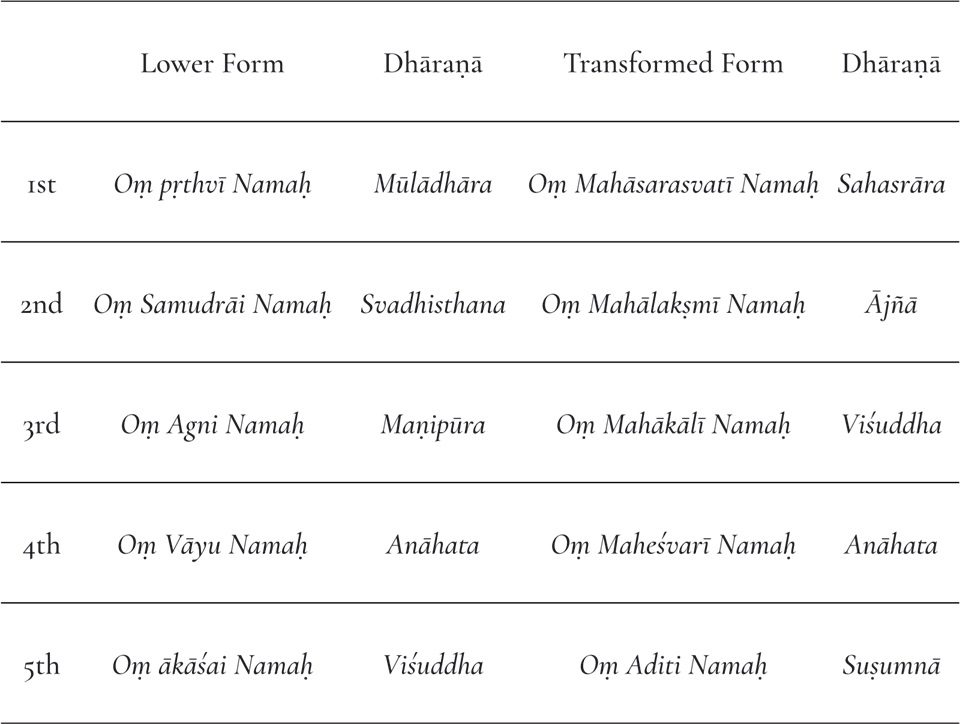
The Divine Mother’s Sādhana works exactly along this axis. Kapālabhāti awakens the fire, bhrāmarī dissolves it into sound, the mantra carries it upward, and at the end bīja nyāsa sets each element in its place. If you want to know the chakras not as a picture but as an experience, this is a very direct road.
You can go further in our YACEP Chakra Workshop and the YACEP Meditation Workshop. How Hatha and Kundalini Yoga relate to one another in our school is described separately.
The practice – step by step
Sit down before you begin. Fold your hands in front of your heart, take a few breaths and remember the teacher – the inner one as much as the outer. Then start.
1. Nāḍiśodhana – purification of the psychic network
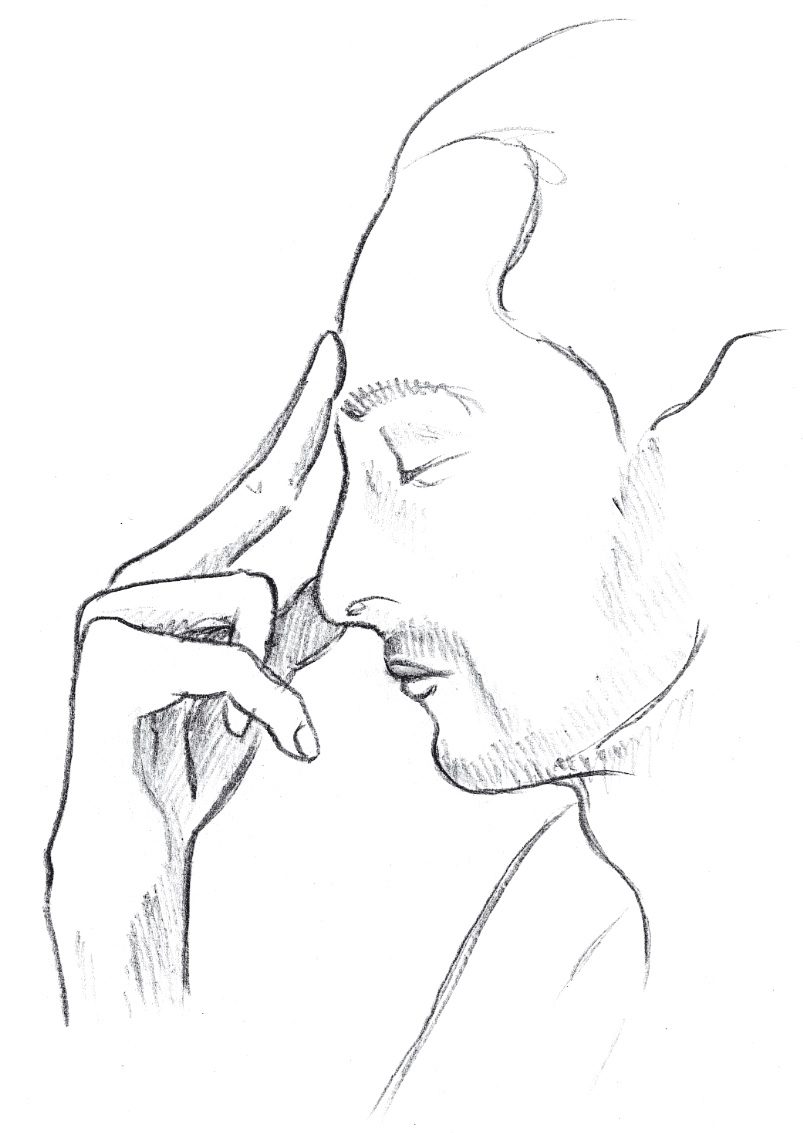
Nāḍiśodhana should be practised with full awareness, or not at all. There are many ways of creating breathing patterns, but in this context we use the simplest one to deepen the breath: keep the lengths of the in- and outbreaths equal in duration.
A mantra like Oṃ can help you count the time. The breath should be deep and strong. Pull mūlabandha whenever the breath turns and allow yourself a short kumbhaka – though no longer than two seconds. This stimulates the nāḍis and helps purification.
When you sit for your sādhana, you have nothing else to do, so do nothing else.
Practise 10–20 rounds.
2. Kapālabhāti – the breath of fire
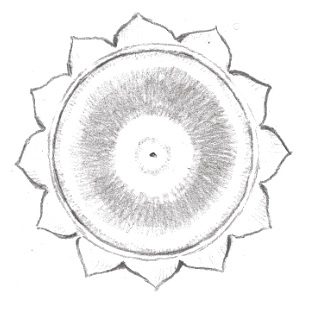
Gently pulse your navel on the exhalation and keep a steady rhythm. When you practise kapālabhāti, imagine a golden egg surrounded by subtle electric fibres. Imagine it moving up slightly when you push the air out, and down slightly when you breathe in.
When you feel the stimulation of the navel point, observe a fine stream of energy generated in the pelvis and expanding beyond the forehead. At the end, pull mūlabandha and retain the breath in the centre.
Practise for at least one minute.
3. Sūryanamaskāra – salutation to the sun
Sūryanamaskāra can be done with deep breathing, either with one breath in each position or as many as you need to find the right pace.
Purifying variation. If you are an advanced practitioner and wish to bask in the rays of the sun, practise this sun salutation with a gentle kapālabhāti pulse in the navel in every position. Let the sun’s hand only slightly touch each position, never forcefully. It is a gentle dynamic dance. Stay open.
Subtle variation. Each of the twelve positions is connected to a fundamental aspect of the sun. These aspects are mirrored in sonic form by twelve bījas.
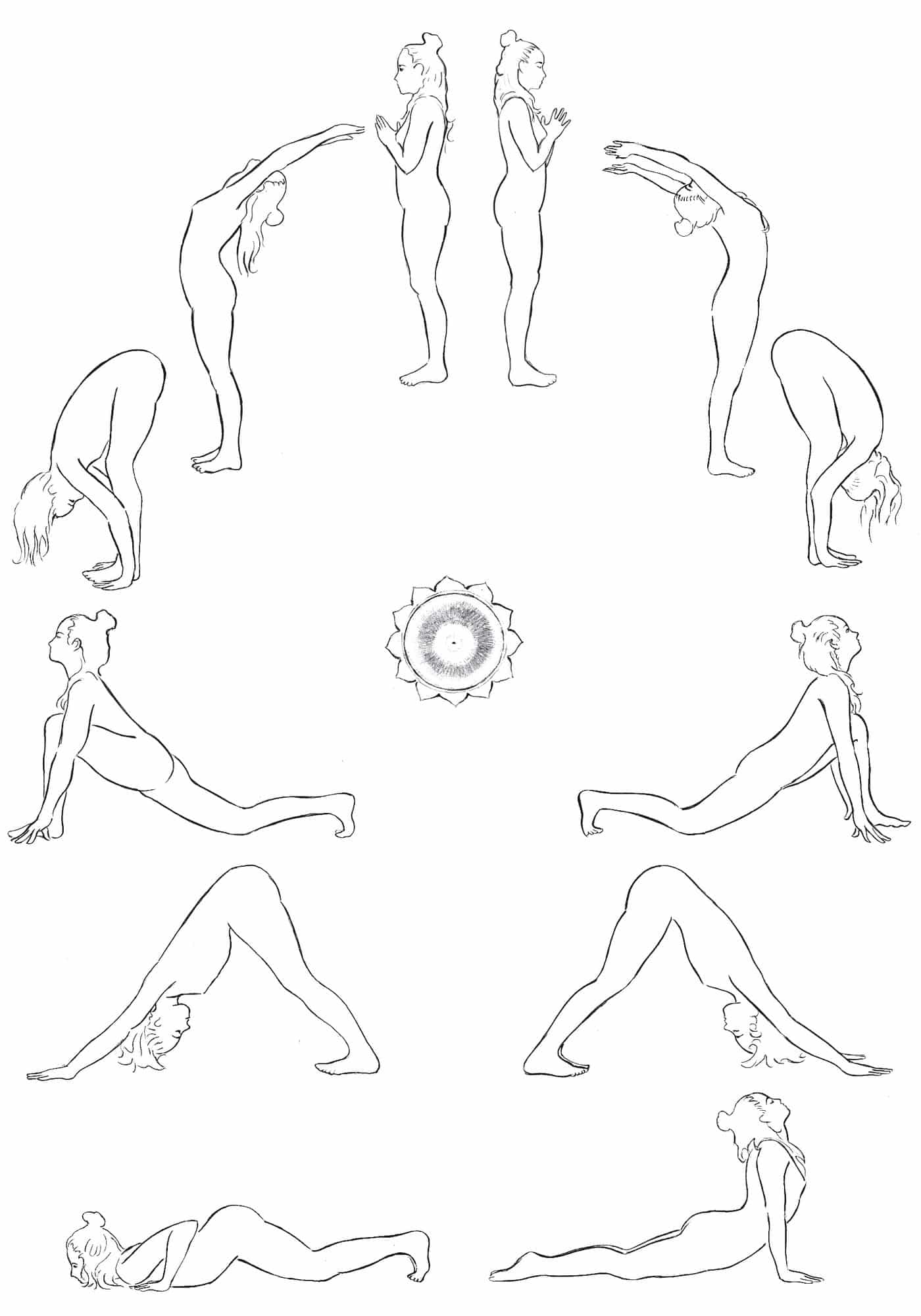
| Hrāṁ | Praṇāmāsana | Prayer pose |
| Hrīṃ | Hastottānāsana | Raised arms pose |
| Hrūṁ | Pādahastāsana | Hands-to-feet pose |
| Hraiṁ | Aśva Sañcalanāsana | Horse-riding pose |
| Hrauṃ | Parvatāsana | Mountain pose |
| Hraḥ | Aṣṭāṅga Namaskāra | Eight-point salutation |
| Hrāṁ | Bhujaṅgāsana | Cobra pose |
| Hrīṃ | Parvatāsana | Mountain pose |
| Hrūṁ | Aśva Sañcalanāsana | Horse-riding pose |
| Hraiṁ | Pādahastāsana | Hands-to-feet pose |
| Hrauṃ | Hastottānāsana | Raised arms pose |
| Hraḥ | Praṇāmāsana | Prayer pose |
Practise 12–36 rounds.
4. Jānuśirāsana – head to knee pose

Practise three times with deep breathing. Stretch. Then at least 30 seconds of kapālabhāti and three rounds of bhrāmarī, on each side.
Remember that bhrāmarī is the expansion of your inner sound body. It resembles the sound of a swarm of love mad bees. It is the sound of pleasure; it silences the mind, expands you, relaxes you, guides you home. Fully surrender to it.
5. Titali Āsana – the butterfly pose

Practise three times with deep breathing. Stretch. At least 30 seconds of kapālabhāti and three rounds of bhrāmarī.
The butterfly opens the hips and the pelvic floor – the seat of mūlādhāra. Give it time and the breath will change by itself. More about this centre in our article on the Mūlādhāra Chakra.
6. Paścimottānāsana – the back stretch pose

Practise three times with deep breathing. Stretch. At least 30 seconds of kapālabhāti and three rounds of bhrāmarī.
7. Pāda Prasara Paścimottānāsana – open legs back stretch
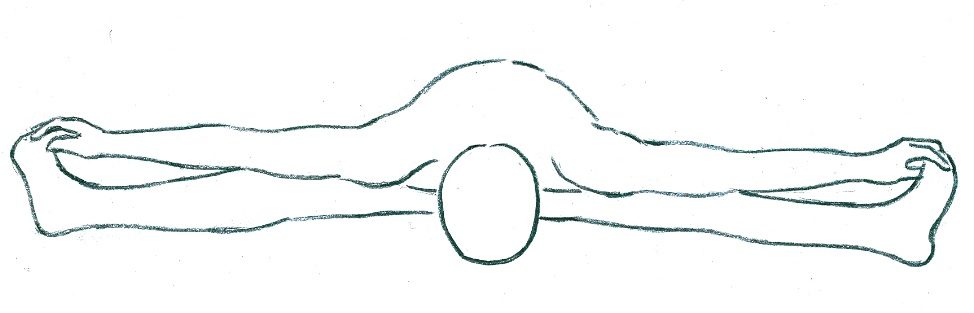
Practise three times with deep breathing. Stretch. At least 30 seconds of kapālabhāti and three rounds of bhrāmarī, on each side.
The same force is at work here that carries the third Pavanmuktāsana series – apāna, the descending, releasing movement. You will meet it in Pavanmuktāsana 2 – the Abdominal Series.
8. Mārjārīāsana – the cat pose
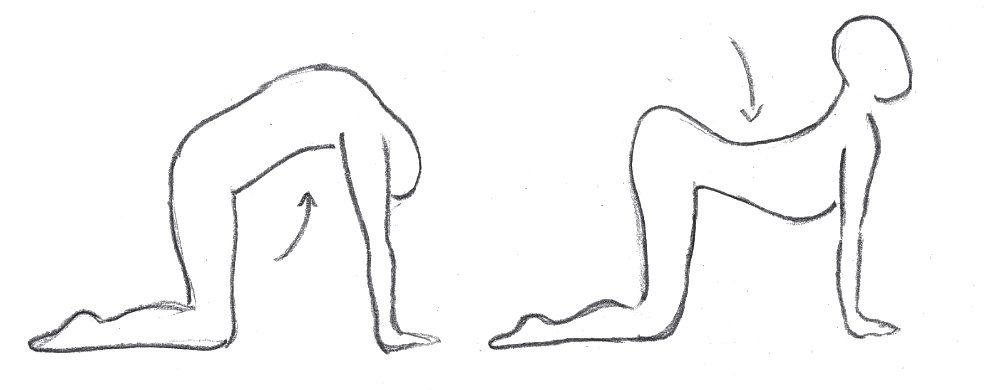
First move in a dynamic cat–cow posture for about a minute. Inhalation – up, exhalation – down.
Then look up in the cat and start 30 seconds of kapālabhāti. After this go into cow and practise three rounds of bhrāmarī.
9. Parvatāsana – the mountain pose
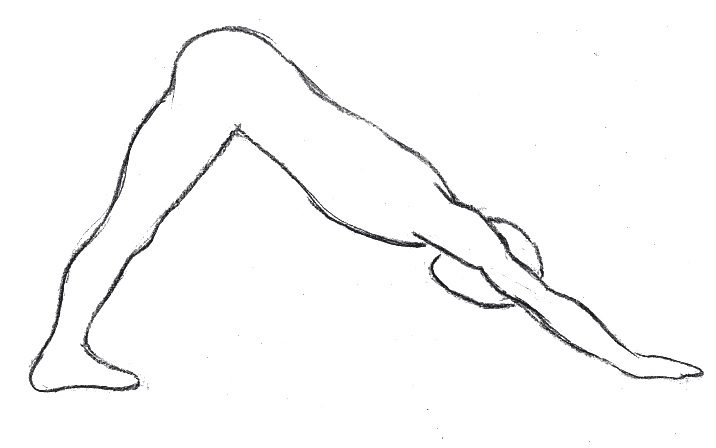
Move gently into parvatāsana and practise three times with deep breathing. At least 30 seconds of kapālabhāti and three rounds of bhrāmarī.
10. Vajrāsana – the thunderbolt pose
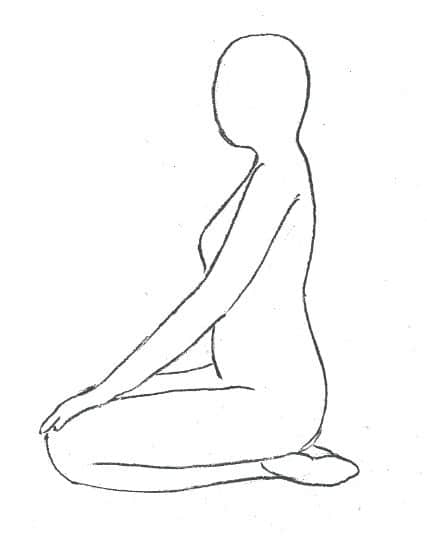
Sit and relax in vajrāsana. Open your chest. Stretch your arms. Practise three times with deep breathing. Pull mūlabandha. At least 30 seconds of kapālabhāti and three rounds of bhrāmarī.
11. Uṣṭrāsana – the camel pose
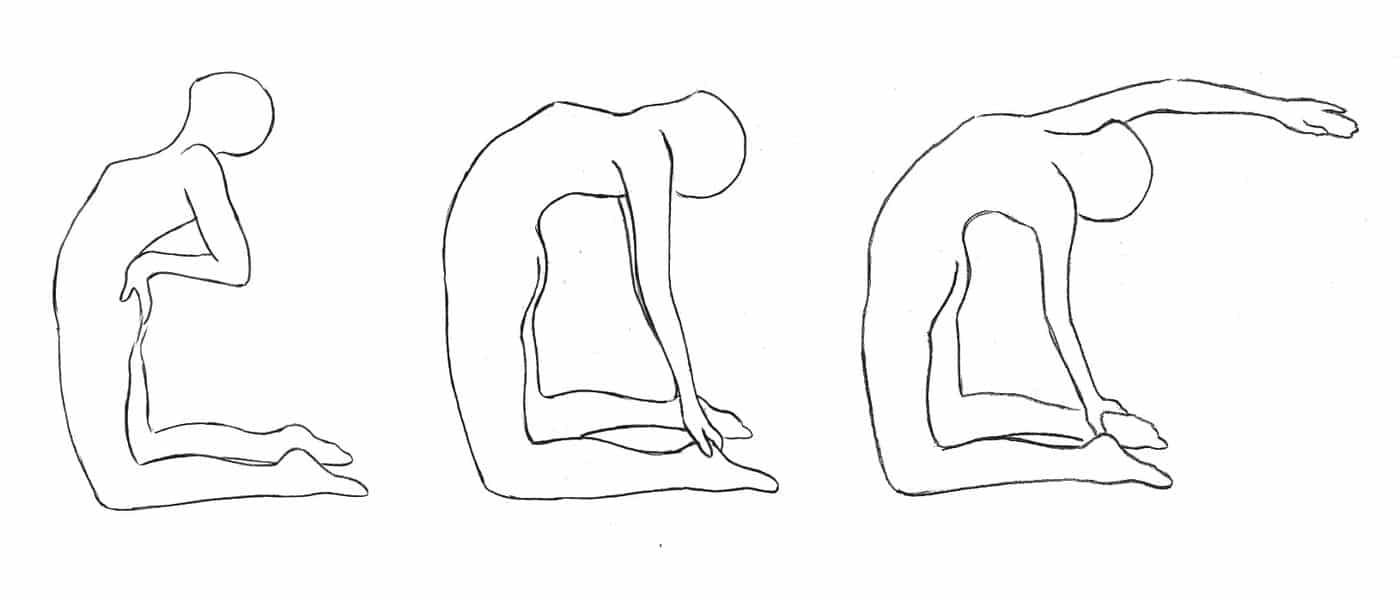
Move into uṣṭrāsana or ardha uṣṭrāsana. Practise three times with deep breathing and about 30 seconds of kapālabhāti.
The backbend opens anāhata, the heart centre. That is exactly where the sound we search for in bhrāmarī lives – see Anāhata Chakra.
12. Śaśankāsana – the rabbit pose
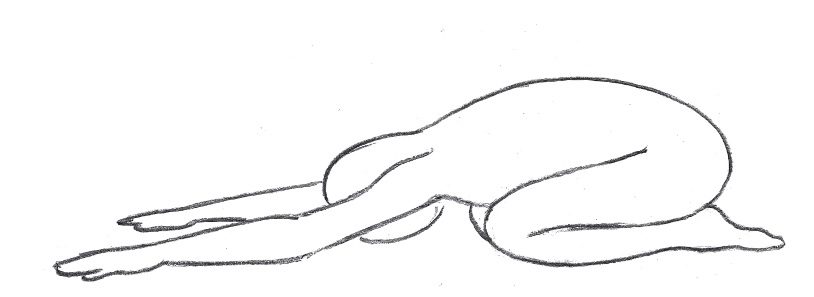
From vajrāsana, open your knees, stretch up and move down into śaśankāsana. Surrender yourself. Stretch your arms out. Take three deep breaths, at least 30 seconds of kapālabhāti and three rounds of bhrāmarī.
And then, in that surrender, silently chant the mantra of the Divine Mother:
Oṃ Mā
Two syllables. Nothing more is needed. Oṃ is the whole, Mā is the Mother who carries it. Stay here as long as it is good.
13. Bīja Nyāsa – placing the seed sounds

Sit in meditation posture with your hands outstretched and fixed. Perform mūlabandha at the beginning of each sound. Finally perform namaskāra mudrā and breathe deeply.
The full instruction for bīja nyāsa follows further below – it is the practice with which every one of our classes closes.
14. Śavāsana

Lie on your back with your palms facing upwards. Contemplate the following:
I am you. You are me. We are one.
The class at a glance
| Nāḍiśodhana | Psychic network purification |
| Kapālabhāti | Shining skull, breath of fire |
| Sūryanamaskāra | Salutation to the sun |
| Jānuśirāsana | Head to knee pose |
| Titali Āsana | Butterfly pose |
| Paścimottānāsana | Back stretch pose |
| Pāda Prasara Paścimottānāsana | Open legs back stretch pose |
| Mārjārīāsana | Cat pose |
| Parvatāsana | Mountain pose |
| Vajrāsana | Thunderbolt pose |
| Uṣṭrāsana | Camel pose |
| Śaśankāsana | Rabbit pose |
| Bīja Nyāsa | Placing the seed sounds |
| Śavāsana | Final relaxation |
The complete script of this class is available as a PDF: download The Mother’s Sādhana. You will find it in our downloads section, together with the sound recordings for bīja nyāsa and further material from the teacher training manual.
The breathing techniques in detail
Bhrāmarī Prāṇāyāma – the humming bee breath
Bhrāmarī is a breathing technique that brings deep joy and serenity to those who practise it. It can be likened to a wedding with one’s inner self. That self vibrates in this sweet and honey-like sound, a sound that is like an eternal rushing river, without beginning or end.
When practising bhrāmarī, imagine yourself as a being made of this one sound. However, the sound you are reaching for cannot be heard with your ears. It is an inner, delicate sound that you must search for in the subtle dimension within. When you hum, listen for the more subtle sound, which shines from the joy of your ever expanded being.
The primal sound known as nāda, from which the universe is emitted, is found in the central channel called suṣumnā, or sarasvatī nāḍī. According to the yogis, sarasvatī nāḍī carries sound within her very essence. The heart lies at the core of the suṣumnā channel, and it is here that nāda resides as śabda-brahman – the eternal vibration of the divine in the form of sound.
When one listens to the unstruck sound in the heart (anāhata), that is uninterrupted just like a rushing river without beginning or end, this one will become one with that sound that is God, and enter the highest state.
Vijñāna-bhairava-tantra 38
According to the Kubjikāmata-tantra, śabda-brahman represents the individual soul, which can experience its divine essence by immersing itself in the primal sound from which it originated. In this way, practising bhrāmarī is a prayer offered to your own soul.
Inhale rapidly, producing the sound of a male bee. Then exhale with the sound of a female bee. This is followed by kumbhaka. The great yogis, by constantly practising this, experience indescribable happiness in their hearts. This is bhrāmarī.
Haṭha-Yoga-Pradīpikā 2.67
Kapālabhāti – the shining skull
Kapālabhāti is a ṣaṭkarma – one of the six purification exercises – as well as a prāṇāyāma. It moves the prāṇas and purifies them when they mix with the fire at the navel.
Kapālabhāti is performed from the kanda, the navel point. Kanda is commonly misunderstood as the Maṇipūra Chakra. In some yogic schools all the nāḍis originate from there. It has the form of a golden egg, is situated underneath the navel, and is the centre of bodily pranic force. From there the prāṇas expand upwards; the great sun makes them rise.
Sit straight, open up your face, and feel the sun rise on your forehead. Pull mūlabandha very gently. Push the air out and move your navel inwards. When the breath relaxes, you will inhale naturally rather than actively. Feel the pulse massaging your lower belly; the rest of the body stays relaxed and the face open.
The pace can be accelerated until a comfortable rhythm is reached. Imagine a stream of golden light rising from your navel to the sky. Practise gently, but quickly – and without any effort at all.
Inhale and exhale like the bellows of a blacksmith. This is kapālabhāti and it removes all ailments due to kapha.
Haṭha-Yoga-Pradīpikā 2.35
Why these two techniques belong together
Kapālabhāti awakens and moves prāṇa. Bhrāmarī gathers it and dissolves it into sound. Without the first the class stays cool; without the second the energy stays scattered. The five vāyus – the winds into which prāṇa divides within the body – show what is at stake:

The class moves right through this series: kapālabhāti awakens prāṇa and apāna, the postures bring them together, bhrāmarī establishes samāna – the central, one-pointed silence – and bīja nyāsa opens udāna and vyāna, the ascending and the all-pervading force.
Bīja Nyāsa – the placing of the seed sounds
You are invited to practise bīja nyāsa at the end of every class. Bīja nyāsa is a practice of ancient Tantra in which a seed sound (bīja) is placed within the body. Bīja nyāsa purifies consciousness, expands it and awakens Kuṇḍalinī.
Nyāsa literally means placing, setting down, entrusting. In tantric ritual it is the act by which a deity, a mantra or an element is set into a particular place in the body. The body is not being decorated here – it is being built. What you place, you become.
One of the secrets of Kundalini Yoga is that Kuṇḍalinī is sound in her very essence. She is the word that stands at the beginning of creation, and this word is sound, and this sound is her body – your inner body. Bīja nyāsa is the awakening of the sound body of Kuṇḍalinī.
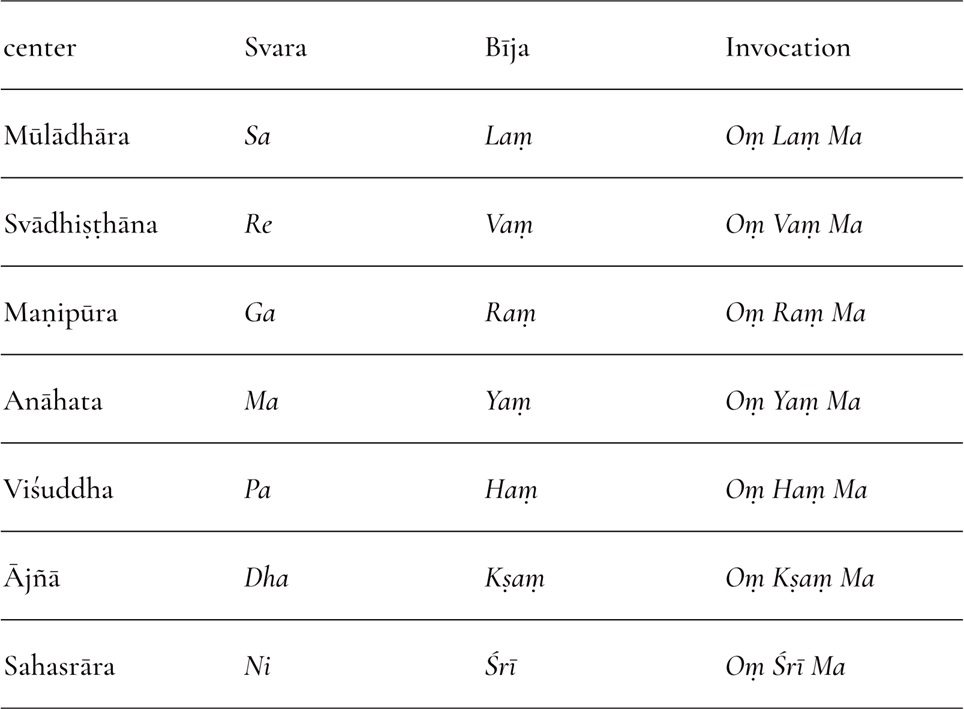
The table of seed sounds
| Centre | Svara | Bīja | Invocation |
|---|---|---|---|
| Mūlādhāra | Sa | Laṃ | Oṃ Laṃ Ma |
| Svādhiṣṭhāna | Re | Vaṃ | Oṃ Vaṃ Ma |
| Maṇipūra | Ga | Raṃ | Oṃ Raṃ Ma |
| Anāhata | Ma | Yaṃ | Oṃ Yaṃ Ma |
| Viśuddha | Pa | Haṃ | Oṃ Haṃ Ma |
| Ājñā | Dha | Kṣaṃ | Oṃ Kṣaṃ Ma |
| Sahasrāra | Ni | Śrī | Oṃ Śrī Ma |
Three columns, three levels. Svara are the seven notes of the Indian scale – the musical body. Bīja are the seed sounds of the elements – the elemental body. The invocation relates both to the Mother: Oṃ … Ma.
The practice in three steps
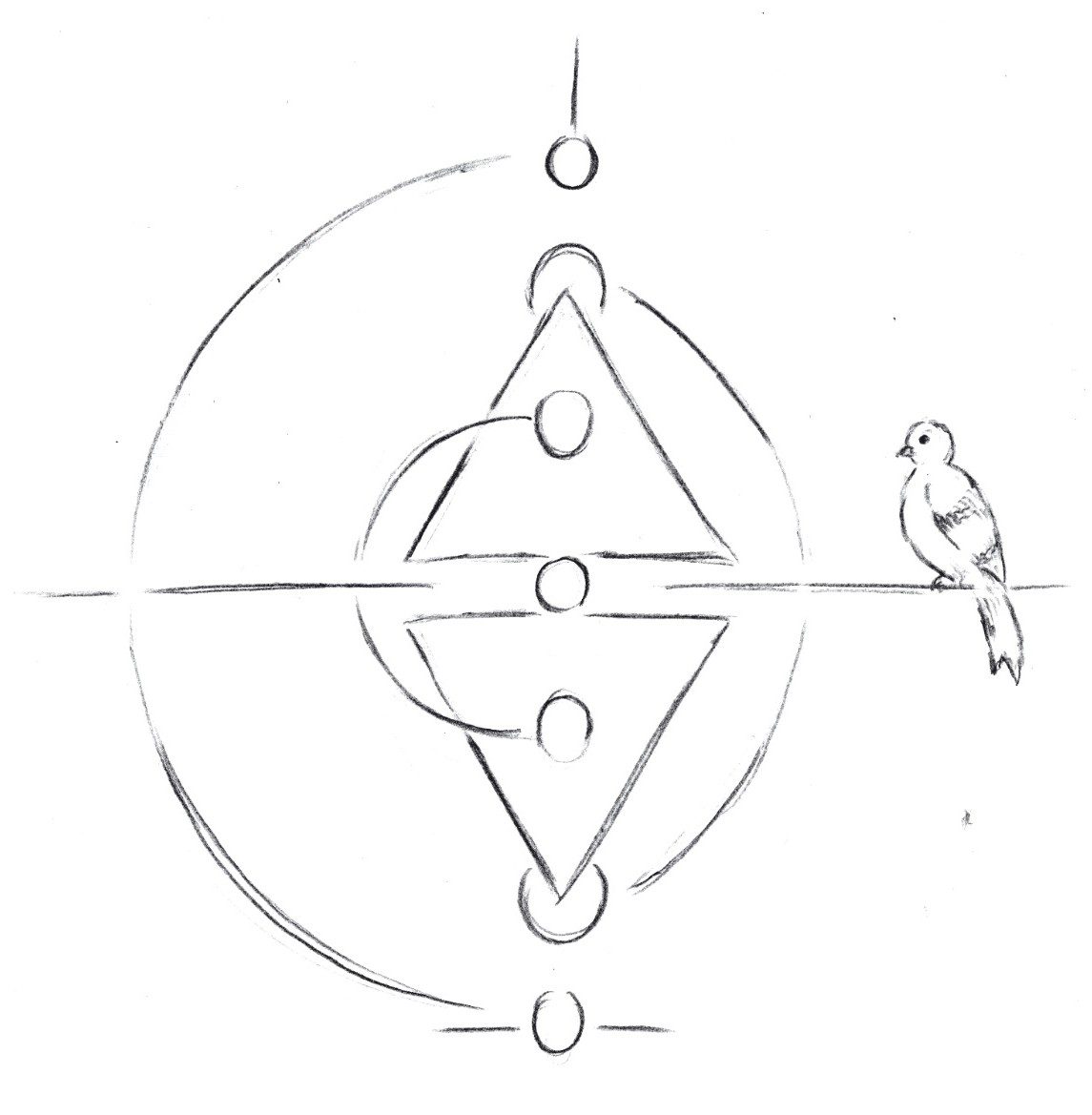
There are several variations of bīja nyāsa, each drawing out a particular aspect of the inner energy of all things. In this bīja nyāsa we position the seed sounds of the five elements within the revered suṣumnā, the central axis of the body, and allow their vibrations to expand.
Assume a meditative posture, comfortable but upright, arms outstretched, and rest in your centre. First fold your hands in front of your heart, feel your centre, softly sing Oṃ, and let this Oṃ travel through your body from the base to the cosmos. This Oṃ represents the teacher, guide, mother, father and soul.
Perform mūlabandha at the beginning of each sound, and let it rise in this way from the base.
- The seven notes. Place the seven notes in each chakra from the base upwards – Sa, Re, Ga, Ma, Pa, Dha, Ni. Simply make yourself vibrate with sound and look inwards.
- The bījas of the elements. Then successively place the bījas of the five elements in one chakra after the other, from below upwards – Laṃ, Vaṃ, Raṃ, Yaṃ, Haṃ. Give the sound space.
- The invocation. The last step invokes the elements through a mantra. Chant Oṃ at mūlādhāra and pull the perineum, then let the bīja ascend through the body and expand above in Ma – the supreme Mother.
Finally, namaskāra mudrā and a few deep breaths.
How to find the right sound
To form the correct sound it is advisable to look for a qualified teacher, or simply to ask us for help. On our website there is a section in the downloads area where we form the sounds – to listen to and sing along with.
One note from practice: the sound does not have to be beautiful. It has to be carried. A quiet tone that truly comes from the pelvis does more than a loud one that stays in the throat.
If you would like to go deeper into the sound dimension of Tantra, look at our Trika Tantra courses with Mark Dyczkowski.
Remember the teacher
All kriyās should be practised with the teacher. Nothing can be achieved in the teacher’s absence. The teacher is both the means and the goal. Every action begins with, is pervaded by, and finally rests in the teacher.
This teacher is your heart. The one teacher, manonmanī, the place beyond mind.
Before you even chant the mantra, take a few breaths with your hands folded in front of your heart. Sink into the cavity of your innermost being. Repose at the bottom of your heart. Silently remember the teacher – the flame, beautifully burning without smoke. An eternal light in the dark, illuminating the path.
The invocation mantra of the Divine Mother
Oṃ Ānandamayī – Oṃ, She, the Delight
Chaitanyamayī – She, the Consciousness
Satyāmayī – She, the Truth
Pāramī – She, the Supreme
All things beseech her. That her feet may heal the aching throb of life and break the seal upon the human soul, may she kindle the fire in the closed heart of all things!
Śrī Aurobindo, Savitri
One must develop love for God. Because if there is no love for God, yoga will not be effective.
Swami Lakshman Joo
Frequently asked questions about the Divine Mother’s Sādhana
Who was Svāmī Vidjanand?
Svāmī Vidjanand was a disciple of Svāmī Satyānanda Sarasvatī, the founder of the Bihar School of Yoga. From him our teacher learned the gentle and loving Kundalini Yoga that is still the foundation of our classes – and from him this sādhana comes. It is therefore a directly transmitted practice from the Satyānanda lineage, not a sequence assembled from books. The other teachers we count as ours are listed on Who we are.
Is this Kundalini Yoga or Hatha Yoga?
Both – and that is not an evasion. The postures are classical āsanas of Haṭha Yoga. What makes them Kundalini Yoga is the intention and the layering: breath, sound, mantra and bandha work together in the same posture to awaken and direct a force. We describe the relationship between the two paths in detail in Hatha and Kundalini Yoga.
Who is the Divine Mother in yoga?
She is śakti – creative power itself, not a person and not a belief. In the tantric view, everything that moves, breathes and perceives is her movement. The mantra Oṃ Mā is not a request addressed to a figure outside you; it is the recognition of what is carrying you right now. You do not have to believe anything to practise it. You only have to listen.
What exactly does bīja nyāsa mean?
Bīja means seed, nyāsa means placing. Together: the placing of a seed sound within the body. It is one of the oldest tantric techniques there is and appears in almost every school of Śaivism and Śāktism. In Kundalini Yoga it has a special role, because Kuṇḍalinī herself is understood as sound: whoever places the sound awakens her body.
Do I need any experience for this class?
No. The postures are simple and can be practised in any variation. What takes practice is kapālabhāti – and for that it is enough to start slowly. If you feel unsure, come to one of our yoga classes in the Wachau; we will show you the technique in peace.
How often should I practise the sādhana?
A sādhana lives on repetition, not on intensity. Once a week in full length, or every morning in the short version – both carry. More important than the duration is that you begin at the same hour.
Are there any contraindications?
Kapālabhāti is not indicated during pregnancy, with untreated high blood pressure, acute cardiovascular conditions, epilepsy, or shortly after abdominal or eye surgery. In those cases practise the postures with deep breathing and bhrāmarī – that is a complete practice in itself. When in doubt, ask your doctor and talk to us.
Can I teach this class?
Yes, and we are glad if you do. The script is freely available in the downloads area. If you want to teach the class together with its background, our RYT 200h teacher training is the right place – this sādhana is part of the manual there. For already certified teachers there is the RYT 300h training.
Finally
This kriyā is gentle. It asks nothing of you that you cannot already do. And still it has the power to open something that has felt closed for a long time – because it works at a place you cannot reach by effort: sound.
If you would like to practise it with us, you will find the dates under yoga classes in the Wachau. If you want to stay longer, come to our retreats in the Wachau valley or to one of our yoga teacher trainings, which are also available as online and hybrid formats. For any question, simply write to us through the contact page.
And here are the other foundational series of our classes:
Oṃ Mā.
Where we go deeper in the training
We teach this practice in detail in our RYT® 200h Yoga Teacher Training in the Wachau, Austria. Kriyas, bandhas and pranayama go further in the RYT® 300h Training.
Blog