Matsya Yoga meets the soul and goes Wachau

Matsya Yoga meets the soul and goes Wachau

Matsya Yoga comes to the Danube in the Wachau region

Dear Matsya community,

We have some great news to share with you!

After years of searching, we have finally found the perfect place in Austria for our yoga trainings, our classes and our journey to the soul. I am delighted to announce that our new center is located in the heart of one of Austria’s most beautiful regions – the Wachau, about an hour from Vienna.

More specifically, our new location is just a short walk through the alluvial forest from the banks of the Danube, opposite Dürnstein Castle. This magical region is known for its picturesque hiking trails, idyllic vineyards and its proximity to the site of the Venus of Willendorf – one of the oldest depictions of the goddess.

Focus on yoga philosophy and real tantra

Matsya will always remain a school where classical yoga is practiced and taught. But with our new center, we are focusing even more on teaching yogic philosophy and the Shiva tantra.

This means that we will dive deep into rituals and into the heart of yoga without compromise. This also means a sacrifice; we will consciously not focus on commerce, but on teaching yoga that is special and deep.

In this context, we look forward to imparting the Trika Prajapati – the ritual for the Triune Goddess. The Vijnana Bhairava in all aspects up to the complete recitation – the Shiva Tantra will be the backbone of our journey to the soul.

Of course, we will continue our yoga teacher training courses in Rossatz and also offer regular yoga classes in a new location in Vienna, but our heart beats for the deep immersion in rituals, sound and the spiritual magic of yoga – together with you, in the midst of the breathtaking scenery of the wild Danube.

Yoga teacher training: Continue flexibly

We want to make sure that everyone who has started their yoga training in Vienna can continue seamlessly in the Wachau. We offer two options for this:

You can come to our new center from March 2025 during the yoga training times and participate on site.
– Alternatively, you can complete your yoga training online – from the comfort of your own home.

In addition, our new center has several beds and two apartments that are available to our yoga students during training times.

Landscape of the Goddess. Yoga teacher training in Austria, Yoga Alliance Hatha Yoga training, Kundalini Kriyas, Mantras
Fish Logo Matsya Yoga. Yoga Alliance yoga teacher training in the Wachau. Hatha Yoga training, real Kundalini Yoga. Yoga Kriyas.
The flow of life, yoga teacher training in Austria

Online yoga offer remains as always

For all those who would like to continue using our online services: Don’t worry!

All yoga trainings in the Wachau and classes will continue to be streamed online. As usual, you can also book our classes via Eversports and MyClubs, whether online classes or face-to-face classes.

Starting in September

We will close the doors of Matsya Yoga in Vienna at the end of September. Afterwards, the extensive renovation of the large and beautiful house in Rossatz-Arnsdorf in the Wachau region will begin.
We expect to open our doors for yoga workshops and yoga trainings in the Wachau region from March 2026.

Matsya will continue in other premises

Although we will be giving up our current room in Florianigasse, we will still be opening another room in Vienna for regular classes where yoga can continue to be taught.

It remains to be seen whether yoga trainings will also take place in Vienna from time to time.
We will stream weekly classes online from our new studio and also hold classes in our alternative space in Vienna.

In addition, we will maintain our community meetings: at least once a month we will dedicate ourselves to topics of the Shiva Tantra, diving deep into the “Vijnana Bhairava Tantra“. We look forward to your participation, which is free of charge in these sessions.
You will soon find more detailed information on the community sessions here.

We look forward to starting this new chapter together with you. Let’s discover the magic of yoga and tantra in new depth on the banks of the Danube, between ancient vineyards and mystical landscapes.

We invite you to join us in creating a space for growth, magic and inspiration.

More about us

Take a look at our books

Our books shed light on the philosophy of yoga and delve into the secrets of the cosmos, to which yoga is supposed to be a gateway.

Yoga is a way to explore the unfathomable behind the mind and to improve the existence that lies embedded in it.

Behind the mind, the understanding, the word, the known, and the concept, there is the very being, the magic of existence.

Das Buch zum YACEP Kurs

Any questions?

Just write to us!

8 + 11 =

2. chakra zeichnung

Meditation for the Soul

Meditation for the Soul

This meditation is a gateway to the soul – a true Meditation for the Soul.

While walking, talking to others, while going about your daily tasks.

Pause and imagine yourself arriving at the future moment of your death.

Now look back from this moment of death – to the very moment you are in now. And to every “now” of your life that will ever be.

Ask yourself:

How would I really have wanted to live now?
What would I really have wanted to do at that exact moment?
What was that thing that called me?

When you look back from this special moment of death – the moment when all vanishes into the great ONE – you instantly understand how you are supposed to live.

Meditation for the Soul like this allows you to experience a flash of the Soul.

Always remember that

The Goddess hand drawing pencil
The Moon Salutation in Kundalini Yoga

The Moon Salutation in Kundalini Yoga

Candranamaskāra – the moon salutation in Kundalini Yoga

Candra” means moon, “namaskāra” means greeting or worship.

The light of the moon is a reflection of the sun – just as our spirit, our ego, and our mind are mirrors of eternal consciousness. In this sense, the moon is a gateway to individuality, to the self. Honoring the moon means honoring the spirit, the ego, and the self. By turning to the moon, looking at it lovingly, penetrating it with consciousness, and accepting it, we bring it back into the light. When we turn to our dreams, they transform. When we enter the night, it becomes day.

Moon Salutation in Kundalini Yoga, known as Candranamaskāra, are a sacred practice that embodies this connection. They guide us inward, inviting reflection, healing, and alignment with lunar energy.

The Viśuddhi chakra stands for the transformation of the spirit. It is the space where the self expands fully in the cosmos, where the light of the moon and the stars become one. This is why we also honor the energy of Viśuddhi with the moon salutation – we find healing in our dreams, enter the silence of meditation, and immerse ourselves in the vastness of eternity.


In Kundalini Yoga

In Kundalini Yoga, you can recite the mantras of the Aṣṭa Mātṛkās, the eight divine mothers, before each moon salutation. They represent the powers of the soul, which expand and contract in the eight phases of the moon. Where the mother is, there is Shakti.

The mantras of the Aṣṭa Mātṛkās are:

New Moon – Cāmuṇḍā

Oṁ Hrīṁ Cāmuṇḍāyai namaḥ – Death, Ego dissolution.

Waxing Crescent – Brāhmaṇī

Oṁ Aiṃ Brāhmaṇyai namaḥ – Divine wisdom, creative beginning

First Quarter – Kaumārī

Oṁ Klīṁ Kaumāryai namaḥ – Warrior maiden Courage, action

Waxing Gibbous – Vaiṣṇavī

Oṁ Śrīṁ Vaiṣṇavyai namaḥ – Protection, stability, harmony

Full Moon – Maheśvarī

Oṁ Hūṁ Maheśvaryai namaḥ – Light, Fullness, expanded consciousness

Waning Gibbous – Indrāṇī (Aindrī)

Oṁ Krīṁ Aindryai namaḥ – Sovereignty, royalty self-worth

Last Quarter – Vārāhī

Oṁ Glauṁ Vārāhyai namaḥ – Purification, truth grounding

Waning Crescent – Narasimhī

Oṁ Kṣraum Narasiṁhyai namaḥ – Fierce protection, wild dance, shadow

Practice at least 8 rounds – or a multiple thereof.

moon phases hand drawing, pencil, Matsya Yoga Vienna

This moon salutation, in whatever form you practise it, is dedicated to the goddess.

We teach two variants:

Deep breathing

Before each round, you can invoke one of the eight mothers – the Aṣṭa Mātṛkās, which symbolize the phases of the moon. Place your hands together in front of your heart and recite the respective mantra at least three times.

Then you can practise the moon salutation in two ways:

  • One complete breathing cycle per posture: inhale as you go in, exhale as you stay.
  • One breath per posture: inhale when changing into the posture, exhale during the next transition.

Move slowly. The nourishing state of mind lies between waking and dreaming – let yourself fall into this transitional space. This is where transformation takes place.

With Bhrāmarī

In this variation, which comes from transformational Hatha Yoga and is also closely linked to Kundalini Yoga, we invoke the nourishing aspect of the moon.

Each posture is gently assumed with the inhalation and deepened with the exhalation. And with each exhalation, you allow the Bhrāmarī vibration to resonate in your body.

Bhrāmarī is the sacred sound that opens the gateway to Brahman. It dissolves the mind in the cosmic.

Bhrāmarī is also the goddess who appears as a swarm of bees – sweet as nectar, she carries away all worries and melts the mind in the ocean of nectar.

Before you begin, sit quietly in Vajrāsana and invoke the Goddess – as Soma, the cosmic nectar:

Oṁ Śrīma Candrāya Soma-Somāya Namaḥ

moon salutation hand drawing pencil all positions, crescent moon in the center

The positions at a glance:

Vajrāsana – lightning pose

Sit relaxed on your heels. Place your hands in front of your heart. Feel the silver light of the moon or recite the mantra.
This posture directs the power of the ‘vajra’ – the thunderbolt – upwards and makes it accessible for your spiritual development.

Śaśāṅkāsana – rabbit posture

From Vajrāsana: arms up, palms forward – then bow forward. Surrender to the moon.

chandra namaskara moon salutation - vajrasana shashankasana

Aṣṭāṅga Namaskāra – Eight-point salute

Slowly come down to the floor with your chin, hands, chest, knees and toes.
Feel how Viśuddhi is activated here.

Ps. If you take one breath per pose, you flow directly from rabbit into cobra – as in the “Beating Cobra” flow(śaśāṅka-bhujaṅgāsana).

Bhujaṅgāsana – Cobra

Glide gently forward, lift yourself upwards, then bend your elbows and open your heart wide backwards.
Look into the vast space – remember Ājñā.

Parvatāsana – mountain

Now push yourself back into the posture of the mountain – powerful and still, like Pārvatī himself.
Breathe slowly and deeply.

moon salutation, hand drawing kundalini yoga, asthanga namaskara, pavatasana, bhujangasana

Aśva Sañcalanāsana – riding position

In the first moon salutation with the left foot forward (in the next with the right). Fingertips on the floor, palms facing backwards, looking up to the sky.

Ardha Candrāsana – crescent moon

Turn your palms towards each other, raise your arms to the sky.
Imagine you are holding the silver moon disk between your hands.

moon salutation ardha chandrasana hand drawing pencil

Pādahastāsana – hands-to-feet posture

From the half moon, slowly bring your hands to your feet and step forward with your back leg.
First bend your knees, gently place your belly against your thighs, then slowly stretch your legs – this will keep your heart open and protected.
Surrender to the night – it brings regeneration.

Hastottānāsana – Stretched arm posture with backbend

Stretch yourself high and far back – your body forms a half moon.
Give the moon your palms – they are gates to your heart through which the light may enter.

Praṇāmāsana – prayer posture

Bring your hands together from the heart. Let the mantra resound once more – as a greeting to the mother, the moon in its healing, regenerating power:

Oṁ Śrīma Candrāya Soma-Somāya Namaḥ

moon greeting hand drawing pencil

Hastottānāsana

Stretch yourself high and far back once more – open yourself up to the moonlight again.

Pādahastāsana

Gently bring your hands back to your feet. Bend your knees, bring your stomach to your thighs, then straighten your legs again.
Look inwards.

Aśva Sañcalanāsana

Now kick your left leg backwards (left leg on the first pass, right leg on the next).
Find your footing – and your balance.

moon greeting kundalini yoga hand drawing

Ardha Candrāsana

The hands point upwards again, holding the silver moon disk.
Feel carried by the light.

Parvatāsana

Bring your hands to the ground and go back into the mountain – into the power of Pārvatī.

Breathe deeply and consciously.

ardha chandrasana hand stretching kundalini yoga

Aṣṭāṅga Namaskāra

Now lower your knees and chin to the floor and return to the eight-point pose. Keep your elbows close to your chest.
Gaze softly into the distance, not into the floor. Your inner alignment is directed forward – dṛṣṭi towards the horizon.

Bhujaṅgāsana

Lift yourself back up into Cobra – arms long, chest open.

Let your heart guide you.

ardha chandrasana hand stretching kundalini yoga

Śaśāṅkāsana

Back to the bunny position – lie down in the cooling silence of the moon.

Vajrāsana

Straighten up again. Palms facing forward, arms raised once more towards the sky, towards the shining moon.
Then place your hands on your thighs – they will bring the moonlight back with them.

That was a complete round.

Now bring your hands back in front of your heart – and start the next round if you like:

Oṁ Śrīma Candrāya Soma-Somāya Namaḥ

moon greeting shashankasana hand drawing kundalini yoga

Would you like to use this PDF, the images or the text?

Simply link to our website, then everything is yours and you will also be supporting our project:

www.yogamatsya.com

Even more inspiration for you

If you would like to delve deeper, take a look at our download area.

There you will find a lovely selection of Kundalini Yoga Kriyas, mantras and other beautiful inspirations that I have put together for you.

The Sun Salutation in Kundalini Yoga

The Sun Salutation in Kundalini Yoga

The sun salutation in Kundalini Yoga – The gateway to life

The sun salutation is an awakening and reverence for life on all levels of human existence. There is hardly an exercise in yoga that can be used so well in all situations in life, whether young or old, healthy or ill, and that can therefore be practiced safely throughout all years of life.

In Kundalini Yoga, the Sun Salutation is considered a cleansing and preparatory exercise that prepares for a deeper practice. However, when Mula Bandha is placed between postures or Sun Salutation is performed together with Kapalabhati, it transforms into a powerful tool for awakening energy and drawing it into the center.

In general, the sun salutation has an enlightening and strengthening effect on all levels of the human being – body, mind and soul. Before we turn to the forms of the sun salutation in Kundalini Yoga, let’s look at how it affects the different levels of the human being:


sun hand drawing pencil

Annamaya Kosha

Health is a state that occurs naturally when the body can move freely through life.

The freedom to move and breathe is not only good for the ability to move itself – it is a gateway to participation in life and thus to the ability to accept the gifts of life.

The sun salutation is therefore a gateway to life itself, especially on a physical level . When this gate is opened, all good things can enter – the fruitful challenge and gift of life can unfold.

The sun salutation makes you flexible, stimulates the circulation and opens you up for the day. It is hard to imagine remaining tired or depressed if you practise 12-24 sun salutations in the morning.

It creates a fertile tension in the body – and this tension is the foundation on which life can be supported. Tiredness and confusion have no place in it.


Prāṇamaya Kosha

On the level of the Prāṇa, the sun salutation creates space to deal with emotions – it gives you serenity.
But this serenity is based on inner strength and conscious tension.

Where strength is used consciously, relaxation is possible.

The sun salutation also has an opening effect emotionally – it enables constructive aggression, which helps you to move forward in life, let go and take part in challenges with joy. Yoga is the unity of opposites.

It frees you from depression and transforms it into activity. It frees you from fear and transforms it into strength.


Manomaya Kosha

On the level of the mind, the sun salutation frees you from unnecessary thoughts – they are burned away in the fire of movement.

Thoughts are like clouds – behind them is always the sky, and behind it are always the stars, and there is infinity.

Those who practice the sun salutation daily develop a clear mind that can distinguish the unnecessary from the essential, recognize the goal and move confidently towards it.

Vijñānamaya Kosha

If you practise the sun salutation from the heart, you overcome yourself. At some point, you will leave behind what you think you have to be.

When you forget what you are, you go from wanting to being.

Then you already are – this being is your resting in the world, your silent knowledge of the path, of the soul.
From there the unarticulated knowledge flows into the articulated – there is the source of your beliefs, and there is the source of your true knowledge.

Clear your conscience, practice surrender and find peace with yourself.

Vijñānamaya Kosha

If you practise the sun salutation from the heart, you overcome yourself. At some point, you will leave behind what you think you have to be.

When you forget what you are, you go from wanting to being.

Then you already are – this being is your resting in the world, your silent knowledge of the path, of the soul.
From there the unarticulated knowledge flows into the articulated – there is the source of your beliefs, and there is the source of your true knowledge.

Clear your conscience, practice surrender and find peace with yourself.

sun hand drawing pencil

The 12 positions of the classic sun salutation

The traditional sun salutation – as taught at the Bihar School of Yoga – consists of 12 postures. Each of these postures is assigned to one of the 12 names of the sun and reflects one of its aspects.

The positions are:

  • Pranāmāsana – prayer posture
  • Hastottānāsana – posture of the raised arms
  • Pādahastāsana – hands-to-feet posture
  • Aśva Sañcalanāsana – riding position
  • Parvatāsana – mountain position
  • Aṣṭāṅga Namaskāra – Eight-point greeting
  • Bhujaṅgāsana – Cobra
  • Parvatāsana – mountain position
  • Aśva Sañcalanāsana – riding position
  • Pādahastāsana – hands-to-feet posture
  • Hastottānāsana – posture of the raised arms
  • Pranāmāsana – prayer posture
sun salutations positions hand drawing pencil

Forms of practice in Kundalini Yoga

One breath per posture – flowing breathing

The simplest and at the same time most beautiful form of the sun salutation is the one in which the breath carries the movement. Not every pose is rigidly assigned a breath – rather, the breath leads and the movement follows.

“First comes Prāṇa, then comes the body. The breath is the soul of the body.”

This form can be practiced quickly or slowly – as the flow of your breath dictates. In the last position, you can lead your hands from the cosmos back to your heart – accompanied by a loud or silent OM.

Breathing sequence (orienting):

  • Pranāmāsana – exhalation
  • Hastottānāsana – Inhale
  • Pādahastāsana – Exhale
  • Aśva Sañcalanāsana – Inhale
  • Parvatāsana – Exhale
  • Aṣṭāṅga Namaskāra – Hold your breath – Hold the emptiness
  • Bhujaṅgāsana – Inhalation
  • Parvatāsana – Exhale
  • Aśva Sañcalanāsana – Inhale
  • Pādahastāsana – Exhale
  • Hastottānāsana – Inhale
  • Pranāmāsana – Exhalation – OM

Two breaths per posture – Mula Bandha

In this form, you take time to immerse yourself in each posture. The gaze is directed inwards, the breath is still and controlled.

Mula Bandha will transform the meditative effect of the exercise into an invigorating one. As soon as Mula Bandha is pulled at the end of each exhalation and each inhalation, the prana expands. After just three rounds, a feeling of magnetic power sets in.

Where is Mula Bandha?

Where exactly Mula Bandha is located is less important than the sensation of the root closure itself. The muscles of the anus, genitals, perineum and cervix are all equally involved in what constitutes the lower closure of the force.

Imagine that you draw the force into the center in the middle between the breaths. When you feel the power rising, you have found the bandha. This is the gateway to Kundalini Yoga.

  • Inhalation – you move into the posture.
  • End of inhalation – Draw Mula Bandha in fullness.
  • Exhalation – you extend the strength of the posture and relax.
  • End of exhalation – Draw Mula Bandha into emptiness.

Every posture becomes more present. Immersion in stretching and stillness becomes possible. The practice with two breaths per position is calm, meditative and regenerating.

It works at the level of the Manomaya Kosha. Mula bandha expands the prana; when the mind remains still, without agitation, the gateway to great power opens.


Kapalabhātī – The fiery purification

This powerful practice was taught to me by my Kundalini Yoga teacher. It purifies and creates the basis and strength for deeper exercises. In each posture, a short Kapalabhātī impulse is given from the navel.

Power

This form is energizing, cleansing (physically & mentally) and liberating from unnecessary thoughts and emotions. The focus is on the Uḍāna Prāṇa, the ascending life force that strives for expansion. In Tantra, Uḍāna Prāṇa is also understood as the manifestation of Kundalini.

The movements are gentle and fast – like a dance around the center, but not like a deliberate stretch. Each posture is touched only fleetingly.

Speed

Begin slowly and carefully, placing each kapalabhati pulse mindfully. When you feel confident in the sequence of movements, you can gradually increase the speed so that the movement becomes a fiery dance around the center.

People often have two forms of blockages:

  • Either the mind is afraid of sinking into the depths and cannot perform a movement slowly and consciously.
  • Or the mind stiffens and does not manage to let go in the flow of speed.

This exercise invites you to surrender to the flow of power.

Conclusion

At the end of each round, when you return to Pranāmāsana, you chant a mantra – the mantra brings you back to your center:

Om śrīma sūryāya nārāyaṇāya namaḥ

This practice is like a shower of light, a fire ceremony of the breath.


Mantra in sun salutation

The sun is the origin of life: all things move around it, everything will pass away in it. Every breath of wind, the ripples in the water, the growth of plants – everything can be traced back to its life-giving rays.

This form is not used exclusively in Kundalini Yoga, but Kundalini is Mantra-śakti. It is God in the form of sound (Śabda Brahman). Therefore, she is also the vitality of all mantras.

When movement and mantra are combined, it is a powerful tool to honor the Goddess. In the devotion in the mantra, she vibrates as the electric force that gives life to the mantra.

The 12 names of the sun:

You can recite one of the 12 names in each of the 12 postures, or chant a mantra in Pranāmāsana before each new round to center yourself.
At the end of each round (from Hastottānāsana to Pranāmāsana) you can chant the corresponding Bīja mantra (Hrāṁ, Hrīṁ …) as you exhale.

Hrāṁ Oṁ Hrāṁ Mitrāya Namaḥ – I greet you, great friend!

Hrīṁ Oṁ Hrīṁ Ravaye Namaḥ – I greet you, protector of all!

Hrūṁ Oṁ Hrūṁ Sūryāya Namaḥ – I greet you, source of all good!

Hraiṁ Oṁ Hraiṁ Bhānave Namaḥ – I greet you, radiant sun!

Hrauṁ Oṁ Hrauṁ Khagāya Namaḥ – I greet you, sky walker!

Hraḥ Oṁ Hraḥ Pūṣṇe Namaḥ – I greet you, the nurturing one!

Hrāṁ Oṁ Hrāṁ Hiraṇyagarbhāya Namaḥ – I greet you, golden womb of life!

Hrīṁ Oṁ Hrīṁ Marīcaye Namaḥ – I greet you, shining ray!

Hrūṁ Oṁ Hrūṁ Ādityāya Namaḥ – I greet you, the beginning of all being!

Hraiṁ Oṁ Hraiṁ Savitre Namaḥ – I greet you, creative power!

Hrauṁ Oṁ Hrauṁ Ārkāya Namaḥ – I greet you, fiery ray of light!

Hraḥ Oṁ Hraḥ Bhāskarāya Namaḥ – I greet you, radiant source of light!

Sun Yantra hand drawing pencil

Sūrya Namaskāra in Kundalini and Hatha Yoga

Let us now go through the individual positions of the Sūrya Namaskāra together – the gateway to life.

The postures are identical in any form of breathing or with mantra, whether the form supports the unfolding of Kundalini or not, so let’s take a closer look at all the postures.

Note: In each round, one leg leads the way backwards and forwards. In the first round, the right leg starts, in the second round it is the left leg.

Pranāmāsana – prayer posture

Stand upright with your feet together. Your hands are slightly pressed against each other in front of your heart. Feel the power of your center.

Om śrīmaḥ sūryāya nārāyaṇāya namaḥ

Drishti (gaze focus): To the horizon, with the inner focus in the heart.

Hastottānāsana – posture of the raised arms

As you inhale, raise your arms above your head and open your palms to the cosmos. The legs remain active, the chest is wide open and the arms are slightly spread.

Drishti: Into the cosmos

Pādahastāsana – hands-to-feet posture

Bend forward from the hips. Place your hands next to your feet and your fingers next to your toes. Your knees may be bent at first to bring your stomach to your thighs. Then slowly straighten your legs so that your forehead rests on your knees.

Drishti: To the navel

Yoga hasta uttanasana pranamasana surya namaskara hand drawing pencil

4. aśva sañcalanāsana – riding position

Step back with your right leg. Keep your fingertips on the floor next to your toes and raise your palms slightly. The pelvis sinks, the right knee remains over the right foot. The chest arches forward, the head is slightly tilted back.
Drishti: Ajñā Chakra (between the eyebrows)


Yoga ashwa sanchalanasana surya namaskara hand drawing pencil

5. parvatāsana – mountain position

Step back into the mountain with your left leg. Feet closed. The hands, shoulders and hips form a line – no hollow back, no hunchback. The knees may remain slightly bent so that the pelvis has freedom.

Drishti: To the navel – enjoy the vastness and power

6. aṣṭāṅga namaskāra – eight-point greeting

First lower your knees to the floor, then lower your chin between your fingertips. Slide your pelvis slightly forward until your sternum touches the floor. Eight points now touch the floor: feet, knees, sternum, chin and hands.

Drishti: To the horizon – forward, not to the ground

Yoga pavatasana ashtanga namaskara surya namaskara hand drawing pencil

9. aśva sañcalanāsana – riding position

Step forward with your right leg. In the next round, you will switch legs. Fingertips touch the floor, palms lift. Lower your hips, open your chest and look up.

Drishti: Ajñā Chakra


Yoga ashwa sanchalanasana surya namaskara hand drawing pencil

10. pādahastāsana – hands-to-feet pose

Step forward with your left leg. Keep your knees bent if this helps to bring your stomach to your thighs.

Drishti: Inwards – into the silence

11. hastottānāsana – posture of the raised arms

With your knees bent and your back straight, straighten upwards. Open your chest, let your arms spread out slightly and show your palms to the cosmos.

Drishti: Into the cosmos – it’s your home

12. pranāmāsana – prayer posture

Bring your hands together above your head and slowly lower them in front of your heart. As you lower your arms, you can chant the Bīja mantra of the sun aspect or simply OM to celebrate the connection between the cosmos and the heart.

Drishti: Inwards – to the heart

That’s one round.

Yoga asana hand drawing hasta uttanasana

Would you like to use this PDF, the images or the text?

Simply link to our website, then everything is yours and you will also be supporting our project:

www.yogamatsya.com

More inspiration from us

If you would like to discover more from and about us, just take a look at our download area!

I have prepared many Kundalini Yoga Kriyas, mantras and other beautiful things for you there.

Why is Tantra Secret?

Why is Tantra Secret?

Das Geheimnis im Wesen des Yoga

Das Geheimnis im Yoga hat zwei große Aspekte. Zunächst einmal ist Yoga – und das Tantra, das ein Teil davon ist – kein Geheimnis im Sinne eines verbotenen Wissens, das man nicht weitergeben darf. Vielmehr ist Yoga etwas, das seinem Wesen nach dem gewöhnlichen Menschen und dem alltäglichen Leben auf natürliche Weise verborgen bleibt.

Das liegt daran, dass Yoga eine innere Natur besitzt, die unausgesprochen ist – nicht, weil sie nicht ausgesprochen werden darf, sondern weil sie unaussprechlich ist. Die Seele des Yoga entzieht sich den Kategorien des Verstandes, allen Worten und Handlungen, die versuchen könnten, sie auszudrücken.

Jeder Versuch, diesen innersten Kern sichtbar zu machen, würde ihn nur verschleiern. Ihn als leicht verständlich oder rein praktisch darzustellen, hieße, genau jenen Teil des Yoga zu ignorieren, der jenseits von Praxis liegt. Diese Ignoranz zerstört den wahren Yoga – und verschließt ihn gerade denen, die ernsthaft danach suchen.

Der Yogi, der Yoga verstehen will, muss das Formlose anerkennen, das allen Formen zugrunde liegt. Je tiefer er in sich selbst blickt, desto deutlicher erkennt er:

Das wahre Yoga – das große Namenlose – entzieht sich Worten, Techniken, Formen. Der Yogi verneigt sich in Stille und bewahrt die Natur des Unnennbaren im Schweigen.

Er zieht es vor, allein mit dem Einen Großen zu sein. Ist er unter Menschen, so handelt er wie sie. Doch wenn die Wahrheit einmal erkannt ist, kann sie durch kein äußeres Mittel erreicht oder verändert werden. Der Yogi wird von Handlungen frei und bleibt unsichtbar in der Welt.

Weil er das große Geheimnis im Herzen trägt, predigt er nicht. Was von innen erkannt wird, ist wahr; was nicht von innen erkannt ist, ist nicht erkannt. Deshalb stört er die Gedanken anderer nicht, denn er hat nichts hinzuzufügen.

Sein Geheimnis ist nur denen offen, die danach fragen.

Worte können nicht ausdrücken, was der Geist erfassen kann. Und der Geist kann nicht erfassen, was Worte zu sagen versuchen. Die Wahrheit liegt jenseits der Sprache. Sie kann von niemandem enthüllt werden – sie muss erfahren werden. Am Ende stehen wir alle sprachlos vor Ihm: dem Namenlosen, dem Formlosen, dem Allgegenwärtigen.

„…Doch der Weise soll die Gedanken der Unwissenden, die an Handlungen gebunden sind, nicht stören. Indem er selbst im rechten Geist handelt und auf Mich ausgerichtet bleibt, inspiriert er still andere, dasselbe zu tun.“

— Bhagavad-gītā 2:25–26


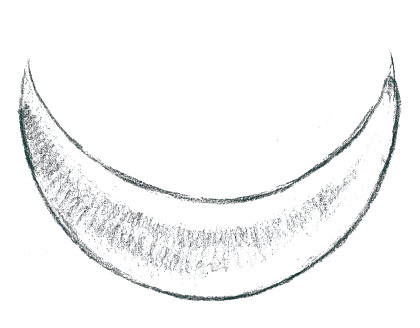
moon hand drawing pencil

Das Geheimnis im Wesen der Wahrheit

Was ist Wahrheit?

Wahrheit ist die Wirklichkeit dessen, was ist. Es gibt Menschen, die behaupten, dass Wahrheit relativ sei, aber das ist nicht richtig. Es gibt viele Blickwinkel auf die Realität einer Sache, und diese Blickwinkel sind Facetten der Wahrheit. Die Wahrheit selbst ist das Wesen einer Sache, und dieses Wesen ist absolut.

Die Tatsächlichkeit der Welt, also die Wahrheit darüber, was die Welt ist, ist ihre Seele, und ihre Erscheinung zeigt sich durch die vielfältigen Augen der Welt. Dieses Wesen der Welt ist die Welt selbst, es ist die Schöpfung und damit Gott. Die Erfahrung dieser Schöpfung ist die Seele der Welt und damit die Göttin.

Die Wahrheit ist also das Göttliche.

Wie können wir dieses Wesen der Wahrheit, also das Wesen der Dinge, verstehen und erkennen? Wie Kierkegaard sagt: „Die Wahrheit ist immer im Einzelnen.“ So ist das Verständnis einer Sache immer ein individueller Prozess. Wenn ein Einsicht kollektiv wird, also geteilt zwischen Individuen im Wort oder im Bild, dann wird sie reduziert auf den Ausdruck, den der Einzelne verstehen kann.

Geteilte Information ist immer der groesste gemeinsame Nenner aller, die sie teilen.

Bist du schon einmal an einem Fußballstadion vorbeigegangen, wenn alle singen? Es ist das dämonische Grölen der Massen. Der Einzelne mag gut singen, doch sobald es 40.000 Menschen tun, verliert sich die Wahrheit in jeder Stimme, und die größte Gemeinsamkeit aller ist leider sehr klein.

Das gleiche gilt für die Einsicht in das Wesen der Natur auf spiritueller Ebene. Gottes Wort wirst du in Einsamkeit am besten hören können, denn dort ist das Einzelne dem Höchsten am nächsten.

Die Seele tauscht Quantität gegen Qualität.

Je mehr das, was wahr ist, geteilt wird, desto weniger ist die Wahrheit vorhanden. Je mehr sie destilliert und ungeteilt bleibt, desto reiner wird sie.

Die größte Vision ist die, die unausgesprochen und ungeteilt bleibt.

Aus diesem Grund muss das Tantra, das wahr ist, ungeteilt bleiben, um der Wahrheit am nächsten zu sein. Nicht weil es geheim ist, sondern weil es im Geheimen dem Wesen der Wahrheit am nächsten sein kann.


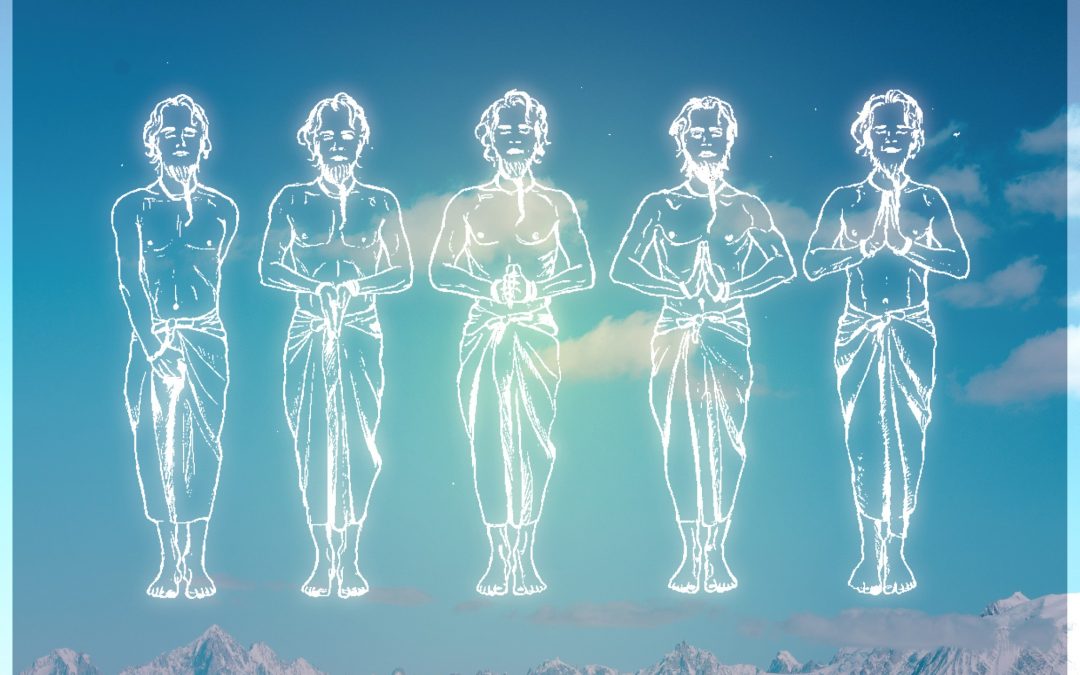
Yogis Figuren Handzeichnung Chakra

Das Geheimnis der Kraft

An der Quelle des Yoga liegt Shakti – die Kraft. Die Hatha Yoga Pradipika spricht davon, dass Kundalini, ein Name für diese Kraft, der Schlüssel sei, mit dem der Yogi das Tor zur Erleuchtung öffnet.

Diese Kraft ist besonders im Tantra – einer inneren Disziplin des Yoga – präsent. Kundalini wird im tantrischen Text Siddha-Yogeśvarī-Mata erstmals erwähnt. Von dort fand sie ihren Weg in viele Traditionen – auch in unsere Praxis.

„Kundalinī ist der Schoß des Universums. Aus ihr entstehen die drei Śaktis, und aus diesen gehen alle Klänge der menschlichen Sprache hervor.“

— Siddha-Yogeśvarī-Mata

Warum aber ist Kundalini, die Shakti geheim? Shakti ist der Schlüssel zur Existenz. Sie ist Māyā, das Tor zur Illusion, und Kundalinī, das Tor zur Befreiung. Sie ist Jñāna Shakti, das formende Wissen, aus dem das Leben entsteht, das du führst. Alles, was du denkst und glaubst, ist eine Mischung aus deinem Verstehen und deinem Irrtum.

Wenn du nicht irren würdest, wärst du nicht du. Und wenn du nicht auch etwas verstehen würdest – wärst du ebenso wenig du.

Deine Identität besteht aus Licht und Schatten. Shakti ist die Kraft, die beide formt. Deshalb beschreibt das Devī Māhātmya die große Kraft zugleich als höchste Göttin und höchste Dämonin – als Grenzen und Ursprung der Schöpfung zugleich:

„Du bist das große Wissen und die große Illusion,
die große Intelligenz, das große Gedächtnis und die große Täuschung,
die große Göttin und die große Dämonin.“

— Devī Māhātmya 1:77

Tantra – Die Kunst, eins mit der Göttin zu werden

Tantra ist die Kunst, mit der Göttin eins zu werden – eine Reise in das Wissen über das eigene Licht und den eigenen Schatten. Es ist die Konfrontation mit dem Selbst, so wie es sich wirklich zeigt.

Wer bist du in diesem Wissen? Was ist deine Leidenschaft? Warum bist du, wer du bist? Wie bist du hierhergekommen?

Dieses Wissen zerbricht die Persönlichkeit, die aus ihren Grenzen besteht. Das individuelle Selbst wird in das kosmische Sein aufgenommen. Doch dieser Prozess kann nur durch vollständige Hingabe geschehen – denn er ist der Tod des Begrenzten.

Es ist das Einswerden mit Bhairava, dem, dessen Ruf den Tod des Todes verkündet. Auflösung ist Schmerz. Lernen ist Schmerz. Loslassen ist Schmerz – und auch der Tod ist es. Doch hinter jedem Schmerz liegt eine größere Freiheit. Hinter dem Tod des Todes öffnet sich der Himmel in die Weite des Kosmos.

Er ist auch als Bhairava bekannt, da er der Herr jener ist,
die sich an seinem furchterregenden Brüllen (bhīrava) erfreuen –
dem Ruf, der den Tod des Todes verkündet!

Als Meister jener Schar erhabener Yogis,
die der Furcht überdrüssig sind und Befreiung suchen,
ist er Bhairava – der Höchste, dessen Wesen reines Bewusstsein (vijñāna) ist.
Als Spender der Nährung der Seele breitet er seine Kraft im ganzen Universum aus!

— Maṅgala-Śloka zur VBT, Kṣemarāja

The Goddess hand drawing pencil

Die Konsequenz der Macht

Shakti ist Kraft, und Kraft ist Macht – jene dynamische Energie, die das Formlose in Form bringt. Sie ist die Ermöglichung von Selbstverwirklichung – durch die Erfahrung des Selbst.

Doch was uns oft von der Verwirklichung unserer inneren Träume trennt, ist nicht der Mangel an Geld, jener Kraft, die das Denkbare möglich macht, sondern der Schatten unserer Illusionen:

Er täuscht uns mit falschen Träumen und raubt uns zugleich die Kraft, echte Träume zu verwirklichen. Wir sind doppelt gefangen – und diese Gefangenschaft ist Segen und Fluch zugleich.

Denn hätte der Mensch die Macht, all seine Illusionen zu verwirklichen, wäre dies seine Vernichtung.

Stell dir einen Süchtigen vor, dem man plötzlich Reichtum gibt – besser, er bleibt arm.
Andererseits: Wäre das Bewusstsein so frei von jeder Illusion, sodass sich keine Leidenschaften mehr erheben, würde das Leben auch aufhören zu sein.

Die große Kraft lähmt daher das individuelle Sein – um es überhaupt möglich zu machen.

Wer Tantra praktizieren möchte, muss zuerst eine reine Intention haben. Nur wer seine illusorischen Leidenschaften bereits innerlich abgelegt hat, kann diese Macht ertragen – denn sonst würden seine Leidenschaften, in Form gegossen, ihn zerstören.

Tantra ist Macht. Es ist die Fähigkeit das unmanifestierte Wirklichkeit werden zu lassen.


Schlange Kundalini handzeichnung

Der Lehrer des Tantra sieht den Schüler still an. Er prüft sein Herz – seine Liebe. Ohne Worte beobachtet er, ob der Schüler tut, was richtig ist.

Wenn der Lehrer erkennt, dass der Ruf der Göttin aus dem Herzen des Schülers spricht, wenn das Opfer gebracht wurde, wenn nichts mehr gebraucht wird – dann darf der Schüler eintreten in das Geheimnis.

Doch dies ist kein Grund zu verzagen. Im Geist der Bhagavad-Gītā sollen wir einfach tun, was gut ist – und dem Wahren treu bleiben.

Wenn die Göttin uns für würdig hält, wird sie uns an der Hand nehmen – und uns in den Tempel führen.


Dann dürfen wir dankbar sein.

Kriyas and Classes in Kundalini Yoga

Kriyas and Classes in Kundalini Yoga

Our Beautiful Book about Kundalini Yoga Kriyas

Discover a journey through the wonderland of your own consciousness with our beautiful book: “Kriyas and Classes in Kundalini Yoga”

Dedicated to all yoga enthusiasts, this book is a treasure trove of Kundalini and Hatha yoga classes. Designed with precision and love, each class, each kriya, is a path to deeper self-awareness and spiritual evolution.

A book to be applied

I wrote and illustrated this book as a guide for our trainees in the Kundalini Yoga teacher trainings. It was important to me that our students have structured classes that they can use as a guideline when they start teaching, and so can slowly find their own style.

Inspiration for yoga teachers

These classes are not rigid instructions, but serve as inspiration – you can play with them, with the rhythm of the breath, with the sequence of postures, and develop your own style.

They are pillars on the individual path of yoga. Whether you are a yoga teacher and want to enliven your classes with new ideas or someone who wants to deepen their own practice – this book invites you to integrate, modify or expand the practice sets.

Ultimately, a practice must be alive in order to bear fruit in your life and in the lives of those you touch through your practice.

This book bridges the gap between traditional practice and contemporary yoga. It seamlessly blends classical Hatha and Kundalini yoga techniques to nourish the practitioner’s spirit.

Yogis figures hand drawing Chakra

Design Guidelines

The classes are based on the same principles as those set out in our training manual:
Symmetry and counterbalance

Each asana finds its counter-posture in the course of a class – both along the physical body axes and along the poles of tension and relaxation.

  • Everything that becomes tense must find relaxation.
  • Everything that is opened needs stability again.

Hatha yoga means finding strength in the center – the center as a dance between the poles.

The wheel of the day

Each class is a journey through your consciousness – and therefore a journey through your life, because life springs from your consciousness.
So each class is a way to understand each of your actions more deeply – an invitation to become more fully one with yourself.

Every class is therefore a journey through your life.

You can find out more about this in the second part of our yoga teacher training manual.

Wheel of Opposites, Opposing Positions Yoga Drawing

Transformational Yoga

Many of the classes in this book – especially the chakra series and the Divine Mother Sadhana – are designed according to the principles of Transformational Yoga.

Transformational yoga means that the class is a journey through the layers of your being. We start in the body, dive into the breath and prana, traverse the mind and finally sink into the heart.

Transformational Yoga uses specific techniques such as Kapalabhati and Bhramari – breathing techniques that help us to penetrate the deeper layers of our being.

You can find out more about this in our handbook – there is a whole chapter on transformational yoga.

Kundalini Yoga – Yoga of the Goddess

Kundalini Yoga is the yoga that honors the Goddess as the source of spiritual growth – the Goddess as the key to knowledge.

In our practice, there are two main ways to awaken the inner power – the Shakti:

  • as Prana Shakti in the form of breath,

  • as Mantra Shakti, also Śabda Brahman, in the form of sound.

We use techniques such as Bhastrika and Kapalabhati to activate the prana in the center and guide it upwards.
We also work with subtle sound yoga techniques to honor and connect with the power within.

Ultimately, Kundalini Yoga is the yoga of the Goddess – and the relationship with her is a relationship of love. That is why Kundalini Yoga is always bhakti – devotion – at its core. Without it, it remains unfruitful.

Bahirava Mudra hand drawing

The Classes at a Glance

Pavanmuktasana series

In this book you will find newly illustrated representations of the famous Pavanmuktasana series by Swami Satyananda Saraswati.
These classes are an essential part of our training and offer valuable tools to create your own classes.

The series are Sukshma Vyayam – subtle yogic exercises – and are therefore also part of Kundalini Yoga.

They also include breath-intensive sequences, as known from modern Kundalini Yoga, and at the same time are technically broadly based – suitable for young people, strong and weak bodies, even for older people (e.g. the gentle joint series).

A great companion for every yoga teacher!

The sadhana of the divine mother

I had to practise this class with my teacher in India every morning for 108 days. It showed me a lot about the depth of subtle yoga – and I could feel the presence of the mother in it.

I wish – but do not demand – that my students also follow this path.

This class is a journey through the chakras and the koshas alike. It leads from the bottom up through the levels of our being – with the tools of Transformational Hatha Yoga.

This inner journey is also a journey through the body of the goddess – of which we are a part.

Sadhana is the path to the goal.
The class is the path to your inner goal – your heart, the place of ultimate contentment.

swamiji initiation hand drawing

Chakra classes

These classes deal successively with the energies of the chakras – earth, water, fire, air and space within you.

Each class is a journey into yourself.
Take it, experience it – and write in the comments what each class means to you 😊

Classes for the five pranas

Apana, Maha, Samana, Udana and Vyana Prana are five transformations of prana – five forces that work in the body and at the same time five stages of inner development.

In the process of meditation and alignment with the highest goal, the prana changes:

  • Apana & Maha – Exhalation & Inhalation
  • Samana – holding and balancing in the middle
  • Udana – the upward flowing current of Kundalini
  • Vyana – unity with the universal

Our classes on the five pranas explore these movements of energy step by step.
At the same time, they are short classes (20-40 minutes), ideal for a lunch break or evening practice.

And therein lies – in addition to the energetic depth – its practical value for you as a teacher:
Short, inspiring sessions that you can play with – and that will inspire you.

The great Sukshma Vyayam

This series comes from the great Kundalini yoga teacher Dhirendra Brahmachari, who also taught Yogi Bhajan.

The Sukshma Vyayam is calm, static and intense – expansive and clearing – and leads you into the state of Vyana: a wide, still, meditative state of consciousness.

A journey to the roots of Kundalini Yoga.

Sound Yoga, OM & Śabda Brahman

Ultimately, we want to discover the sound – because the great secret of tantra is:

The goddess is sound at its core.

Those who know how to bring sound into the body know how to honor the goddess in her essence. She is God in the form of vibration – and this vibration encodes all forms of existence. She is passion – and therefore the source of all creation.

Experience these classes beyond words.

Kriyas and Classes in Kundalini Yoga great book cover

Look into this Book

If you want to discover more of this book, just have a look at our downloads section!

There are some Kundalini Yoga Kriyas from the book available for you to download.