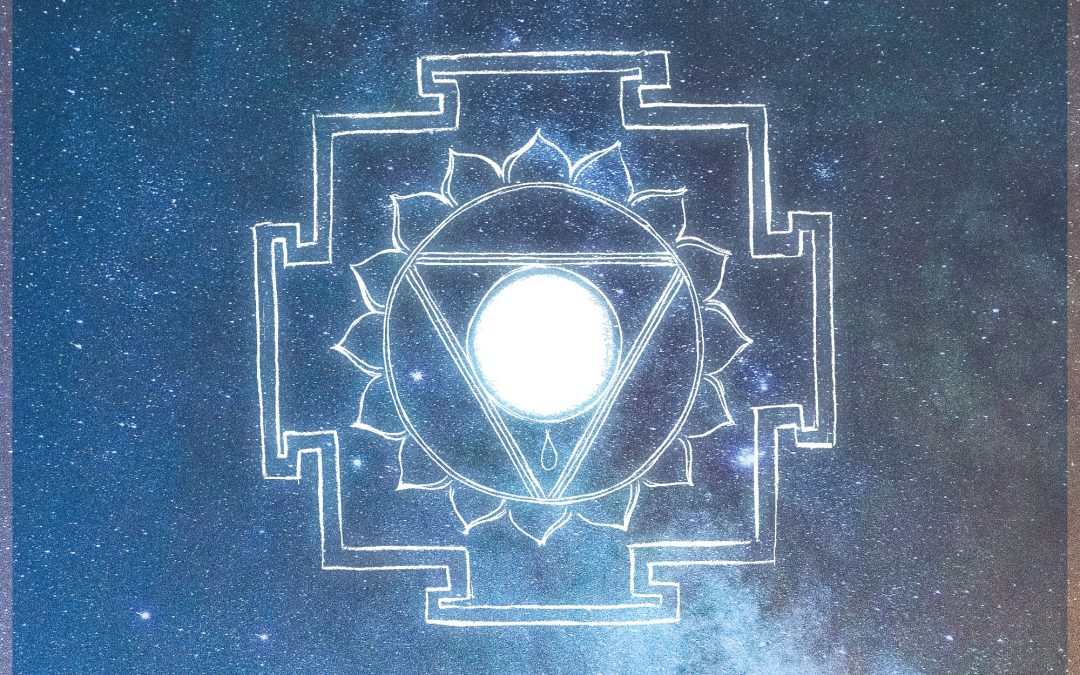
VIŚUDDHA Chakra
Whoever meditates on this is truly the lord of the yogis and deserves to be called wise; through meditation on this Viśuddha lotus, the yogi immediately comprehends the four Vedas with their mysteries (...).
Even if the yogi's mind happens to be absorbed in the Self at that moment, it withdraws from the external world and certainly enjoys the inner world.
Śiva Saṃhitā (5:92–93)
THE CROWN OF THE WORLD
Viśuddha is located in the heaven beyond human individuality and represents the first seat of our cosmic identity, which is governed by the power of will, icchā Śakti.
Icchā Śakti is like the dove that hovers high in the dome of the church and embodies the final aspect of the Trinity: will, knowledge, and action. This cosmic will (icchā) unfolds into an inner Trinity consisting of three further aspects.
Much like in a kaleidoscope, the holographic nature of reality unfolds, and whatever possesses a trinity below the heart also possesses another one above it— viśuddha, ājñā, sahasrāra.
Viśuddha symbolizes the aspect of cosmic fire and the space in which the mind is transformed. When the mind is purified by the power of fire, it can ascend to the heaven of pure understanding, where silence reigns and the clouds of thought have dissipated. Here, in the space of stillness, truth unfolds. This cosmic fire, which radiates from the throat when the maṇipūra chakra is purified, is Mahā Kālī, the supreme and eternal Kālī.
Viśuddha is governed by the fifth element, which encompasses the powers of the other four elements. To live in viśuddha, therefore, means to possess power over the elements and, consequently, over the entire world.
While maṇipūra embodies power over the material aspect of the world, viśuddha represents mastery over the mind and, thereby, over the Self. Once the Self has been mastered and one can rest in one’s own stillness, there are no longer any obstacles on the path to self-realization. The only enemy that must be defeated is oneself. Once this is achieved, the final barrier to the heaven of knowledge opens .
Consciousness at the level of viśuddha makes it possible to transform what was once considered toxic into nourishing nectar. Obstacles become opportunities. The power of wisdom makes it possible to transform life’s challenges into a new beginning and greater vitality. This power of wisdom, which is foreign to the ordinary mind, underscores the superior, even cosmic, nature of viśuddha. Śiva, sometimes known as Nīlakaṇṭha, the Blue-Necked One, symbolizes the ability to transform the greatest poison into personal wisdom.
Viśuddha means “purity” and is the seat of the realized Self, which can be experienced when the mind is transformed by the power of the heart. It is the place where one’s true nature unfolds completely and without compromise, like a master on his throne. This nature is boundless bliss, a presence that fills space, just as space permeates everything.
When viśuddha permeates life, our true nature manifests as the vibration with which we permeate the world. On an individual level, this vibration is the tone of one’s own voice. The sound of your self is therefore an indicator of how deeply you rest in your true essence; it is the music of the dance around your own center.
And yet, just as the essence of viśuddha sound is space, so too is the essence of every word ultimately the silent space in which it is embedded. The power of words lies in their silence, not in the word itself. This silence is the essence of the meaning of words, which expresses the space beyond conception.
It is there, in silence, beyond words, that understanding takes place.
The word alone is spirit, concept, form, but the silence between them is insight beyond the conceptual; it is the word’s inner meaning. Just as a word is powerless without its meaning, so too is language powerless without the silence that accompanies it.
So when you speak, choose your words as if they were nestled in silence, and in this way honor the great viśuddha, the seat of wordless, profound inner understanding.
FEATURES
Active: Words with meaning. Insight beyond words. Character, strength, integrity, intelligence, responsibility, and consistency in thought, speech, and action. Honesty and a well-established life. A stable metabolism, a stable mind, a calm mind.
Meaning: Purity
Mantra: Oṃ ākāśai namaḥ
Bīja Element: Haṃ, Space
An aspect of icchā Śakti: Eternal Fire—Mahā Kālī
Age: 28–35 years
Anatomy: On the central vertical axis behind the neck groove. The Bihar School illustrates its location at the top of the neck groove.
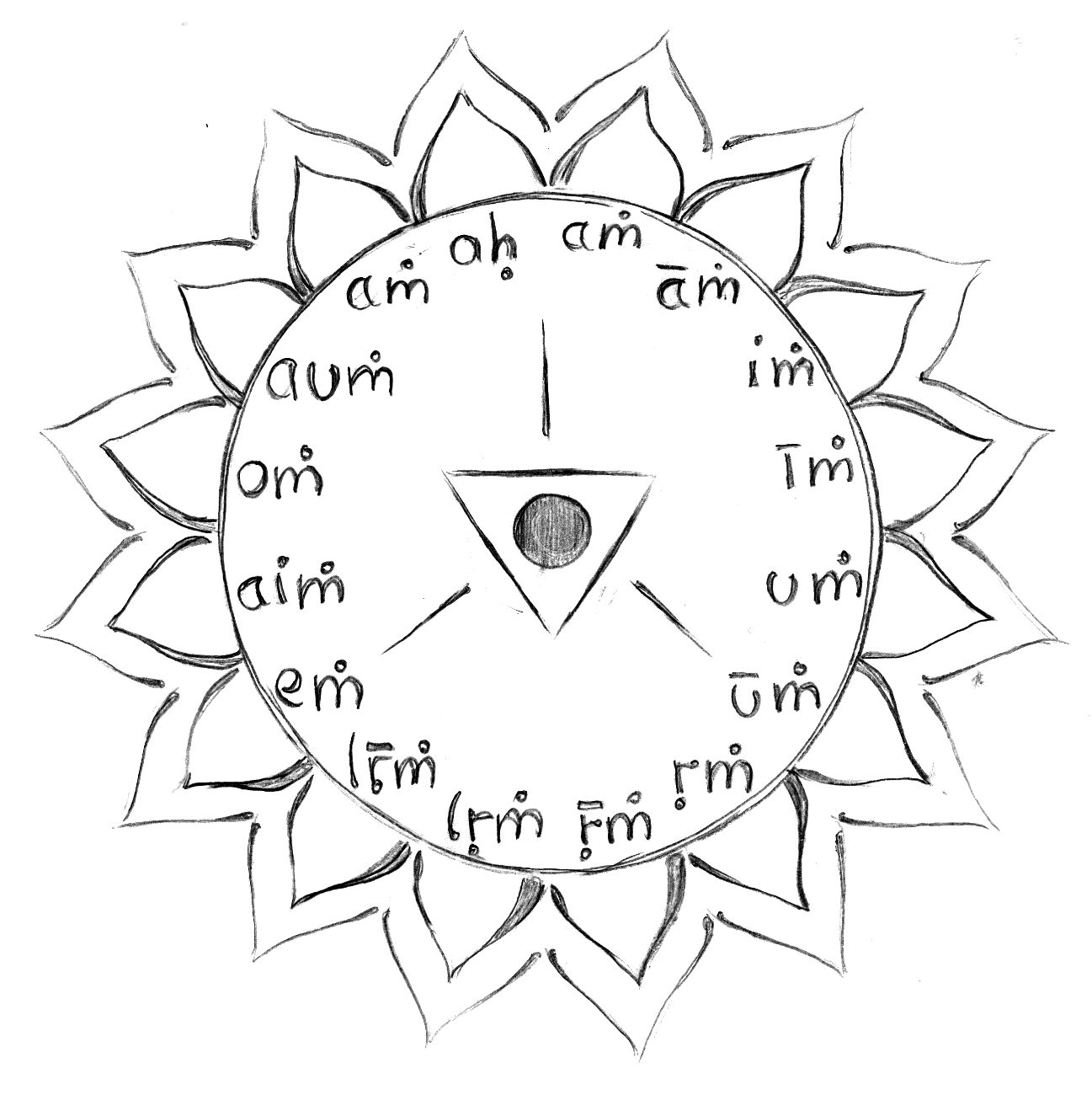
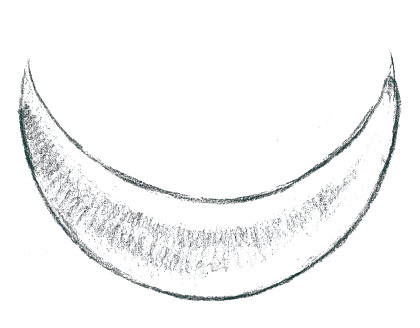
Symbolism: A golden or purple lotus with 16 petals, a silver disc, a white elephant.

Exercise for the Heart Chakra
Here in our download section, you'll find the "Anahata Kriya" exercise. This exercise is a way to honor and awaken the energy of the heart chakra.
All the exercises are hand-illustrated and lovingly designed. They will enrich and deepen your yoga practice. Come join us and practice with us! All the best!

Learn more about the chakras here
A journey through the chakras is a journey to yourself.
In this book, we also explore the roots of Kundalini Yoga and yogic anatomy, and we discover the secrets of the koshas, prana, and the Trinity of the Goddess.
These profound practices, visions and insights into yogic anatomy and chakras will inspire and enrich any yoga practice.

More Articles Weekly
We'll be posting new articles every week on the individual chakras, the koshas, and topics in yogic philosophy. Stop by or send us an email so I can add you to our newsletter mailing list.
Any questions? Just write to us!
In der Ausbildung vertiefen wir das
Die Chakren sind ein Kernthema unserer RYT® 200h Yogalehrer-Ausbildung in der Wachau. Wer bereits unterrichtet, geht in der RYT® 300h Ausbildung tiefer – oder besucht den YACEP® Chakra-Workshop.
Blog