MAṆIPŪRA Chakra
The chakra located in the navel region is called maṇipūraka (house of gems), because the body is permeated by vāyu (prāṇa) like gems strung on a thread.
Driven by past virtuous and sinful karma, the jīva whirls around in this great chakra with twelve spokes until it has grasped the truth.
Dhyānabindhu Upanishad (48–50)
THE SEAT OF POWER
The maṇipūra chakra, also known as the“House of Crystals,” is the center of self-empowerment and the seat of the waking state of consciousness (jāgrat).
It represents the power of fire and the spirit, which, when transformed, forms the final aspect of kriyāśakti, the universal power of action.
Rising from the depths of desire and the blindness of the lower centers, the awakening maṇipūra enables the practitioner to overcome blind desires and take control of their own destiny. Purposeful action is what the lower centers lack amid the fog of passions; maṇipūra, the fire, is the ability to see. This inner and outer vision enables the mind to choose a path into the future.
Maṇipūra is the seat of the mānas, the mind, and thus the source of the manomaya kośa —the mental body, the seat of our knowledge and our projections.
True reality exists beyond what can be categorized. It is incomprehensible, like a leaf on a tree, a stone, or this book—all these things can indeed be classified into categories, but their true nature goes far beyond that. That which actually is cannot be grasped; it would dissolve our mind. Therefore, in order to function in the world, the mind must carve out a single comprehensible image from the incomprehensible, vast reality.
In this way, with every category, the mind destroys the infinite potential of what is, in favor of a single thing—the cosmic experience in favor of a single human being, which is you.
The mind creates illusions, images, and stories, and leads us to believe that this is the world. If we cling to these images, the world shrinks to the boundaries of those images; the pulsating wonder of the world is lost. For wonder is that which arises anew, beyond comprehension; it unfolds beyond the mind and then presents itself to the mind as a gift.
When the miracle is suffocated by a mere reflection of itself, the world is lost along with it; the mind revolves only around itself and believes it knows the world. And when it looks outward, it sees only its own reflection, the grimace of its illusions. Depression, anger, and fear then take hold.
For when the infinite must give way to the finite, the infinite Self within you becomes trapped in a finite world; then despair is inevitable. Therefore, the mind must be transformed; one must pour it like salt into the sea of infinity, and then the Self will be freed from its prison
For the yogi, the path out of this limitation lies through the mind itself, for the yogi must use the mind to transcend the mind itself. This paradoxical process is the path of śaktopāya, the path of power. The mind, which is the source of binding illusion, possesses the power to create a liberating illusion.
Śakti is both bondage and freedom.
The mind must create an image of the highest reality and then dissolve itself into that image. Concentrating on the highest Self breaks through the barrier of all categories and brings the Self into the meditative state of being—that there is only one great, formless reality. Thus, the mind is liberated and becomes one with the ocean once again.
If you set your mind on me and worship me with all your heart, you will surely come to me; I promise this because I love you.
Bhagavad Gita [18.65]
When one surrenders one’s own mind to the Infinite, all limitations fall away, and the path to the awakening of the ultimate aspect of the universal power of action (kriyāśakti) is opened: īśvara-praṇidhāna—surrender to God.
Surrender to the ocean of the Universal silences the mind and opens it to the beauty of what is now, of what truly is.
Only when the three forces of the lower centers—heat (tapas), the cultivation of mindfulness (svadhyaya), and devotion to God (īśvara-praṇidhāna)—can the Kuṇḍalinī rise through the individual self to the heart.
That is the path to self-realization and, at the same time, the path to becoming a living part of everything.
FEATURES
Balanced:
Willpower, concentration, a sense of freedom and wonder, stillness. Ease in decision-making and action. Acceptance of death. Control over one’s own body. Healthy skin, easy digestion, a strong metabolism, a balanced weight.
Unbalanced:
Weakness of will, mind, and focus. Driven by blind ambition and inner restlessness. Difficulty establishing a sense of self in life. Nervous disposition. Unstable metabolism, underweight. Aggression, digestive pain and problems, inflammatory diseases, skin problems.
Meaning: House of Crystals
Mantra: Oṃ agni namaḥ
Element bīja: Raṃ, fire (agni)
An aspect of kriyāśakti: Īśvara-praṇidhāna – devotion to God
Age: 14–21 years
Anatomy: Located on the central axis behind the navel. The Bihar School specifies its position at the navel.
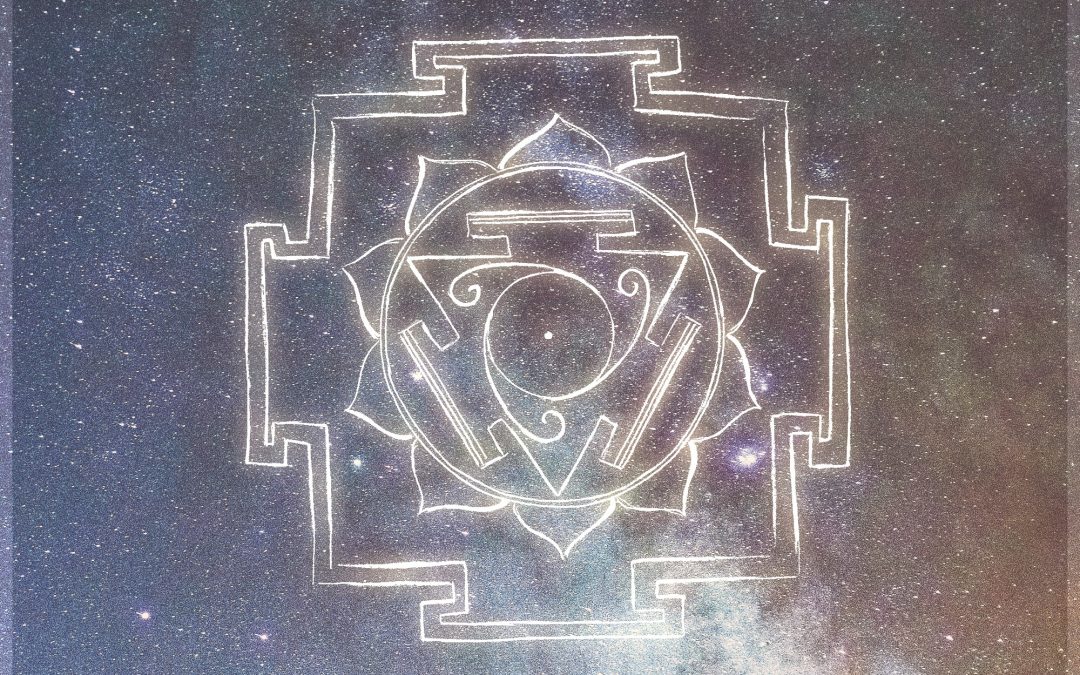
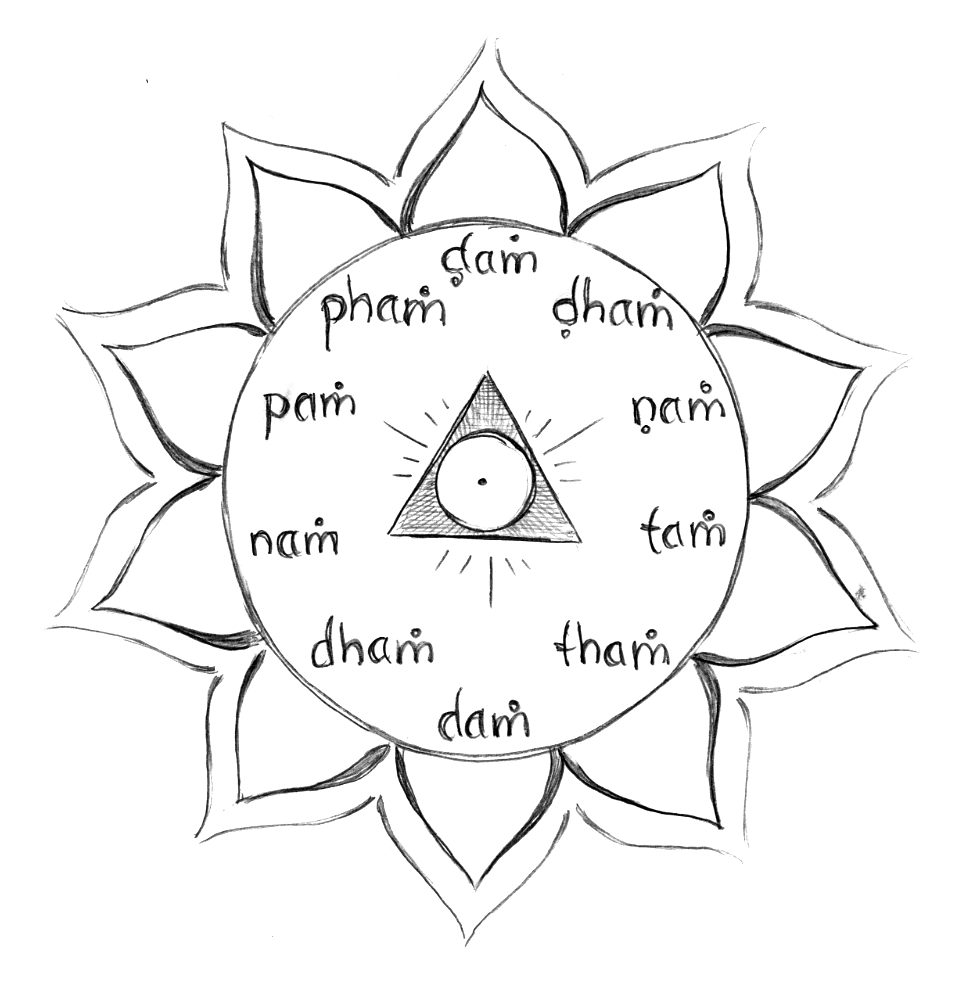
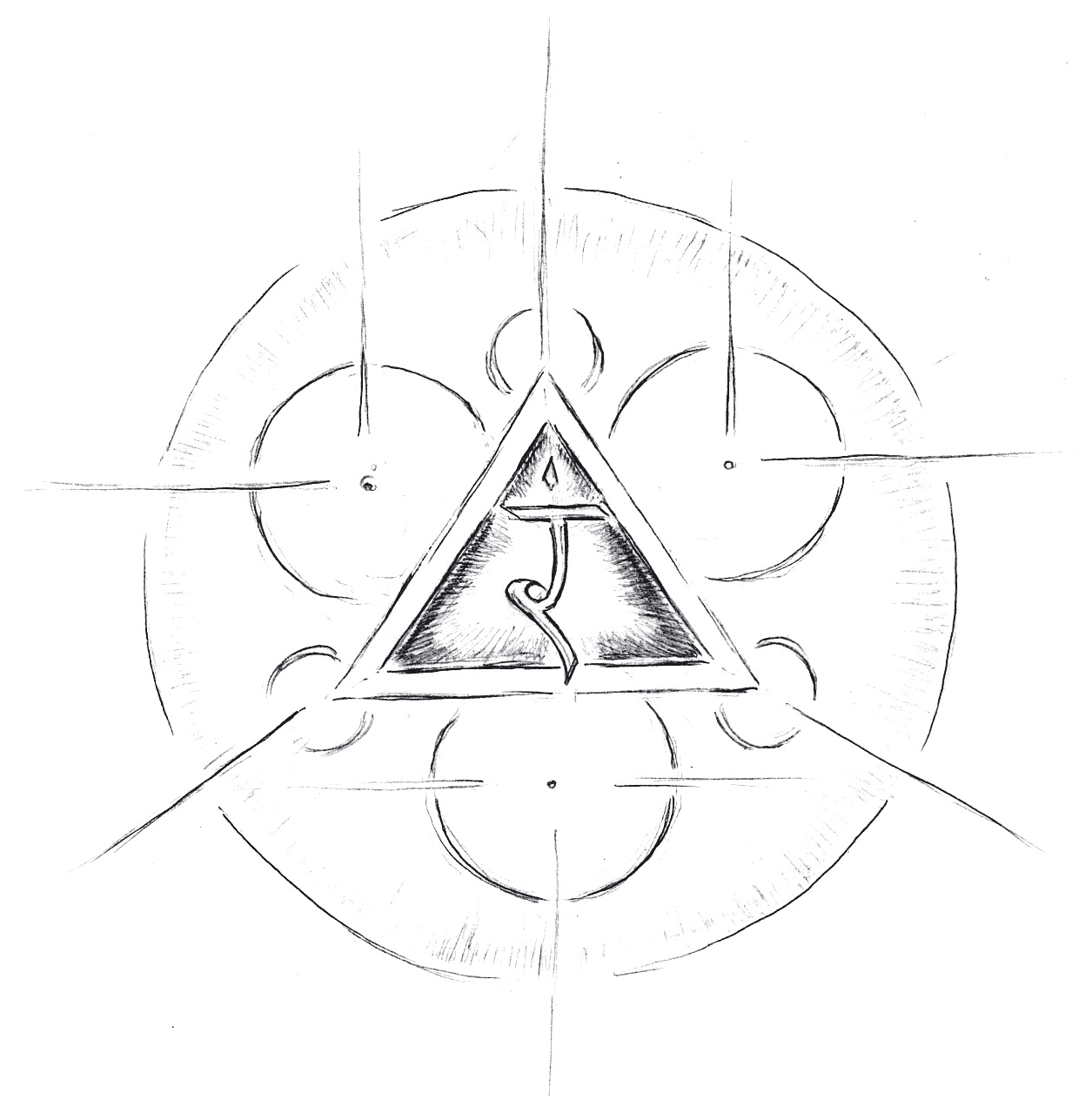
Symbolism: A lotus with 10 petals, a downward-pointing triangle that shines like the rising sun.
Exercise for the Navel Chakra
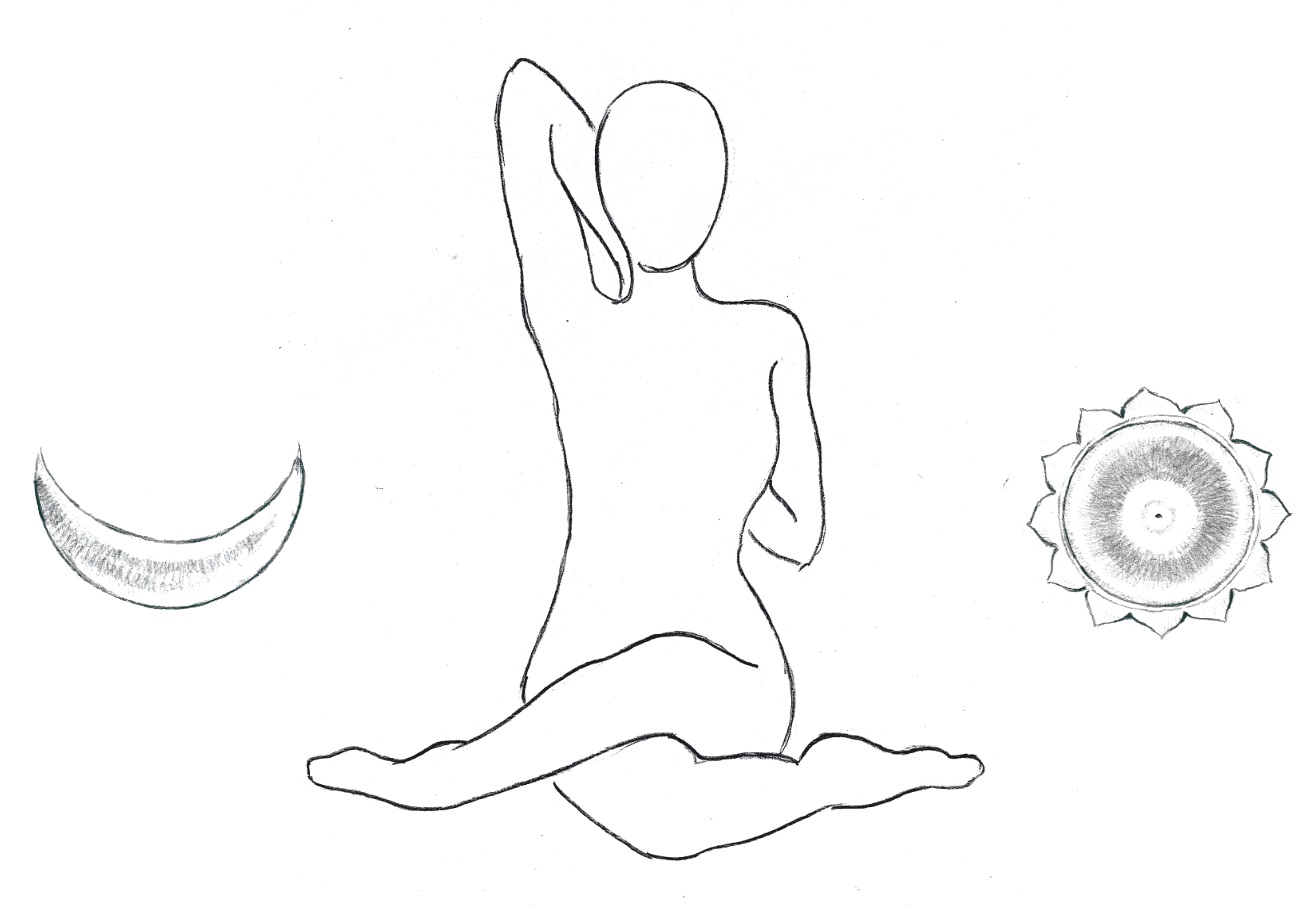
Here in our download section, you'll find the "Manipura Kriya" exercise. This exercise is a way to honor and awaken the energy of the navel chakra.
All the exercises are hand-illustrated and lovingly designed. They will enrich and deepen your yoga practice. Come join us and practice with us! All the best!

Learn more about the chakras here
A journey through the chakras is a journey to yourself.
In this book, we also explore the roots of Kundalini Yoga and yogic anatomy, and we discover the secrets of the koshas, prana, and the Trinity of the Goddess.
These profound practices, visions and insights into yogic anatomy and chakras will inspire and enrich any yoga practice.

More Articles Weekly
We'll be posting new articles every week on the individual chakras, the koshas, and topics in yogic philosophy. Stop by or send us an email so I can add you to our newsletter mailing list.
Any questions? Just write to us!
In der Ausbildung vertiefen wir das
Die Chakren sind ein Kernthema unserer RYT® 200h Yogalehrer-Ausbildung in der Wachau. Wer bereits unterrichtet, geht in der RYT® 300h Ausbildung tiefer – oder besucht den YACEP® Chakra-Workshop.
Blog