A Brief History of the Chakras
Chakra or cakra means wheel or circle. It is also interesting to note that the Greek word "kulkos" and even the English word "cycle" are derived from this word.
The word “chakra” appears in early texts such as the Vedic Ṛgveda. Upon closer examination, however, it becomes clear that at that time the word “chakra” did not yet refer to a spiritual energy center, but rather denoted a wheel or a center of power.
In the 1st century BCE, early Upanishads refer to subtle yogic anatomy, such as the nāḍis. Similarly, the Dhyānabindu Upaniṣad from the 3rd century CE already mentions techniques of Kundalini Yoga, the rising of energy (Śakti), and the positions of the lower chakras.
As tantric yoga continued to evolve from the 8th century CE onward, the yogic understanding of the chakras became increasingly refined. The Upanishads written during this period, such as the Yoga-Kuṇḍalini Upanishad, emphasize the importance of the chakras for the art of Kundalini Yoga.
The path of yoga, as described in detail in the Gīta or the later Yoga Sūtras, leads through the purification of the self to devotion and enlightenment. The chakras existed outside the teachings of early classical yoga and were a purely tantric teaching. It was not until the later schools of Hatha Yoga and Tantric Kuṇḍalinī Yoga that they came to be regarded as the key to enlightenment (Haṭha-Yoga-Pradīpikā, 3:105–110).
Through the union of vāyu and agni (mūlabandha), the Kuṇḍalinī pierces the brahmagranthi and then the Viṣṇugranthi. Then it pierces the rudragranthi [the three knots]. Afterward, all six lotuses are pierced. Then Śakti is blissful with Śiva in the Sahasrāra Kamala (thousand-petaled lotus chakra). This should be known as the highest state of being and the gateway to ultimate bliss.
Yoga-Kuṇḍalini Upanishad (85–86)
CHAKRAS AS MEDITATION TOOLS
A common modern misconception about the chakras is that they do not serve solely as a map of the subtle internal anatomy; rather, the chakra is—and has always been—a tool for meditation.
This means that the activation of the chakra—and the associated experience—is a conscious, deliberate act that takes place within the context of meditation. The chakra therefore has no independent existence outside the mind that creates it.
One’s own will is therefore the key to entering into the experience.
From the very beginning, yogis used visualization techniques in which they used their imagination to place a spinning wheel—dedicated to the energy of a specific deity—within their bodies. These wheels of the deities were placed at various points in the body to activate the deity’s power in that specific area and open a gateway to the inner experience.
What various chakra systems have in common is their vertical alignment along the axis of inner experience (or suṣumnā)—various systems were developed by Tantric traditions to awaken specific energies within this axis.
The Kaubjikā tradition routinely taught two very different systems—one with 5 centers and one with 7—thereby suggesting that the concept of chakras is more of a tool for meditation than a description of a fixed energetic reality. Depending on the goal of the meditation and the system one chooses, a different number of chakras—and different tools within them—is selected.
Most systems describe the chakras as an expression of a specific level of consciousness. Kuṇḍalinī, the goddess, is then the force that can transcend one level in favor of a new one, and thus permeates the chakras.
For this reason, chakras are often described as granthi—a psychological knot or blockage that must be overcome. Tradition identifies three primary knots in the body: Brahmā granthi, Viṣṇu granthi, and Rudra granthi, which represent the three fundamental attachments of the individual self or three obstacles to ascending into cosmic consciousness. These three attachments serve as examples of all other limitations an individual may have; thus, they also represent the seven chakras.
In fact, a chakra is defined as a knot pierced by Kuṇḍalinī. Kuṇḍalinī is often likened to a needle that threads the blossoms of the chakras onto a string, and in this way, by piercing them, creates a harmonious whole.
Awakened by the contact of agni with mānas and prāṇa, it takes the form of a needle and pierces the suṣumnā. The yogi should, with great effort, open this door, which is locked. Then he will pierce the door to liberation through Kuṇḍalinī.
Dhyānabindu Upaniṣad (5:66)
Chakra Systems and Tools
The Five Elements
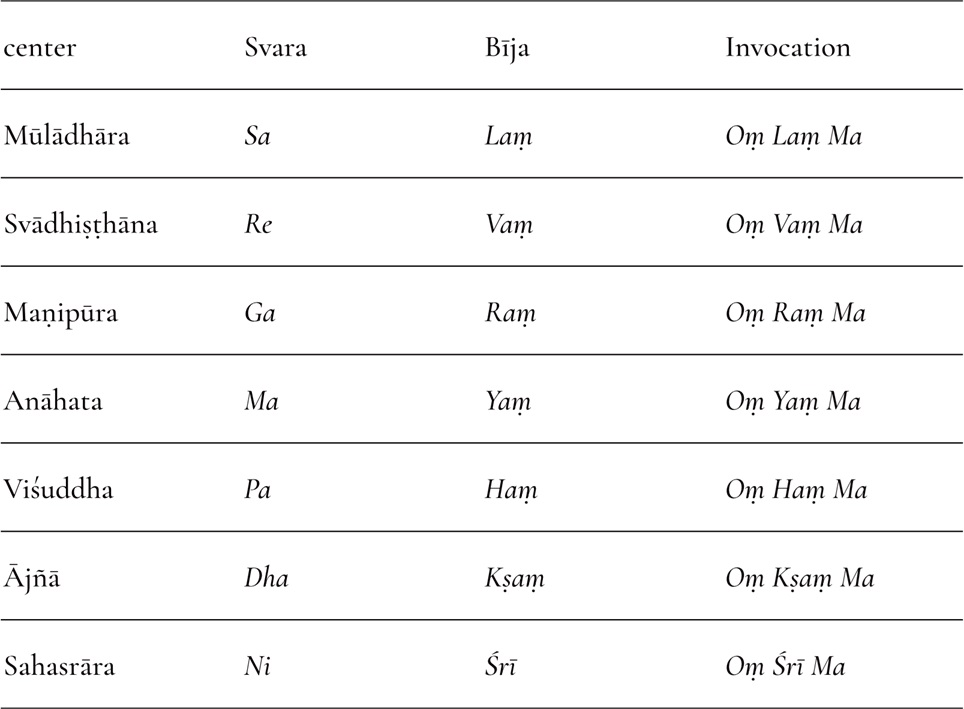
The best-known technique of chakra meditation—and the one my teacher taught me—is bhūta śuddhi, the purification of the five elements. Five chakras—each of which embodies one of the five elements—are located within the body.
Once the forces of the five elements are active, Kuṇḍalinī can rise as the central force. The five elements represent the five limitations imposed on the being by each element. When the elements are activated by the mantra, the energy of the element is permeated by the power of consciousness and mantraśakti.
In this way, the element's limitations are transcended and its power is made available.
Shadow or Light
Everything is both shadow and light. The difference between the two is not the element itself, but the presence of consciousness.
The goddess, who manifests as the five elements, is both limitation and freedom, just as māyā is both the goddess of illusion and the mother of all knowledge. Whether she represents bondage or liberation does not depend on the element itself in which she appears, but rather on the level of consciousness with which that element is recognized and thereby integrated into being.
If the lowest of all elements (earth) does not become an active part of the self through the power of consciousness, but instead runs rampant in the shadow of ignorance, then it is bondage and a gateway to hell.
If, instead, it is permeated by the forces of consciousness, it can be transcended and becomes a source of great strength, center, and stability. When you bring the shadow into the light of the center, it becomes your ally.
Through prakṛti, you will rise. It is through prakṛti that you will fall.
Swami Lakshman Joo
The Deities
Another important approach is to place the six most important deities within the body, thereby awakening their powers within the self. These deities are supreme gods who were worshipped in India at various times throughout history as the highest form. The social evolution that created the image of a particular deity and the power venerated within it is an expression of the spiritual evolution that underlies social development.
The Tantrikas were aware of this connection and therefore revered the chain of supreme deities as representations of spiritual evolution, not only in the cosmos but also in the individual life of a human being. From this perspective, the placement of these deities within the body and the transcendence of each one, one by one (from bottom to top), is a symbolic yet powerful journey through one’s own inner spiritual evolution.
The six deities, as an evolution from mūlādhāra to ājñā:
• Brahmā: God of Creation
• Viṣṇu: The omnipresent god
• Rudra: God of Destruction
• Īśvara: Personal God
• Sadāśiva: Formless Tantric Śiva
• Bhairava/Maheśvara: Supreme left-handed Śiva
The Vowels
In yoga, sound—vibration—is sacred. The entire universe was created through the primordial sound, Oṃ. In the Yoga Sutras, Patanjali explains that Oṃ is the sound form of Īśvara, that is, God. Oṃ is thus the source of all things and the seed of all true insight.
Since Oṃ is God in the form of sound, Oṃ is also Śabda Brahman, the chain of sounds from which the universe is formed and from which all other sounds have emerged. Every sound is thus a creative force of the Supreme—the word with which God creates the world. Together, these words form the one great sound that is the universe itself. They are Kuṇḍalinī, the creative force of the Supreme.
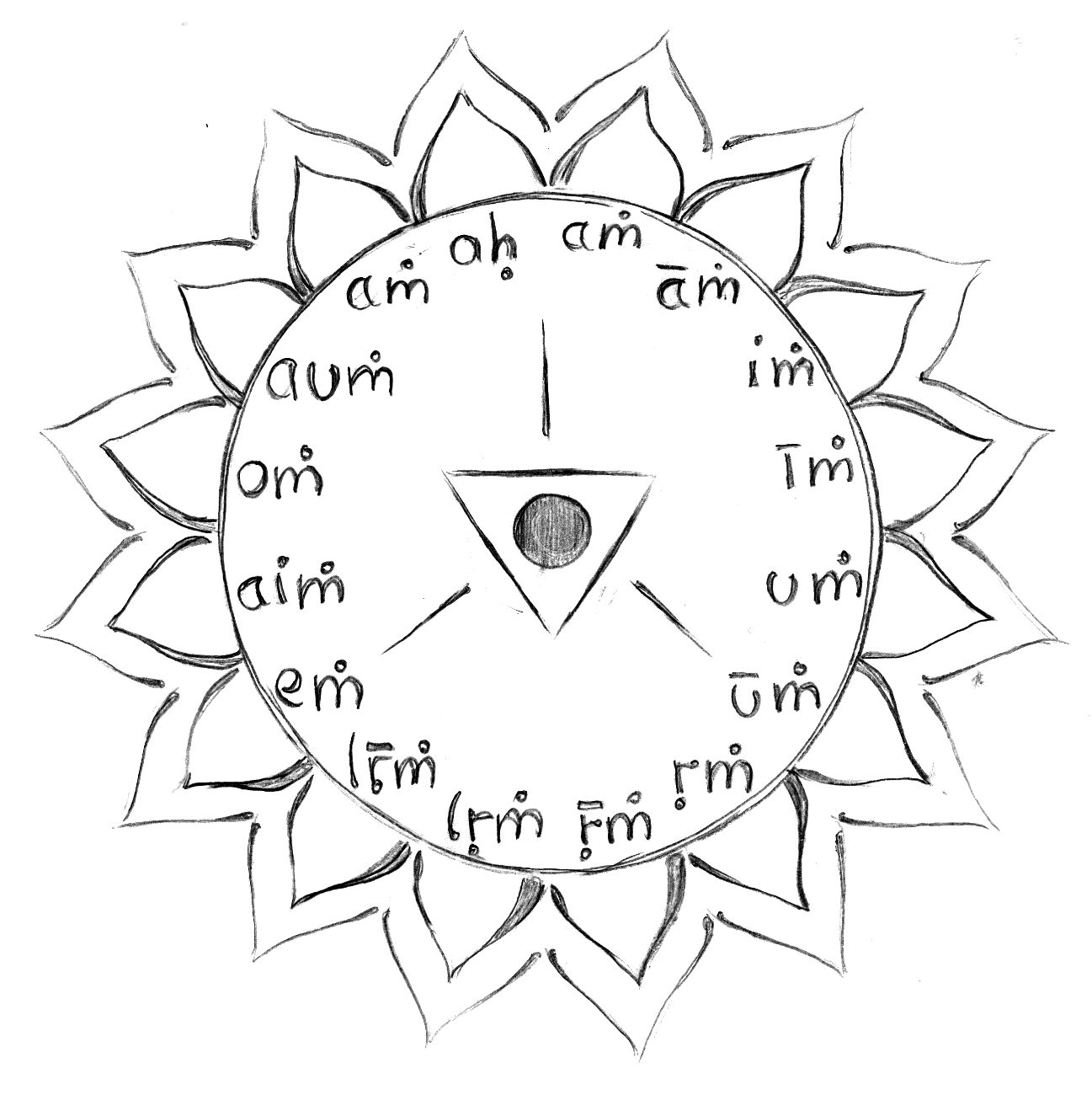
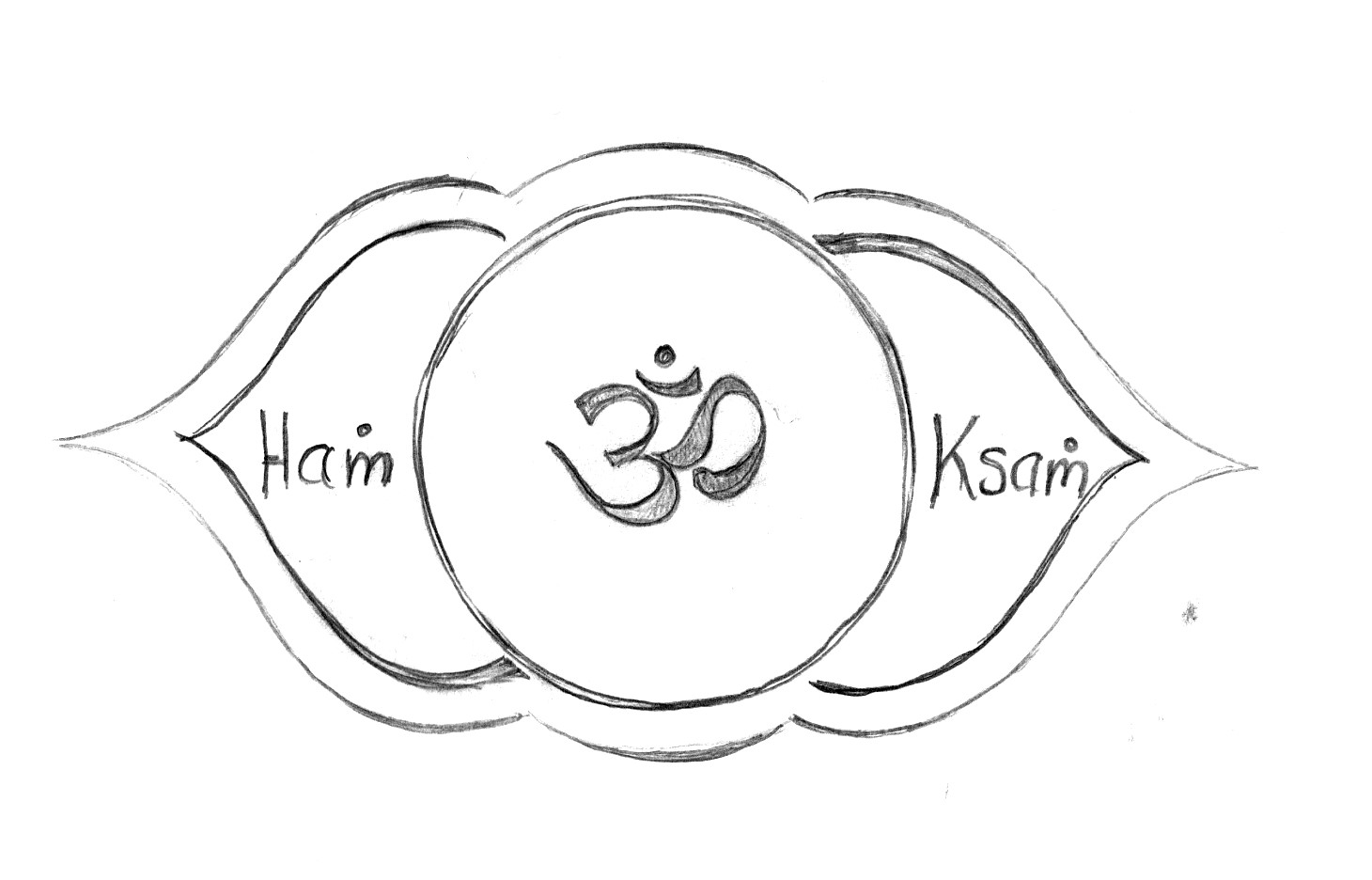
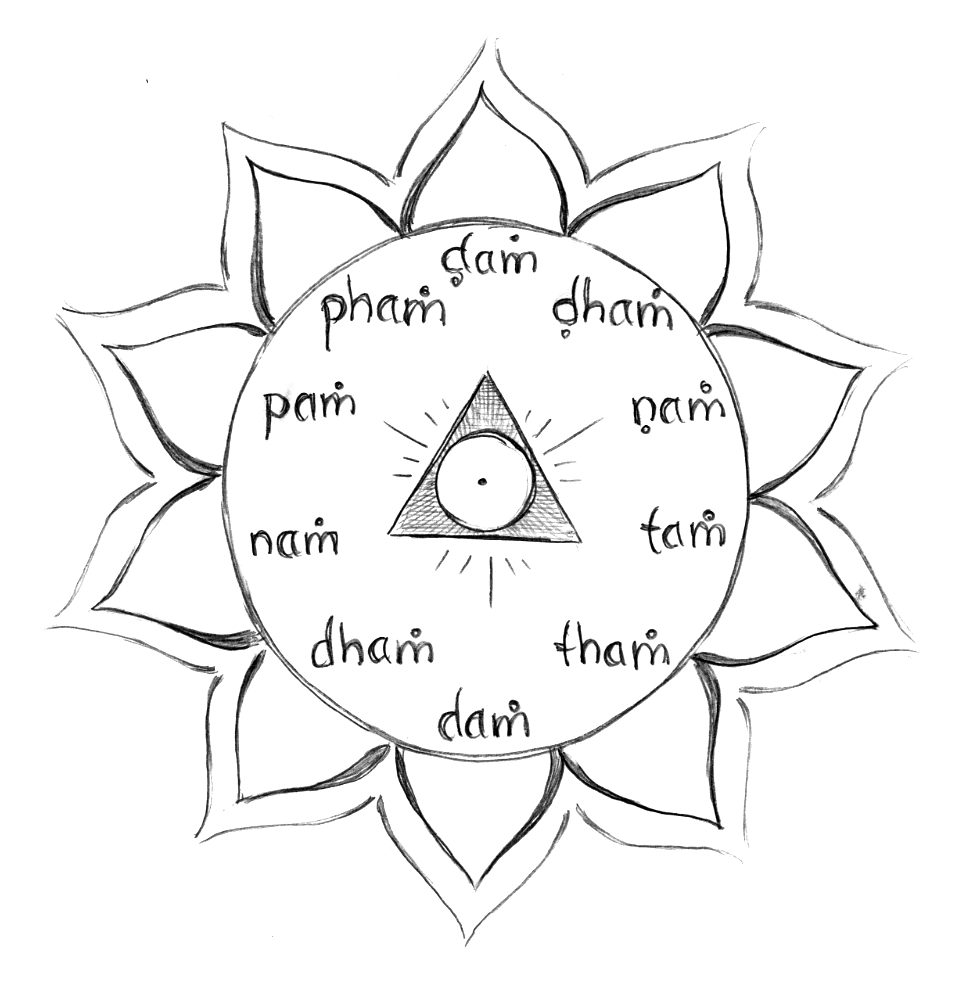
The chakras are an expression of this evolution from the Supreme to the material realm and back again from the material realm to the Supreme. This process of evolution and involution unfolds along the ladder of sounds, which are assigned to each petal of the chakras.
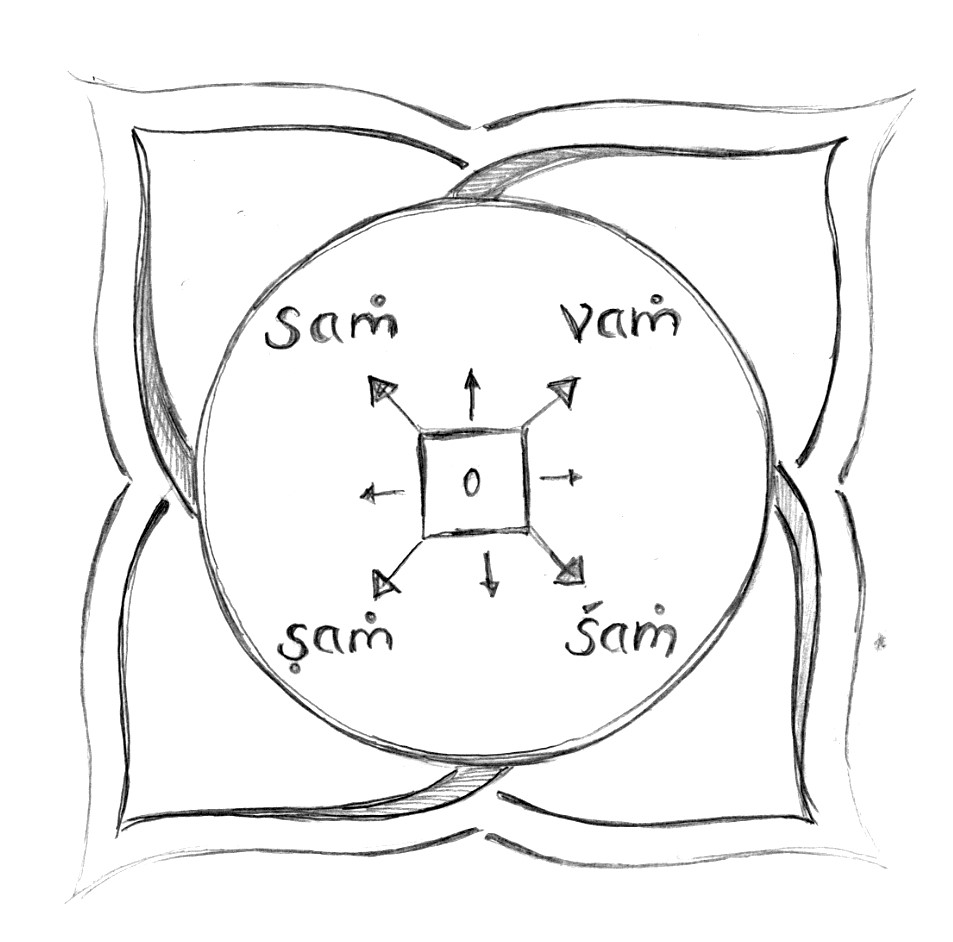
If we consider the number of petals on the lotus flowers of the chakras, their total is 50 (4+6+10+12+16+2), which corresponds to all 50 sounds of the Sanskrit alphabet. Together, these encompass all sounds and thus represent the great primordial sound Oṃ, God, the one source.
Traveling through these chakras from bottom to top and placing the sounds on their petals is, therefore, a journey through the self—from the coarse to the subtle, from the material back to the source of all creation.
Systems
One of the earliest chakra systems originated in the 6th century B.C. and is known to us from the Kālottara Tantra. This was a system of five centers, in which the lowest (mūlādhāra) was located in the heart, and each subsequent center rose steadily upward. The Kālottara Tantra proposed meditations in which the Kuṇḍalinī rises from the heart upward through the five elements and ultimately finds fulfillment above the head. This system was conservative, meaning that it ignored the lower centers and the sexual energy dormant within them, which was considered dangerous.
The system we know today was first mentioned in the Kubjikāmata Tantra of the Kaubjikā tradition as one of the two most important systems in that tradition. This system of six chakras later appeared in the Śiva Saṃhitā and in the Ṣaṭ-Cakra-Nirūpaṇa, which was translated into English at the beginning of the 20th century, and found its way into the New Age movement.
The Ṣaṭ-Cakra-Nirūpaṇa is not a tantra or a classical text, but rather a treatise written by the scholar Svāmī Purnananda in the 16th century. The text is primarily a vivid description of the mandalas of the chakras, along with their associated deities and symbols.
The Ṣaṭ-Cakra-Nirūpaṇa is not easy for laypeople to understand, yet it is beautiful and inspiring; it is a colorful journey through the world of the chakras, Kuṇḍalinī, and their symbols.
Learn more about the chakras here
A journey through the chakras is a journey to yourself.
In this book, we also explore the roots of Kundalini Yoga and yogic anatomy, and we discover the secrets of the koshas, prana, and the Trinity of the Goddess.
These profound practices, visions and insights into yogic anatomy and chakras will inspire and enrich any yoga practice.

More Articles Weekly
We'll be posting new articles every week on the individual chakras, the koshas, and topics in yogic philosophy. Stop by or send us an email so I can add you to our newsletter mailing list.
Any questions? Just write to us!
In der Ausbildung vertiefen wir das
Die Chakren sind ein Kernthema unserer RYT® 200h Yogalehrer-Ausbildung in der Wachau. Wer bereits unterrichtet, geht in der RYT® 300h Ausbildung tiefer – oder besucht den YACEP® Chakra-Workshop.
Blog